
Iceland votes against EU membership negotiations
 3 Min Read
Polls show that over half of Icelanders voted against reopening membership negotiations with the European Union after talks were suspended more than a decade ago.
-
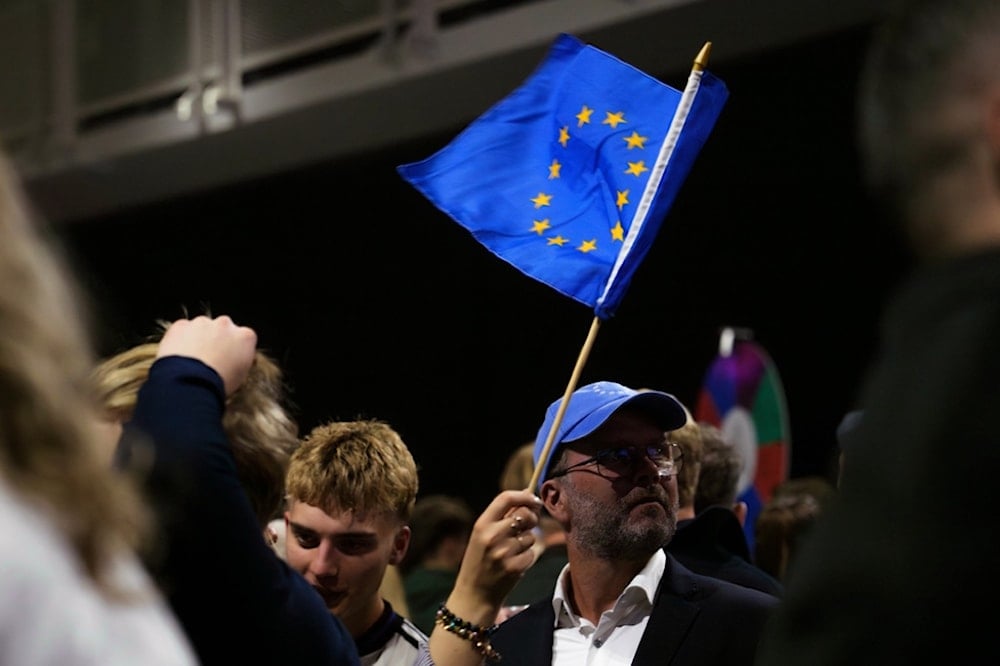
A supporter waves a European Union flag during an election-night gathering for the yes in Reykjavik, Iceland, Sunday, Aug. 30, 2026 (AP)
Over half of Icelandic voters rejected the state's push to restart talks on joining the European Union on Sunday.
RÚV, Iceland's public broadcaster, reported that 52.8% of the 225,031 voters rejected the proposal while 47.2% voted in favor of restarting EU membership talks. Roughly 12,600 votes separated the two sides.
Prime Minister Kristrún Frostadóttir's government promised the population it would hold a public vote by 2027, but the plan was brought forward due to global tensions, including threats made by US President Donald Trump's against Greenland.
RÚV reported that 82.5% of the 270,000 Icelanders eligible to vote turned out, making it the highest in any election on the island since 2009.
Debate among voters centered around the island's fishing industry rather than security concerns.
EU membership would bring Reykjavik into the bloc's customs union and ultimately the euro.
The Fish and marine industries account for roughly 40% of Iceland's exports; many No voters feared that they would cede a portion of control over their fishing grounds if forced to abide by the EU's common fisheries policy.
The referendum would not determine whether Iceland will join the EU. Instead, voters are being asked whether the country should return to the negotiating table.
For Iceland, reopening negotiations would revive a process that has remained dormant for more than a decade and could once again place questions over sovereignty, economic integration, and relations with Europe at the center of domestic politics.
Read more: Turkey criticizes EU document over candidate status, regional issues
Iceland's long-running membership debate
The country formally began accession negotiations more than a decade ago, but the process was halted 13 years ago under a government opposed to EU membership.
The issue subsequently remained politically sensitive, with successive governments facing competing pressures from those favoring closer European integration and those seeking to preserve Iceland’s independence outside the bloc.
Iceland’s left-leaning government, elected in 2024, had initially planned to hold the referendum next year. The vote was ultimately brought forward.
Geopolitical shifts revive Iceland’s EU question
The referendum vote came amid a significantly changed European security environment.
The Russia-Ukraine war has altered security calculations across Europe and contributed to renewed debates over the continent’s political and military alignment.
Iceland’s strategic position in the North Atlantic also gives developments in and around Greenland broader geopolitical significance. Growing tensions surrounding Greenland have added another dimension to discussions about Iceland’s relationship with European institutions and its wider security environment.
The renewed EU debate therefore extends beyond questions of trade and economic integration. Iceland’s potential return to accession talks comes as European states reassess their strategic relationships amid heightened tensions involving Russia, the United States, and the wider Arctic and North Atlantic region.
Read more: Iceland demands answers after Trump envoy jokes about US annexation


