
Inside 'Israel’s' scheme to devour South Lebanon
 3 Min Read
"Israel" has outlined conditions for potential talks with Lebanon, including a proposed three-zone division of southern Lebanon and security demands tied to Hezbollah’s disarmament and presence in the region.
-
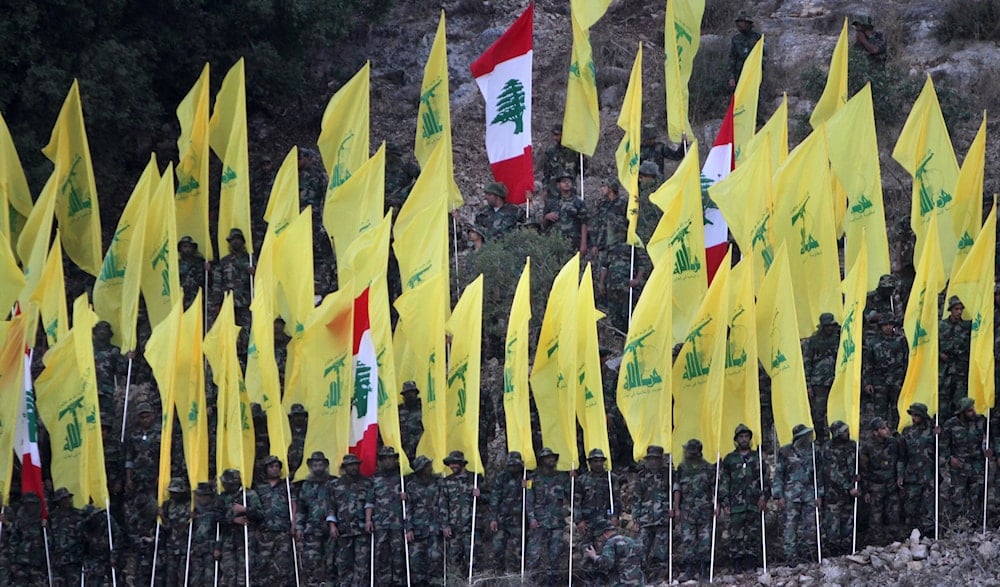
In this August 14, 2015, file photo, Hezbollah fighters hold their group and Lebanese flags, as they perform during a rally marking the ninth anniversary of the 2006 war, at the southern Lebanese village of Wadi al-Hujair, Lebanon (AP)
Direct Lebanese-Israeli talks began on Tuesday evening in Washington after both delegations arrived at the US State Department headquarters, marking an initial round of direct contacts amid continuous Israeli massacres and aggression on Lebanon.
Al Mayadeen’s correspondent in Geneva said "Israel" set sweeping and highly controversial conditions for talks with Lebanon, proposing a three-zone division of South Lebanon.
"Israel" was so insolent as to set sweeping and highly controversial conditions for talks with #Lebanon, proposing a three-zone division of South Lebanon, according to Al Mayadeen’s correspondent in Geneva.
— Al Mayadeen English (@MayadeenEnglish) April 14, 2026
The first zone would become a permanent buffer zone extending 8… pic.twitter.com/eNnN1z77OD
Al Mayadeen's reporter dissects 'Israel’s' three-zone Lebanon plan
The first zone would become a permanent buffer zone extending 8 kilometers deep, where displaced residents would be barred from returning.
A second zone, south of the Litani River, would be designated as an Israeli military operational area aimed at dismantling and disarming Hezbollah, with occupation forces remaining until the "mission" is accomplished.
The third zone would cover areas north of the Litani and the rest of Lebanon, where the Lebanese army would be tasked with dismantling Hezbollah independently.
Our correspondent added that the proposal’s core demand is that no full Israeli withdrawal would take place until "Hezbollah is eliminated." The Israeli demands reflect serious concerns over Lebanon's sovereignty, its future, and its independence in decision-making.
On the ground, people in Lebanon have vehemently rejected the direct talks, holding protests in front of the Serail in Beirut. On the other hand, Hezbollah Secretary-General Sheikh Naim Qassem rejected direct contacts with "Israel", stressing that such a decision cannot be taken unilaterally or imposed under foreign pressure.
Surrender, direct talks with 'Israel' not an option: Sheikh Qassem
On Monday, Hezbollah Secretary-General Sheikh Naim Qassem strongly rejected any move toward direct engagement with “Israel,” warning that such a course would represent a serious political misstep if pursued without broad national consensus. He stressed that decisions of this magnitude cannot be taken unilaterally or imposed under external pressure.
He argued that any attempt to initiate direct talks outside an agreed national framework lacks legitimacy and risks undermining Lebanon’s internal cohesion, particularly at a sensitive moment. According to Sheikh Qassem, national decision-making must reflect collective agreement rather than unilateral government action.
The Hezbollah leader also warned against efforts to sideline or weaken the Resistance in the context of political negotiations, maintaining that such moves ultimately serve the interests of the adversary rather than Lebanon. He emphasized that internal unity remains essential in confronting external pressures tied to the negotiation track.
Calling on the Lebanese government to reconsider its position, Sheikh Qassem urged a reversal of the unjust decision. He underscored that preserving sovereignty requires adherence to consensus-based policymaking, cautioning that any deviation from this approach could carry significant political consequences.


