
IOF open fire on LAF post, Army orders responding to sources of fire
 3 Min Read
Israeli occupation forces opened fire on a newly established Lebanese army post in Marj'youn as Tel Aviv moves to entrench and expand occupied areas within Lebanese territory.
-
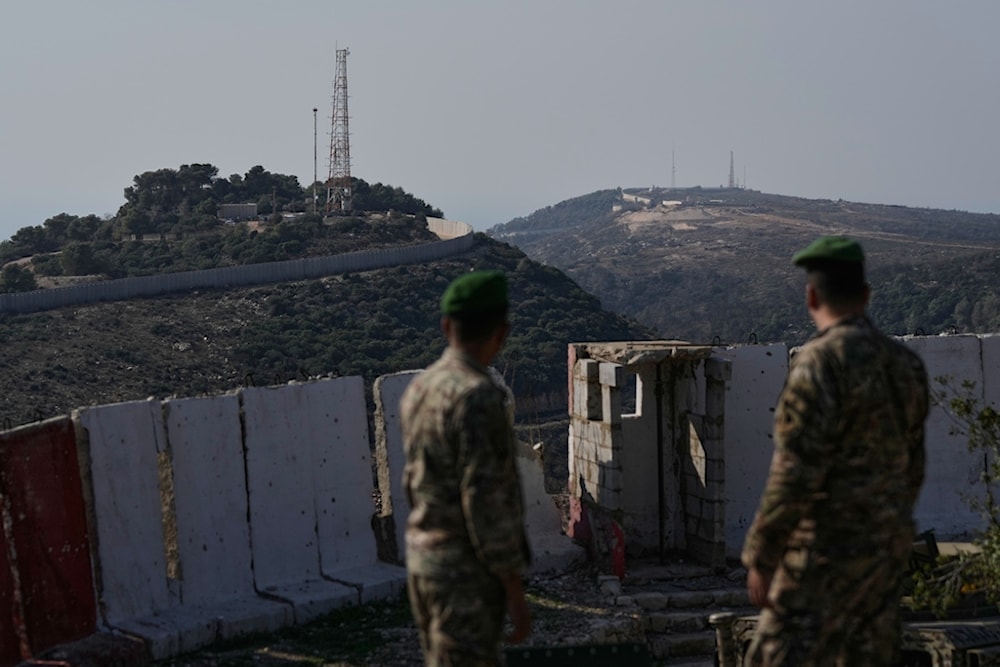
Lebanese army soldiers look at the Israeli military post of Hanita, left, and the Labbouneh post, one of five hills occupied by Israeli occupation forces since last year, right, from a Lebanese military position in the village of Alma al-Shaab in South Lebanon, Friday, Nov. 28, 2025 (AP)
Israeli occupation forces opened fire on a newly established Lebanese army observation post in the Sarda–Marj'youn area on Tuesday, in what the Lebanese Army described as a deliberate attempt to pressure troops to withdraw from sovereign Lebanese territory.
In a statement published on X, the Lebanese Armed Forces said the area surrounding the position came under gunfire from the Israeli side as soldiers were setting up the post. An Israeli drone was also reported flying at low altitude over the site, issuing threats aimed at compelling the personnel to leave.
The Army Command said it ordered immediate reinforcements to the location and instructed troops to remain in position and respond to the sources of fire. The situation is being followed up in coordination with the committee overseeing the cessation of hostilities agreement and the United Nations Interim Force in Lebanon (UNIFIL), the Army stated.
أثناء استحداث الجيش نقطة مراقبة عند الحدود الجنوبية في منطقة سردة - مرجعيون، تعرض محيط النقطة لإطلاق نار من الجانب الإسرائيلي، بالتزامن مع تحليق مسيّرة إسرائيلية على علو منخفض وإطلاقها تهديدات بهدف دفع العناصر إلى المغادرة. وقد أصدرت قيادة الجيش الأوامر بتعزيز النقطة والبقاء فيها… pic.twitter.com/2iHmZ4Gmf5
— الجيش اللبناني (@LebarmyOfficial) February 24, 2026
Expansion of 'buffer zones'
The assault comes amid an openly declared shift in Israeli policy toward Lebanon and Syria.
On February 19, Israeli Prime Minister Benjamin Netanyahu announced that "Israel" would not withdraw from so-called “buffer zones” in southern Lebanon and Syria and would instead expand them, declaring that “there is no longer a policy of containment.”
Following the November 27, 2024, ceasefire agreement, Israeli occupation forces retained five elevated positions inside southern Lebanon beyond the February 18, 2025, withdrawal deadline. The positions overlook towns including Maroun al-Ras, Ayta al-Shaab, Bint Jbeil, Ramyah, and Blida, giving direct line-of-sight into civilian areas.
Despite objections from the Lebanese government and concerns raised by UNIFIL, "Israel" maintained its presence at what it described as five “strategic points,” while reinforcing them with earthworks, fortified berms, surveillance systems, and access roads throughout 2025. Lebanese officials argue that the continued deployment constitutes a violation of both the ceasefire framework and national sovereignty.
In parallel, Israeli forces advanced into the UN-mandated demilitarized zone in southern Syria after December 2024 developments there, with reports throughout 2025 documenting the construction of new military bases and fortified outposts in Quneitra and Daraa provinces.
Against this backdrop, Tuesday’s gunfire incident near Marj'youn is likely to deepen Lebanese concerns that "Israel’s" expanded “buffer zone” doctrine is translating into direct military pressure on Lebanese Army positions along the border. No casualties were reported, but the episode has heightened the risk of further escalation.


