
Iran bolstered its air defense capabilities, new equipment deployed
 3 Min Read
Iran says it has strengthened its air defense capabilities as the Strait of Hormuz becomes a key part of its defense posture amid tensions with the US.
-
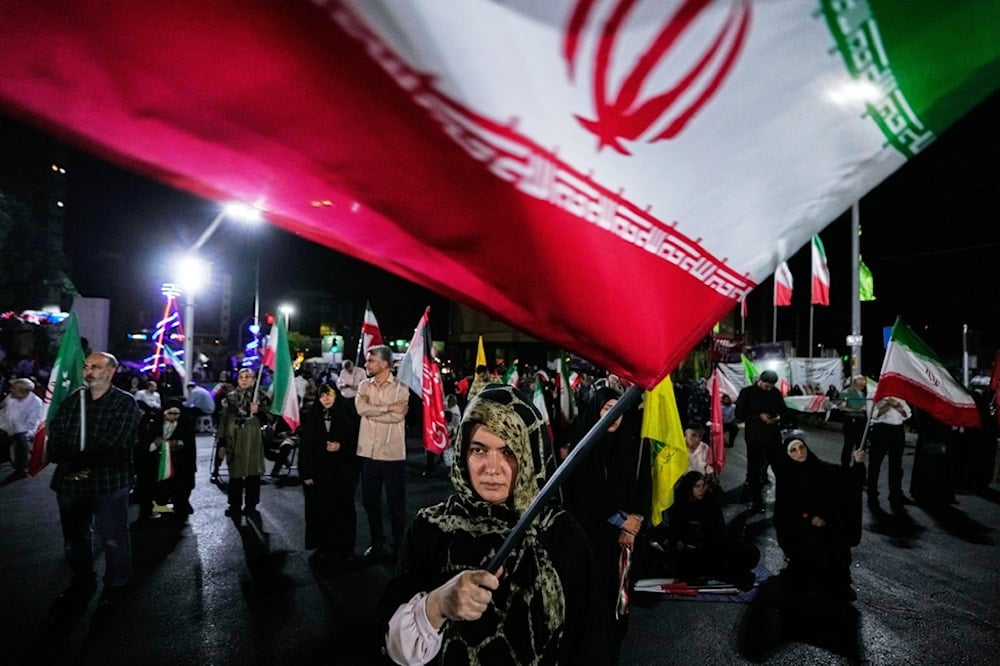
A demonstrator waves an Iranian flag during a gathering in a square in Tehran, Wednesday, Aug. 26, 2026 (AP)
Iran now possesses greater air defense capabilities than it had during the Ramadan War, Iranian Army spokesman Brigadier General Mohammad Akrami-Nia said while noting that new equipment has been incorporated into combat formations.
Akrami-Nia said the Army has also conducted joint exercises with the Islamic Revolution Guard Corps Aerospace Force throughout this period to improve coordination between the two forces.
On the Strait of Hormuz, Akrami-Nia said US President Donald Trump was claiming control over the waterway, but added that "his forces do not dare approach it." He added, "The Americans are forcing many ships to pass through the southern part of the Strait of Hormuz, causing them to sustain damage."
US authorities have said their forces are providing protection for oil tankers and commercial vessels transiting the Strait of Hormuz. The White House also claimed that Washington controls the waterway and is ensuring the continued flow of oil to global markets, while Trump has said the strait is open and under US control.
Strait of Hormuz is central to Iran's defense
Elsewhere, Sheikh Abdollah Haji Sadeghi, representative of the Leader and the Islamic Republic at the IRGC, said the Strait of Hormuz had become a key part of Iran's defense posture.
Speaking from the vital waterway, he stated, "The Strait of Hormuz is today the frontline of defense for the Islamic Revolution and the front of truth against the entire front of disbelief, and we will witness victory soon."
Haji Sadeghi added, "Let the enemy know that our Armed Forces have firmly taken hold of the vital Strait of Hormuz, and the enemy will absolutely never succeed in crossing it." He also said Iran has achieved numerous accomplishments and innovations despite the damage it sustained during the war.
The Iranian Army has previously said that any passage through the Strait of Hormuz must be coordinated.
Iran has maintained an effective closure of normal navigation through the strait in retaliation for the US-Israeli aggression on February 28, 2026, while limited vessel traffic has continued. Iran has linked the reopening of the waterway to conditions concerning maritime security and US compliance with the Islamabad memorandum of understanding.
Iran reiterates restrictions on maritime passage
The announcement follows statements earlier on October 15 by Iranian Army Deputy Coordinator Rear Admiral Habibollah Sayyari, who reaffirmed that the Strait of Hormuz remains closed to unauthorized maritime traffic.
"The Strait of Hormuz is closed," Sayyari declared, pointing to disruptions in global oil shipments and rising fuel prices in the United States as evidence of the restrictions' impact.
"If any passage takes place, it must be coordinated; otherwise, it is clear what will happen," he warned, emphasizing that vessels seeking to transit the strategic waterway must comply with Iranian regulations.
The Iranian Army Navy has reported a similar incident two days earlier, announcing that an oil tanker sustained damage and caught fire after deactivating its tracking systems while attempting to enter the restricted zone east of the strait.


