
Iran details illegality of Trump's threats, points to war crimes risk
 3 Min Read
Iran warns US threats violate international law, with Deputy FM Kazem Gharibabadi stressing potential war crimes and vowing a decisive response.
-
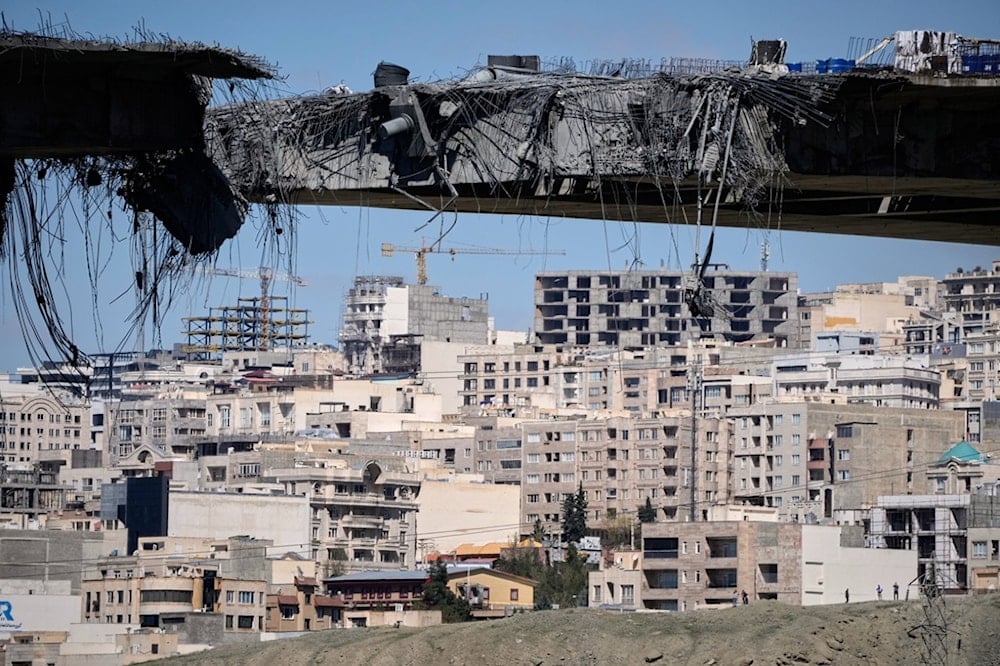
A destroyed section of the B1 Bridge, built to link Karaj to Tehran, is seen in this photo after it was bombed by the United States military, on April 3, 2026 (AP)
Iran’s Deputy Foreign Minister for Legal and International Affairs, Kazem Gharibabadi, issued a strong warning regarding recent US threats, stating that any use of force against Iran constitutes a grave violation of international law and will be met with a firm response.
In a statement, Gharibabadi stressed that the use of force against Iran’s territorial integrity represents a “clear violation” of Article 2(4) of the United Nations Charter, which prohibits the threat or use of force, adding that such actions amount to aggression under UN General Assembly Resolution 3314.
۱. کاربرد زور علیه تمامیت ارضی ایران، نقض آشکار ماده ۲(۴) منشور ملل متحد (ممنوعیت مطلق تهدید به زور) و مصداق تجاوز طبق قطعنامه ۳۳۱۴ مجمع عمومی سازمان ملل است.
— Gharibabadi (@Gharibabadi) April 6, 2026
۲. تهدید به حمله به نیروگاهها و پلها (زیرساختهای غیرنظامی)، جنایت جنگی طبق ماده ۸(۲)(ب) اساسنامه رم دیوان کیفری بین…
Targeting civilian infrastructure constitutes war crimes
The Iranian official further warned that threats to strike civilian infrastructure, including power plants and bridges, would constitute war crimes under international law. He cited Article 8(2)(b) of the International Criminal Court’s Rome Statute, as well as provisions of the 1977 Additional Protocol I to the Geneva Conventions, which prohibit attacks on civilian объектов.
Gharibabadi emphasized that public threats by the US president to carry out such attacks could trigger individual criminal responsibility, stating that such actions may be prosecutable before international and national courts.
Read more: Iran exposes Washington’s propaganda failures in digital war
Iran reaffirms right to self-defense
Reaffirming Iran’s position, Gharibabadi stated that Tehran reserves its right to respond decisively to any act of aggression or imminent threat, in accordance with Article 51 of the UN Charter, which guarantees the right to self-defense.
He concluded by warning that continued threats could have consequences beyond Iran, urging US leadership to reconsider its position before further escalation leads to broader regional repercussions.
On April 2, the B1 (Bileghan) Bridge, one of Iran’s largest engineering projects, was targeted by US-Israeli airstrikes. The bridge, still under construction and valued at hundreds of millions of dollars, connected Karaj to Tehran and was set to relieve traffic congestion while further linking the capital to northern provinces.
13 civilians were killed and 95 more were wounded when these strikes took place on the final day of Nowruz, when families were out in parks and public spaces. The strikes come as part of a broader aggression targeting vital infrastructure, industrial projects, and bridges across Alborz Province.
US President Donald Trump shared footage of the bridge’s collapse, claiming that “much more is to follow," signaling further attacks on Iranian civilian infrastructure and his intent to commit additional war crimes to pressure the Iranian leadership. Trump later reaffirmed his intent to bomb civilian infrastructure, warning, “Tuesday will be Power Plant Day, and Bridge Day, all wrapped up in one, in Iran. There will be nothing like it!!! Open the Fuckin’ Strait, you crazy bastards, or you’ll be living in Hell - JUST WATCH!”
Read more: Oil prices rise as Trump continues threats against Iran to open Hormuz


