
Netanyahu to meet Trump Wednesday in Washington to discuss Iran talks
 5 Min Read
Israeli Channel 12 laments how Tehran continues to shape the direction of Iran-US negotiations, while Gulf states criticize "Israel" for obstructing regional diplomacy on Iran and Gaza.
-
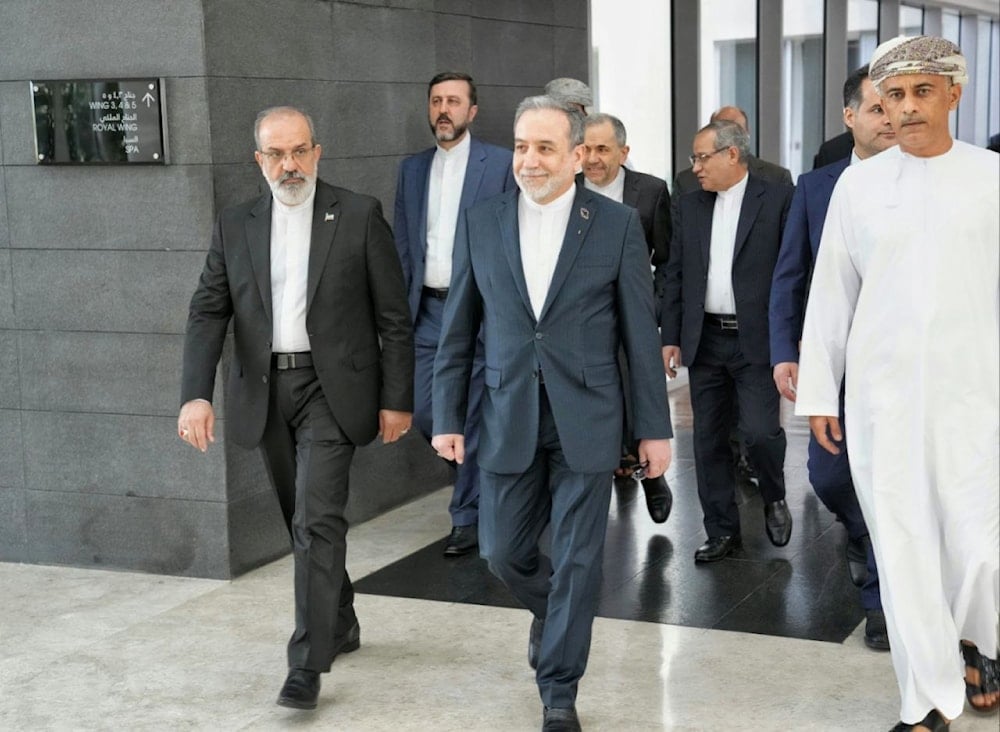
In this photo released by the Iranian Foreign Ministry, Iranian Foreign Minister Abbas Araghchi, center, heads to the venue for talks between Iran and the US, in Muscat, Oman, Friday, Feb. 6, 2026 (AP)
Israeli Prime Minister Benjamin Netanyahu is expected to meet with US President Donald Trump next Wednesday in Washington to discuss ongoing negotiations with Iran, the Israeli PM's office announced on Saturday.
According to the statement, Netanyahu believes any talks with Tehran should include limitations on ballistic missiles and an end to support for its regional allies.
Meanwhile, Israeli Channel 12 reported that a senior White House official confirmed that Netanyahu requested to move his visit forward to next Wednesday, instead of the originally scheduled date the following week. Kan added that the urgency of the visit stems from Iranian statements indicating that US-Iran talks focus solely on the nuclear program, not on ballistic missile development.
These developments follow indirect talks between US and Iranian delegations in Oman’s capital, Muscat, which were described as “positive". Iranian Foreign Minister Abbas Araghchi emphasized that the discussions were limited to the nuclear file. Reuters also cited a regional diplomat on Friday, noting that the Muscat talks did not address Iran’s missile capabilities.
Iran directs talks while 'Israel' gets isolated: Israeli media
Furthermore, Israeli Channel 12 went as far as lamenting how Iran is still standing strong, and Tehran continues to determine both the venue and agenda of talks, a reality that strengthens its position in the region.
According to the channel, there is a “reality Prime Minister Benjamin Netanyahu is trying to forget,” namely that Gulf states repeatedly approach US President Donald Trump to tell him that "Israel" is once again dragging Washington into a confrontation with Iran that ultimately serves no purpose, arguing that “the regime will not fall and nothing will change.”
Channel 12 added that a similar dynamic is unfolding in Gaza, where mediators reportedly tell Trump that Netanyahu is betting on the failure of the second phase of negotiations. They argue that the prime minister does not want the phase to succeed, does not want "Israel" to be part of an international force to be deployed in Gaza, and is preventing them from pressuring Hamas to disarm.
“In the end, they are trying to convince Trump, regarding both the Iranian issue and Gaza, that Israel is an obstructive factor rather than one working to move us toward the second phase,” the channel stated.
Iran-US hold first round of indirect rounds
The first round of indirect talks between the United States and Iran took place in Muscat, Oman, on February 6, marking the first diplomatic engagement between the two sides in months. The discussions were mediated by Omani officials, with each delegation seated in separate rooms as messages were exchanged through intermediaries.
Iranian Foreign Minister Abbas Araghchi described the session as a “good start", stressing that the talks were focused strictly on the nuclear file. Tehran made it clear that issues such as its missile program or regional role were not on the agenda, framing the talks as limited to nuclear-related matters.
The negotiations come amid heightened tensions following last year’s brief military confrontation and an increased US military presence in the Gulf. Washington is reportedly seeking constraints on Iran’s enrichment activities, while Tehran insists on its right to peaceful nuclear technology and demands tangible sanctions relief. Additionally, Washington has been trying to impose limitations on Iran's defenses, namely its ballistic missile program, something Iran has vehemently rejected.
Washington seeks to broaden talks, Iran resists
Washington has signaled that it is seeking to broaden the talks beyond Iran’s nuclear activities. US Secretary of State Marco Rubio said on February 4 that the United States wants the talks to also cover Tehran’s ballistic missile program, its backing of armed groups across the region, and what he referred to as the “treatment of their own people.”
However, a regional diplomat briefed by Tehran told Reuters that Iran firmly rejected any attempt to expand the agenda, maintaining that the discussions must remain centered on the nuclear file and reiterating its “right to enrich uranium.” The diplomat also noted that Iran’s missile program was not discussed during the talks.
According to officials, both sides agreed to continue the diplomatic track after consulting their respective capitals. No concrete breakthroughs were announced, but the atmosphere was described as constructive enough to warrant further engagement.
The next round is expected to be scheduled in coordination with Oman, with diplomats indicating that the coming weeks will determine whether the process can move beyond preliminary exchanges toward more substantive bargaining.


