
US-Iran Nuclear talks back on track as Witkoff's plane lands in Muscat
 3 Min Read
A US envoy’s jet has landed in Muscat ahead of Friday's US-Iran nuclear talks, revived after regional mediation overcame disputes over the agenda.
-
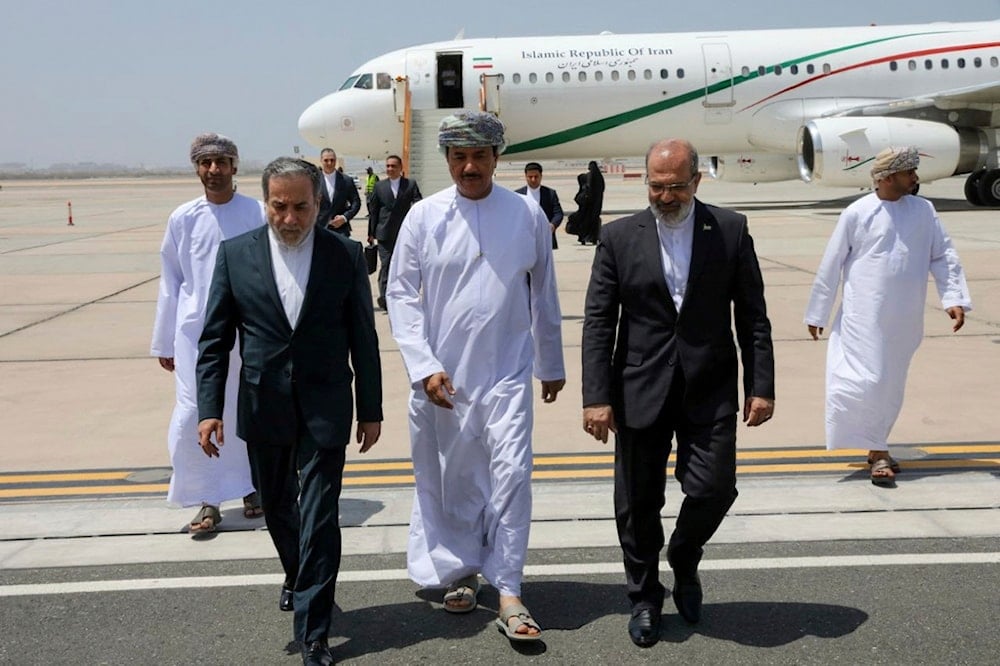
Iranian FM Abbas Araghchi is welcomed by an Omani official upon arriving in Muscat for talks with US envoy Steve Witkoff, May 11, 2025. (Iranian Foreign Ministry via AP)
A Bombardier Global 7500 aircraft linked to US special envoy Steve Witkoff has landed in Muscat, Oman, according to Flightradar24 tracking data.
The private jet, with registration number N102WG, arrived in the Omani capital ahead of expected high-level discussions between US and Iranian officials. The timing of Witkoff’s arrival aligns with previously announced plans for nuclear talks between Tehran and Washington.
⭕️🛩 JUST IN: US envoy Steve Witkoff's plane land in Muscat, Oman. https://t.co/mjpxfZHaCc pic.twitter.com/uTqyaFLSDa
— MenchOsint (@MenchOsint) February 5, 2026
Oman to host new round of US-Iran engagement
Iranian Foreign Minister Abbas Araghchi earlier confirmed that negotiations with the United States would take place at 10 a.m. on Friday in Muscat, expressing gratitude to Oman for its mediation efforts.
“Nuclear talks with the United States are scheduled to be held in Muscat on about 10 am Friday,” Araghchi stated on X.
He added, “I'm grateful to our Omani brothers for making all necessary arrangements.”
Dispute over agenda nearly halts talks
Initial uncertainty surrounded the talks due to disagreements over the scope of the discussions. Sources informed Al Mayadeen that Washington had imposed new conditions, prompting Iran to consider canceling the meeting.
However, the dispute appeared centered on the content of the negotiations rather than the venue itself. Ultimately, diplomatic pressure from several regional actors led to the talks being revived.
Regional actors push for talks
According to Israeli KAN, Arab mediators attempted to sway Iran into expanding the scope of talks to include what is on Washington's agenda, which Iran rejected. "We are ready to discuss the nuclear file only," Iran's negotiating team reportedly stated.
Moreover, two US officials, as reported by Barak Ravid, stated that several Arab and Muslim leaders urgently lobbied the Trump administration on Wednesday not to cancel the planned meeting. One US official said, “They asked us to keep the meeting and listen to what the Iranians have to say. We have told the Arabs that we will do the meeting if they insist. But we are very skeptical.”
At least nine countries conveyed high-level messages to senior officials in the Trump administration, urging Washington not to withdraw from the scheduled talks in Muscat.
A second US official said the administration agreed to move forward with the meeting “to be respectful” of the requests from regional allies and “to continue pursuing the diplomatic track.”
Non-nuclear issues off the table
Since taking the initiative to resume mediated talks with the United States, Iran maintained that negotiations would strictly include the nuclear file. Topics beyond, such as its missile program and domestic issues, were off the table.
It is worth noting that eliminating Iran's advanced ballistic missile program has been a top priority for the United States and "Israel", both of whom launched an aggression on the Islamic Republic in June.
Israeli concerns center on the possibility that any bilateral agreement between Tehran and Washington could sideline two key issues: Iran’s ballistic missile program and its support for regional allies.
Iran maintains that it is open to diplomatic dialogue if Washington provides guarantees of commitment to constructive talks. Meanwhile, US President Donald Trump continues threatening Tehran with military aggression, as key players scramble to curb the possibility of any confrontation that could ignite the region.


