
Iran not seeking war, will retaliate to aggression: Pezeshkian
 3 Min Read
Iran’s president says Tehran does not seek war but will respond to any attacks against the Islamic Republic, following US strikes on Larak Island.
-
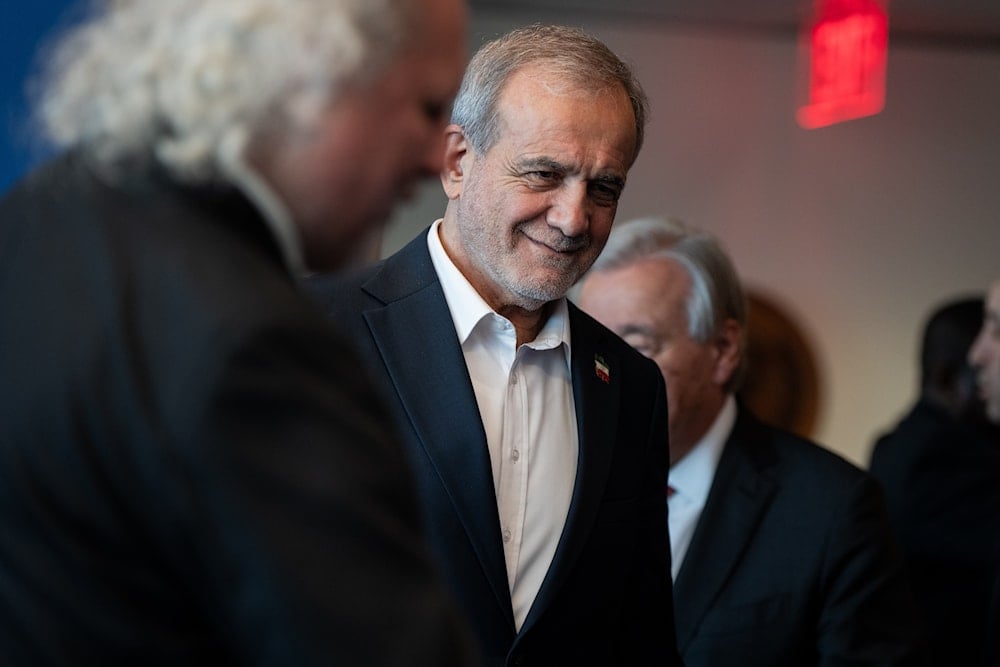
Masoud Pezeshkian, the President of Iran, attends the United Nations General Assembly at United Nations headquarters on September 25, 2025. (AP Photo/Angelina Katsanis, File)
Iranian President Masoud Pezeshkian reaffirmed on Monday that the Islamic Republic does not seek war but will respond firmly to any aggression against it. "We are not looking for war, and this is the clear message that we have announced to the world so far," Pezeshkian said before his flight to Kyrgyzstan.
The Iranian President added that "in the face of any aggression, we will never sit still and will give a decisive response to the aggressors", stressing that "Instability and unrest in the region are not in the interest of any country and will challenge everyone".
His comments follow US strikes against Larak Island in southern Iran. Iranian media reports that Washington's hostilities led to multiple casualties among Iran's military and civilians present on the Island.
Read more: Oil prices jump over 2% after US attacks on Iran's Larak island
Pezeshkian to attend SCO summit
The Iranian president is set to take part in a two-day Shanghai Cooperation Organization (SCO) summit in the Kyrgyz capital, Bishkek, set to be held on September 1.
The head of Iran's presidential Public Relations, Habibollah Abbasi, told IRNA that Pezeshkian will deliver a speech at the summit and hold bilateral meetings with leaders and senior officials from SCO member and partner states.
The Iranian President is also scheduled to attend the official opening ceremony of the sixth World Nomad Games, set to be held from August 31 to September 6 in Kyrgyzstan
US strikes and Iranian response
Washington launched a drone attack against Iran's Larak Island in the southern province of Hormozgan in the evening hours of Sunday, leading to the martyrdom and injuries of several soldiers and civilians.
The IRGC Aerospace Force retaliated by striking technical, maintenance, and fighter jet infrastructure at two US-operated airbases in Jordan, King Hussein and al-Azraq, with a combined ballistic missile and drone attack.
The IRGC stated that their response caused "heavy damage" to the facilities, warning the US that "aggression and crime" will not ease the desperation over Washington's lack of control of the Strait of Hormuz, adding that each attack will warrant a more crushing retaliation.


