
Iran rejects US economic war as Pezeshkian vows no surrender
 4 Min Read
Iranian officials say Washington is using economic warfare to weaken and subjugate Iran, warning that pressure on the Iranian people will draw a wider response.
-
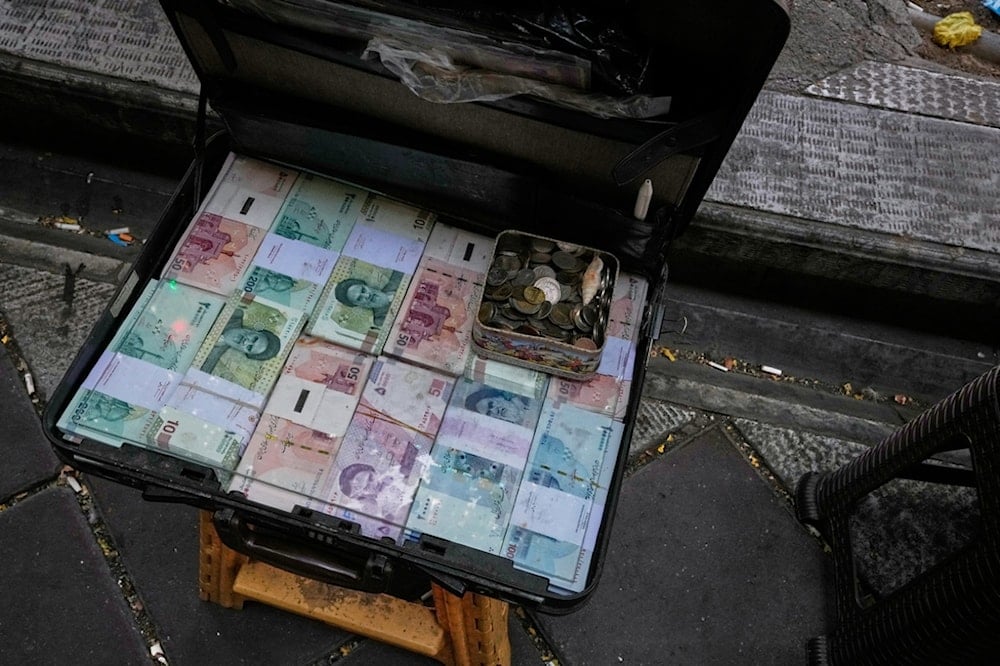
A sidewalk display of Iranian currency is seen at Ferdowsi Square in downtown Tehran, Iran, Monday, Aug. 24, 2026. (AP Photo/Vahid Salemi)
Iranian President Masoud Pezeshkian said Tuesday that economic pressure is an American strategy aimed at subjugating Iran and forcing it to surrender, as Tehran warned that any pressure targeting the Iranian people’s livelihoods and security would be treated as part of the war.
Pezeshkian made the remarks during a meeting with Iraqi Supreme Judicial Council President Faiq Zidan, saying Iran’s adversaries had recognized their inability to subdue the Iranian people militarily and had therefore shifted toward creating social and economic problems inside the country.
“Iran will not surrender,” Pezeshkian stressed, rejecting economic pressure as a means of forcing Tehran to submit.
The remarks came as Washington intensifies its economic campaign against Iran and threatens countries and entities maintaining economic ties with Tehran.
Read more: Iran conveys Hormuz conditions to US via Pakistani mediator: Tasnim
Pezeshkian: US shifted to economic pressure after military failure
Pezeshkian said the United States and its allies had turned toward economic pressure after realizing that military means had failed to subjugate the Iranian people.
According to the Iranian president, the objective of the economic campaign is to create internal social and economic difficulties and weaken Iran from within.
His comments place Washington’s sanctions and financial restrictions within the broader confrontation between the two countries rather than treating them as isolated economic measures.
The Iranian president also said the signing of a memorandum of understanding was not motivated by fear or weakness, but was instead based on logic and awareness.
The statement reflects Tehran’s position that its diplomatic and political decisions are determined by national interests rather than pressure from Washington.
Iran: Pressure on livelihoods is part of the war
Separately, Iran’s Acting Defense Minister Brigadier General Majid Ibn al-Reza said Tuesday that Tehran considers any pressure targeting the livelihoods and security of the Iranian people to be part of the war.
Ibn al-Reza said the Iranian people’s economy, welfare, comfort, and security all fall within the country’s defensive sphere.
He warned that those expanding the scope of pressure on Iran should understand that Tehran will also expand the scope of its response.
“Iran will, in turn, expand the scope of its response within the framework of national interests and defending the Iranian people,” he said.
The warning signals that Tehran views economic coercion as directly connected to national security and intends to respond accordingly.
Read more: Iran parliament approves Article 3 of Strait of Hormuz security bill
Tehran warns of an expanded response
US President Donald Trump announced what he called an “unprecedented economic war” against Iran, while threatening countries supporting Tehran with “severe economic consequences.”
Washington has demanded an end to what it describes as oil smuggling, barter arrangements, cash transfers, currency exchange operations, shipping networks, and shell companies linked to Iran.
The US campaign has also targeted Iran’s access to international financial and commercial channels, while threatening third parties that continue economic engagement with Tehran.
Iranian Foreign Minister Abbas Araghchi has rejected Washington’s characterization of the campaign as merely “economic operations,” calling it a recurring feature of US policy and stressing that Tehran knows how to confront it.
Taken together, the statements from Pezeshkian and Ibn al-Reza indicate that Tehran is treating the intensifying economic campaign as an extension of the wider confrontation with Washington.
Pezeshkian calls for Islamic regional cooperation
Alongside his rejection of US pressure, Pezeshkian called for an alliance among Islamic countries based on the concept of a unified Muslim Ummah.
He said stronger cooperation among Muslim-majority states could contribute to regional stability and security, urging countries to create the conditions necessary to expand regional security.
The call comes amid heightened tensions across West Asia and Washington’s efforts to use economic pressure to isolate Iran from international trade and financial networks.
For Tehran, stronger regional ties could provide an avenue for resisting external pressure while expanding political, economic, and security cooperation among states in the region.
Read more: Iran war reveals limits of US coercion: Foreign Affairs


