
Iran conveys Hormuz conditions to US via Pakistani mediator: Tasnim
 3 Min Read
Tasnim's source dismissed claims by some media outlets that Munir had delivered a threatening message, saying his visit was aimed instead at paving the way for negotiations.
-
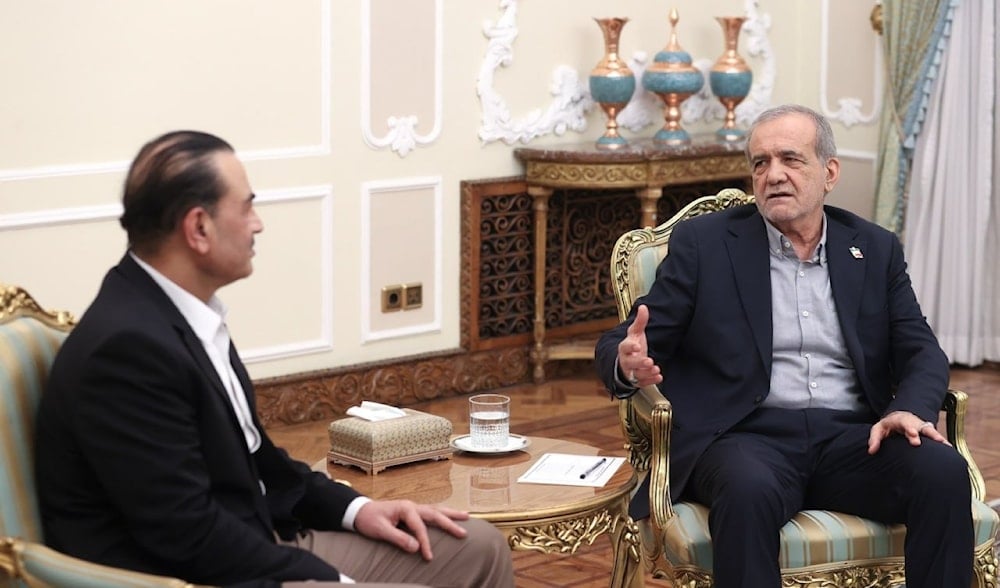
Iranian President Masoud Pezeshkian meets Pakistani Army Chief Field Marshal Asim Munir in Tehran on Monday, August 24, 2026. (Fars News Agency)
Iran's positions and conditions regarding the Strait of Hormuz were fully and transparently relayed to Pakistan, an informed source told Tasnim News Agency.
According to the source, Iran laid out its stance in detail during meetings with Pakistani Army Chief Field Marshal Asim Munir, who traveled to Tehran to deliver Iran's message to the US.
The source also dismissed claims by some media outlets that Munir had delivered a threatening message, saying his visit was aimed instead at paving the way for negotiations.
Among Iran's central demands, the source added, is for the US to return to the Islamabad Memorandum of Understanding and follow through on its terms in full, including Article 5.
Pakistani delegation meets senior Iranian officials
Munir arrived in Tehran on Monday accompanied by Interior Minister Mohsin Naqvi, as part of an effort to deepen cooperation between the two countries and discuss regional developments. Iranian Foreign Ministry spokesperson Esmail Baghaei said the visit reflected one of the best periods in Iran-Pakistan relations, with both sides seeking to expand ties and support regional peace and security.
Munir and Naqvi held separate talks with Iranian Parliament Speaker Mohammad Bagher Ghalibaf, Secretary of Iran's Supreme National Security Council Major General Mohsen Rezaei, and President Masoud Pezeshkian.
Ghalibaf told Munir the parties' obligations under the memorandum are clear and said Washington's failure to honor its commitments has undermined regional stability and deepened mistrust, citing repeated instances of US noncompliance.
Naqvi called his meeting with Pezeshkian "very productive," saying the two sides discussed steps to reactivate the memorandum with a view to reaching a comprehensive settlement, and that the talks concluded on a positive note.
Washington escalates sanctions
The diplomatic push coincided with a fresh round of US economic pressure on Iran. Treasury Secretary Scott Bessent announced sanctions Monday on nearly 60 Iran-linked entities, individuals and vessels tied to nuclear, missile, cyber and oil networks, alongside the suspension of general licenses the US claims have enabled remittance payments to Iran.
Bessent said the campaign, dubbed "Operation Economic Outcast," would pursue a "zero leakage" approach, warning that countries maintaining economic ties with Tehran would face the "full reach of American power."
Meanwhile, a senior Iranian political-security source told Al Mayadeen the plan amounts to media propaganda rather than a substantive shift on the ground, arguing Washington has largely exhausted its available measures against Iran.
The source said Trump's economic messaging follows a recurring cycle timed to market openings and aimed at influencing energy prices, and noted the latest announcement came as the Pakistani mediator was present in Tehran, calling it another example of psychological pressure tactics.


