
Iran says Hormuz will remain under Tehran’s administration after talks
 4 Min Read
US-Iran talks advance on safe passage, Lebanon, sanctions relief, and frozen assets.
-
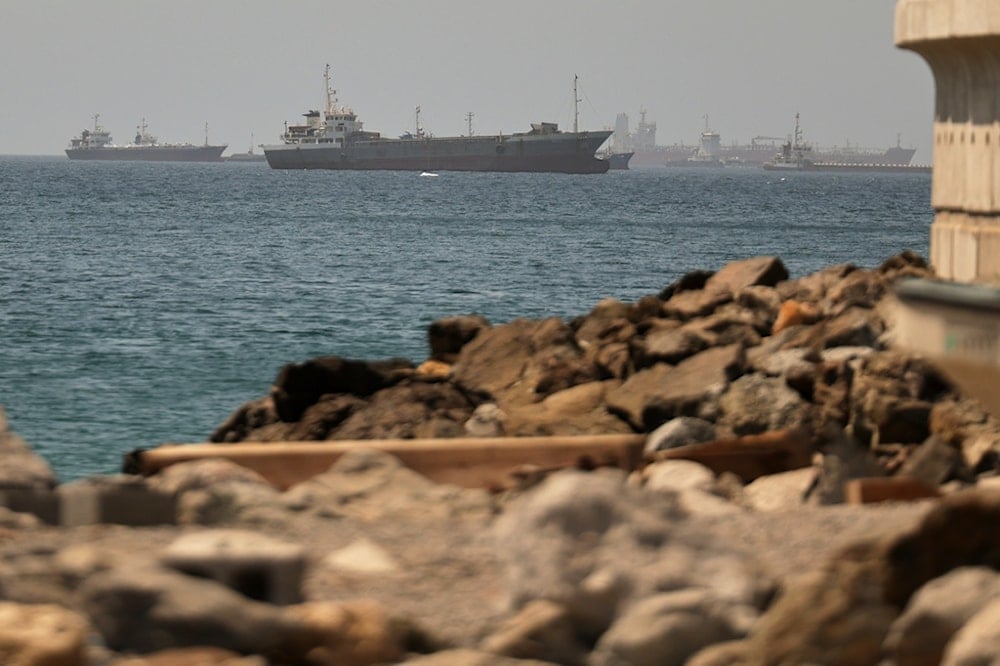
Tankers and cargo vessels are seen in the Gulf of Oman, along shipping routes linking the Strait of Hormuz and the Arabian Sea, Tuesday, June 16, 2026 (AP)
The Strait of Hormuz would remain under Iranian administration, said Iran's Parliament Speaker and top negotiator, Mohammad Bagher Ghalibaf, as US-Iran talks in Switzerland moved into a new phase focused on implementation, sanctions relief, maritime passage, Lebanon, and frozen Iranian assets.
Speaking after returning from negotiations at the Burgenstock resort in Switzerland, Ghalibaf said, "The Strait of Hormuz will never return to its pre-war conditions and will be administered by the Islamic Republic of Iran, in accordance with international law," according to Iranian state media.
The talks, mediated by Qatar and Pakistan, produced a 60-day roadmap toward a broader agreement between Tehran and Washington. Technical-level meetings are expected to continue this week, with working groups set to address the details of the arrangement.
Hormuz at center of negotiations
The Strait of Hormuz has emerged as one of the central files in the talks, after Iran repeatedly linked the reopening of the vital waterway to an end to Israeli attacks on Lebanon and broader US commitments under the interim understanding.
Tehran and Washington agreed to establish a communication line aimed at preventing incidents in the Strait and maintaining safe passage for commercial vessels.
Qatari and Pakistani mediators said the mechanism was designed "to avoid incidents and miscommunication with the aim of safe passage for commercial vessels" through the waterway.
Maritime tracking firms reported that traffic through Hormuz had begun to recover, with oil tankers crossing the strait on Monday after a period of weaker flows caused by renewed tensions.
Sanctions waiver and frozen funds
The United States also issued a temporary 60-day license allowing the sale, delivery, and transport of Iranian crude oil, petrochemicals, and petroleum products until August 21. The waiver covers related services, including banking, insurance, and transportation.
In a video published on his Telegram account, Ghalibaf described the Swiss talks as having produced "good achievements".
"In my view, this trip had good achievements, especially regarding the discussion of the Strait, the Lebanon discussions, the question of oil waiver, and the matter of releasing the frozen funds," he said.
Ghalibaf also said an agreement had been reached for the release of $12 billion in frozen Iranian assets. Washington, however, has suggested that the released funds would be directed toward purchases such as US agricultural goods, a claim Tehran has rejected.
The emerging arrangement is expected to grant Iran a measure of sanctions relief, alongside access to some of its frozen assets.
"Of course, we believe we are still at the beginning of this work and must continue our efforts," Ghalibaf added.
Lebanon remains key test
Lebanon has become another major point in the negotiations, with Tehran insisting that Israeli attacks must stop for the interim understanding to hold.
A deconfliction mechanism involving Washington, Tehran, and Beirut has been set up in an attempt to secure a working ceasefire in Lebanon. However, "Israel" has said it will continue military operations in Southern Lebanon.
Iranian officials have warned that continued Israeli attacks on Lebanon could threaten the broader track with Washington.
Nuclear inspections disputed
US Vice President JD Vance said the talks had laid the groundwork for a final agreement and claimed that Iran had agreed to allow International Atomic Energy Agency inspectors back into the country.
Tehran, however, denied that nuclear issues had been discussed or that Iran had made new nuclear commitments.
The dispute points to the fragility of the process, as both sides continue to frame the outcome differently while trying to preserve the momentum of the talks.
Iranian state media reported that Ghalibaf also made a stop in Oman, which shares the Strait of Hormuz with Iran, as discussions continue over future arrangements in the strategic waterway.
Read more: Qatar warns Lebanon escalation may derail Iran–US negotiations


