
Iran says no talks before preconditions, Lebanon ceasefire are met
 3 Min Read
Islamabad hosts US–Iran talks after a six-week US-Israeli inflicted war, with disagreements over Iran's preconditions on Lebanon and sanctions delaying early progress.
-
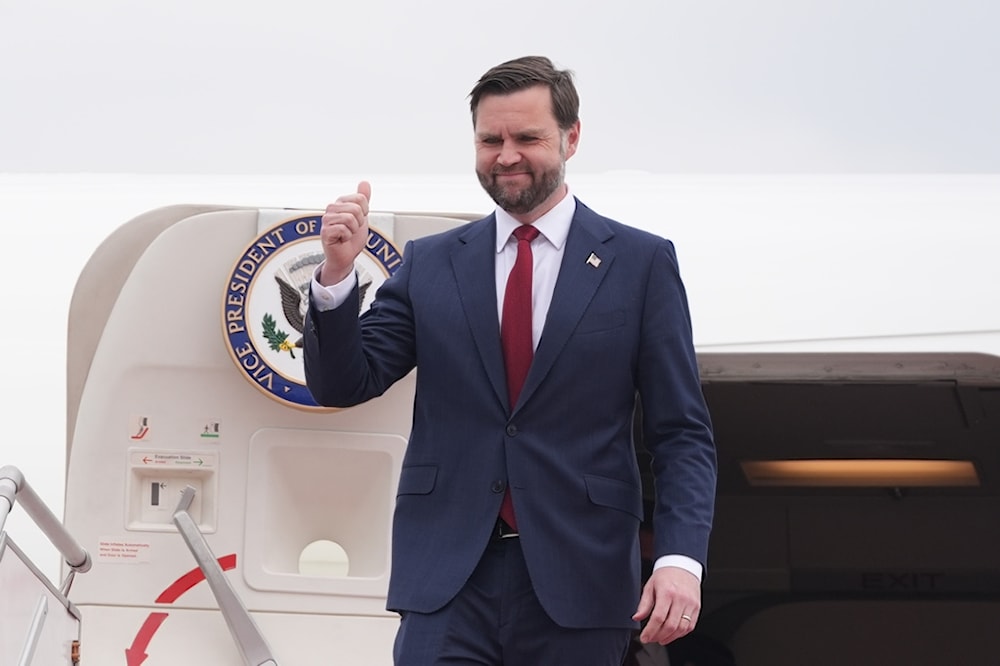
US Vice President JD Vance disembarks from Air Force Two after arriving for talks with Iranian officials in Islamabad, Pakistan, Saturday, April 11, 2026. (AP Photo/Jacquelyn Martin, Pool)
Islamabad is hosting senior United States and Iranian officials on Saturday for high-level negotiations aimed at ending a six-week war initiated by US-Israeli aggression on Iran, although early discussions were clouded by disputes over Lebanon and sanctions.
The talks mark the most senior-level engagement between the two sides since the 1979 Islamic Revolution, and the first face-to-face negotiations since the 2015 nuclear agreement.
The Iranian delegation, led by Parliament Speaker Mohammad Bagher Ghalibaf and Foreign Minister Abbas Araghchi, arrived on Friday, a day earlier, to prepare for the discussions.
The US delegation, led by Vice President JD Vance and including special envoy Steve Witkoff and Jared Kushner, arrived in Islamabad on Saturday aboard two US Air Force aircraft, according to Pakistani sources.
These meetings represent a rare diplomatic opening after years of tensions, following the collapse of the 2015 nuclear deal after Washington withdrew in 2018.
Iran raises conditions over Lebanon and sanctions
Ahead of formal talks, Iran signaled that negotiations could not begin without progress on key issues, including the release of frozen assets and a ceasefire arrangement in Lebanon.
Ghalibaf said Washington had previously indicated willingness to address these conditions, though he stressed that Iran would not proceed without concrete commitments.
"Israel" has continued to insist on excluding Lebanon from the negotiations, while the United States aligned with the Israeli position after the phone call between Benjamin Netanyahu and Donald Trump, attempting to separate the Lebanon war from the Iran talks, even as Tehran maintains that both fronts are interconnected.
The talks will revolve around the 10-point-plan presented by Iran; US officials said they expect progress but warned that negotiations could collapse, raising concerns that Washington is not engaging in good faith or showing real willingness to accept Iran’s stated framework.
Islamabad has implemented an unprecedented security operation, with thousands of paramilitary and army personnel deployed to secure the talks.
Pakistani officials said both delegations arrived with large technical teams, reflecting the complexity of issues under discussion, including economic sanctions, regional wars, and security arrangements.
Despite tensions, Pakistani mediators expressed cautious optimism that the talks could yield at least a framework for further negotiations, though no timeline has been set for an agreement. According to Iranian state TV IRIB, the timing of talks with US delegation will be determined after the situation of preconditions are clarified.
US-Iran talks in Islamabad seen as decisive, says PM Sharif
In a related context yesterday, Pakistan’s Prime Minister Shehbaz Sharif stated that the current phase of Iran-US negotiations is critical, emphasizing that the talks in Islamabad will determine whether a permanent ceasefire can be achieved or negotiations will fail.
US Vice President JD Vance expressed hope that the negotiations would lead to a positive outcome capable of bringing the war to a definitive end.
Speaking before departing Washington for Pakistan, Vance said he was looking forward to engaging in discussions with Iran, adding that he expects the talks in Islamabad to be constructive.
The US-Iran negotiations scheduled for Saturday morning in Islamabad will be focused on reaching a lasting ceasefire agreement between the two sides.


