
Iran says Pakistan remains preferred mediator in Iran-US talks
 2 Min Read
Tehran has reaffirmed its confidence in Pakistan's role as the primary mediator in US negotiations, stating that trust between the two countries remains intact and diplomatic channels are fully functional.
-
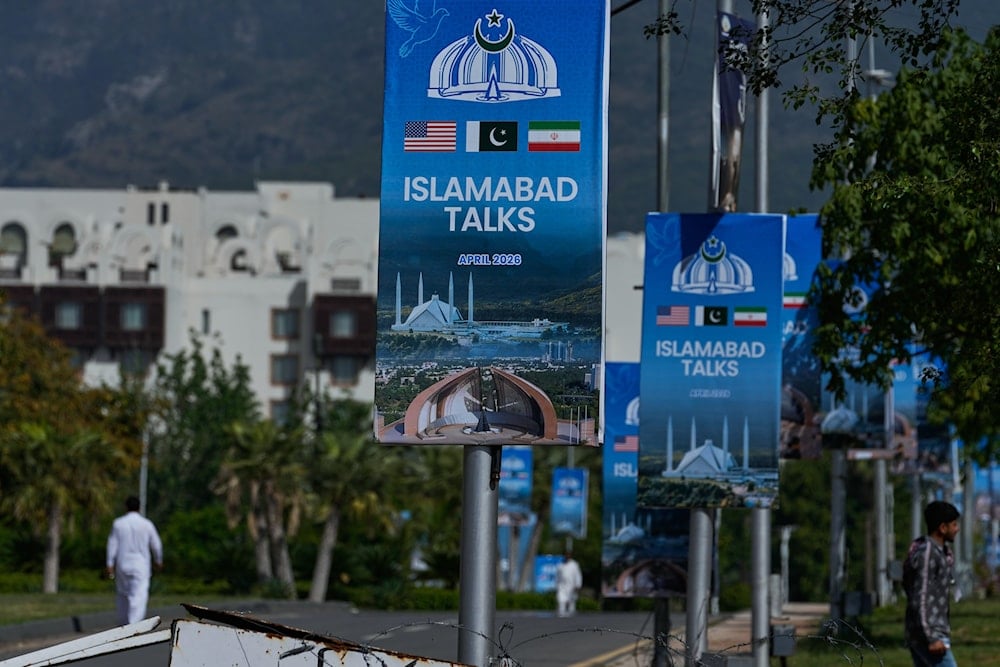
Workers walk past billboards near the Serena Hotel, background, ahead of the second round of negotiations between the US and Iran, in Islamabad, Pakistan, April 20, 2026 (AP)
Iran continues to view Pakistan as its preferred and reliable mediator in negotiations with the United States, with communication channels between Islamabad and Tehran remaining open and continuous at the highest levels, an Iranian diplomatic source has told RIA Novosti.
"Iran continues to consider Islamabad as the preferred and reliable mediator in the negotiations between Iran and the United States," the diplomatic source said.
There is no crisis of trust between Islamabad and Tehran, and communication channels at the highest level remain open and continuous, the source added.
Pakistan sees positive signals in Iran-US mediation efforts
Pakistan does not consider its mediation between Washington and Tehran to be over, and there are currently positive indications, Al Mayadeen's correspondent in Islamabad reported on Wednesday.
Within Pakistani circles, there is talk of positive signals that may yield results within the coming hours, the correspondent added. The Pakistani side is carrying out significant diplomatic efforts between the US and Iran, as well as with Arab countries.
However, so far, no Iranian delegations have arrived in Pakistan, not even at the media level.
As of now, no Iranian preparatory or logistical delegations have arrived, and no coordination steps within the framework of negotiations have been reached, the correspondent said.
Pakistan maintains mediator role
Pakistani officials say they remain engaged with both parties and are working to revive dialogue.
Former diplomat Maleeha Lodhi said the situation remains volatile, warning that both sides are “back on the brink,” while emphasizing the need for renewed diplomatic efforts.
Security remains tight in Islamabad, with road closures and restricted access to central districts continuing despite the stalled talks. Local businesses have reported significant losses, with reduced customer traffic and disruptions to supply chains due to transport restrictions.
The ongoing tensions have compounded Pakistan’s economic challenges, particularly in the energy sector.
The country relies heavily on imports passing through the Strait of Hormuz, including liquefied natural gas and oil supplies, making stability in the waterway critical.
While Pakistani officials continue to push for renewed negotiations, uncertainty surrounds the timeline for any future talks.
Read More: Pakistan pushes to sustain Iran talks as negotiations stall


