
Pakistan pushes to sustain Iran talks as negotiations stall
 2 Min Read
Pakistan seeks to keep US-Iran negotiations alive despite stalled talks, as tensions persist over the US blockade and ceasefire disputes.
-
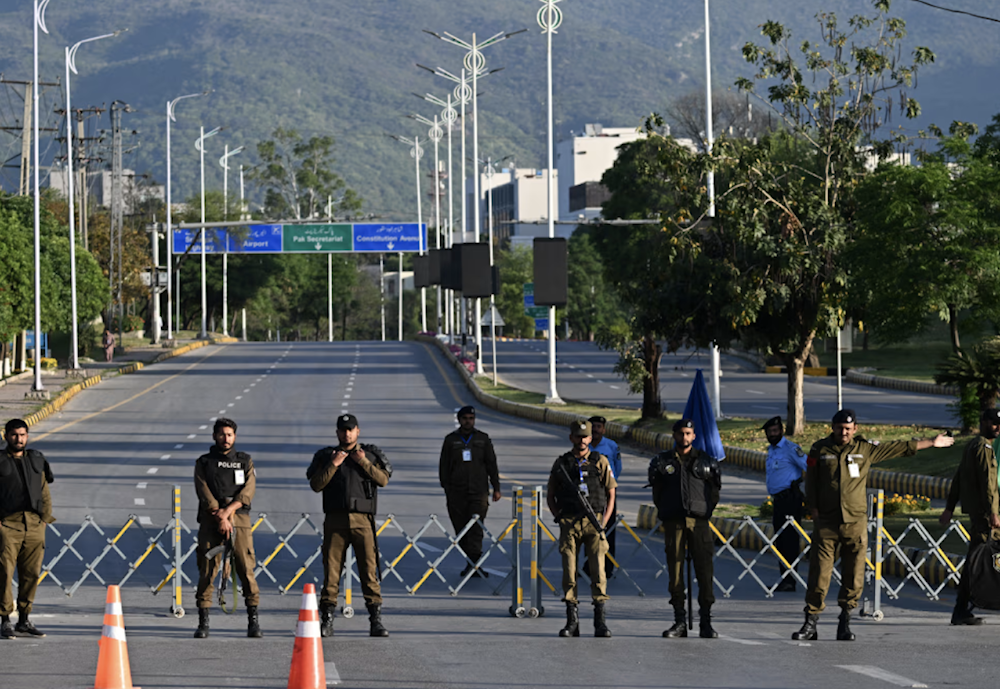
Police officers standing guard in Islamabad, undated. (AFP)
Pakistan is intensifying efforts to preserve negotiations between the United States and Iran after planned talks in the capital stalled, raising concerns over renewed escalation.
Authorities in Islamabad had prepared for a new round of negotiations, imposing heightened security measures and restricting access to key areas of the capital.
Despite expectations, delegations from both sides failed to arrive, dealing a blow to mediation efforts and dampening hopes for a breakthrough agreement.
Iran vows surprises, signals peak military readiness amid US threats
Tasnim News Agency revealed on Tuesday, citing its correspondents, that Tehran has prepared “new surprises” in anticipation of a possible resumption of military confrontation, as the final hours of the agreed ceasefire period approached amid escalating US threats.
The agency reported that the US maritime blockade, coupled with excessive demands from Washington, had prevented the holding of new negotiations. It added that Iran is “fully prepared” for the possibility of renewed war and has readied new surprises for any possible next round of fighting.
Washington has maintained the blockade despite a ceasefire, a move Iran considers a violation of the agreement.
Pakistan maintains mediator role
Pakistani officials say they remain engaged with both parties and are working to revive dialogue.
Former diplomat Maleeha Lodhi said the situation remains volatile, warning that both sides are “back on the brink,” while emphasizing the need for renewed diplomatic efforts.
Security remains tight in Islamabad, with road closures and restricted access to central districts continuing despite the stalled talks. Local businesses have reported significant losses, with reduced customer traffic and disruptions to supply chains due to transport restrictions.
The ongoing tensions have compounded Pakistan’s economic challenges, particularly in the energy sector.
The country relies heavily on imports passing through the Strait of Hormuz, including liquefied natural gas and oil supplies, making stability in the waterway critical.
While Pakistani officials continue to push for renewed negotiations, uncertainty surrounds the timeline for any future talks.


