
Iran serious with diplomacy, prepared to defend itself: Araghchi
 4 Min Read
Iran's foreign minister and Pakistan's interior minister discuss cooperation, regional security, and diplomatic efforts to end the US-Israeli war on Iran.
-
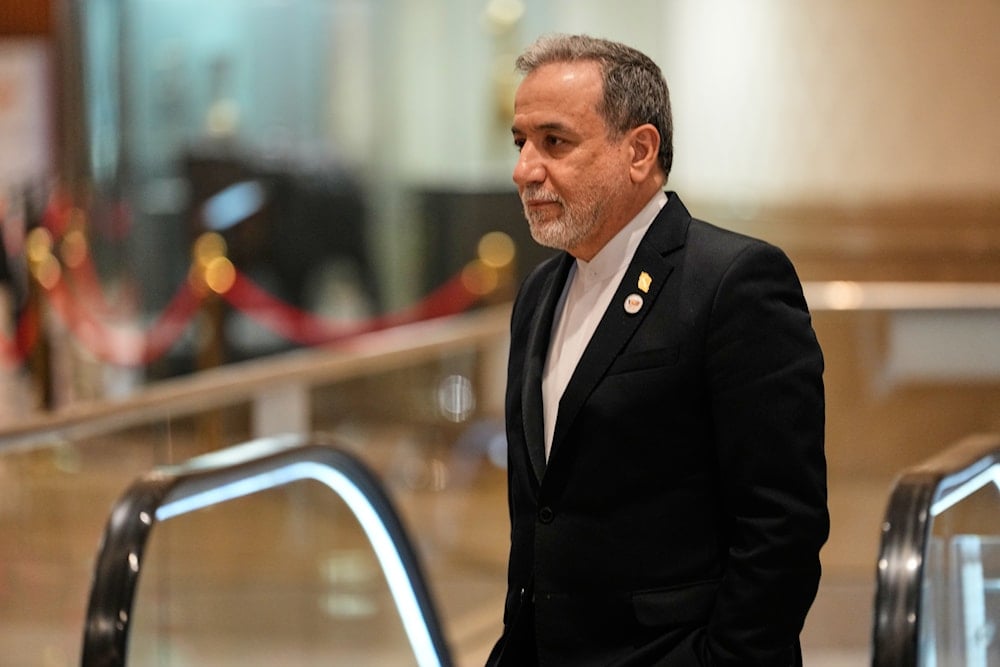
Iranian Foreign Minister Abbas Araghchi arrives for a meeting during the two-day BRICS summit in New Delhi, India, Thursday, May 14, 2026 (AP)
Iranian Foreign Minister Abbas Araghchi held a meeting with Pakistan’s Interior Minister Mohsin Naqvi, during which the two sides discussed bilateral cooperation, regional security, and ongoing efforts to end the US-Israeli war on Iran.
According to the Iranian Foreign Ministry, the two sides discussed “bilateral cooperation between Iran and Pakistan, including in the security and economic fields.” They also exchanged views on “the latest security developments in the region and the ongoing efforts to end the war imposed by the United States and the Israeli entity against Iran.”
During the meeting, Araghchi expressed his appreciation for “the good-faith efforts made by Pakistan to enhance diplomacy and prevent the escalation of tensions.”
US contradictory behaviour serious obstacle to diplomacy
Araghchi directly criticized the United States, stating, “The contradictory and arrogant behaviors and positions of the United States are a serious obstacle in the path of diplomacy.”
He further elaborated on Iran’s historical experience with Washington, saying: “We have previous experiences with the US breaking its promises and betraying diplomacy, but Iran’s entry into the diplomatic process to end the war came from a sense of responsibility, despite severe doubts about the US administration.”
While reaffirming Iran’s commitment to dialogue, Araghchi also issued a warning, saying, “Despite Iran’s seriousness in diplomacy, it will not hesitate to take any action to strengthen its preparations to defend Iran’s national security and interests.”
The Iranian foreign minister also called for holding the aggressor parties "accountable for committing the crime of aggression and other crimes against humanity, such as what happened in the city of Minab – the killing of 170 innocent students and teachers.”
Fundamental disagreements with the US remain
On May 18, a source close to Iran’s negotiating team told Tasnim News Agency that fundamental disagreements with the US on ending the war remain, despite some adjustments in the new US draft. Iran said its demand for compensation from the US for military aggression is “serious and non-negotiable” and that it will not relinquish demands for reparations or the release of frozen assets.
The source added that the US must recognize Iran will not, under any circumstances, link an end to the war to nuclear-related commitments, calling such attempts “political pretexts that violate the rights of the Iranian people.” While reiterating it has never sought nuclear weapons, Iran stressed that any linkage is “illogical and unacceptable,” with a wide gap remaining over the mechanism for returning frozen funds.
Iran submits revised 14-point ceasefire proposal to US via Pakistan
Iran submitted on Monday a revised 14-point proposal to end the ongoing war to the United States through the Pakistani mediator, following Washington’s response to an earlier Iranian plan, according to Tasnim News Agency.
Citing a source close to the negotiating team, the Iranian agency Tasnim reported that Tehran handed the new proposal to the Pakistani intermediary, who is expected to forward it to US officials.
Meanwhile, a Pakistani source told Reuters, "We don't have much time," when asked if it would take time to close the gaps between Washington and Tehran, claiming that both countries "keep changing their goalposts."
The source added that the US recently sent a reply to Iran’s previous 14-point text, prompting Tehran to reformulate its proposal with certain amendments. The revised plan, still made up of 14 points, was then resubmitted to the Pakistani mediator for delivery to Washington.


