
US-Israeli aggression threatening energy security, not Iran: Baghaei
 3 Min Read
Spokesperson for Iran's Foreign Ministry Esmail Baghaei slams the United States and "Israel" for accusing Iran of destabilizing energy markets, placing the blame on their aggression instead.
-
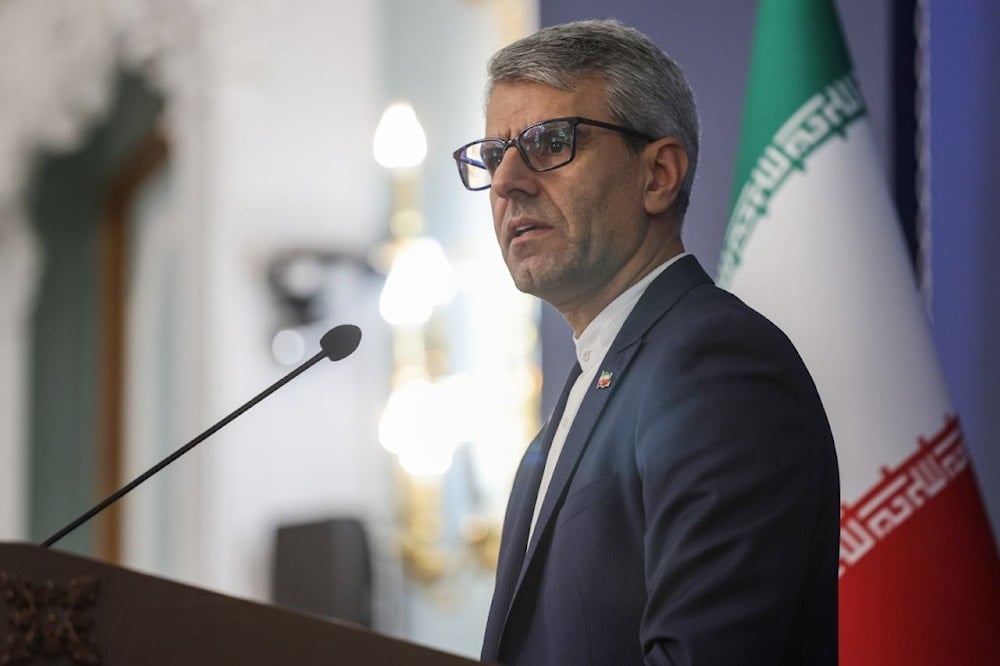
Iranian Foreign Minister Spokesperson Esmail Baghaei gives remarks at the Iranian Foreign Ministry's headquarters in Tehran, Iran, undated. (Iranian Foreign Ministry Website)
Iran’s Foreign Ministry spokesperson Esmail Baghaei said that the blame falls on the unjustified US–Israeli aggression for increased insecurity along key global energy routes.
Responding to US accusations that Tehran is destabilizing the global energy market, Baghaei said the claims are part of another emerging narrative to justify an unlawful war under the pretext of protecting peace and stabilizing energy supplies.
He added that the United States and “Israel” are responsible for creating crises and conflicts, before later presenting themselves as actors restoring stability and defending peace, an approach he said further escalates tensions.
Baghaei also argued that what the US and "Israel's" reckless militarized policies have disrupted diplomatic progress that was previously advancing in the region.
Iran plans new Hormuz traffic mechanism
In terms of global maritime security, Iran has prepared a professional mechanism to manage maritime traffic in the Strait of Hormuz, according to Ebrahim Azizi, head of the Iranian parliament’s National Security and Foreign Policy Committee.
In a post on X, Azizi said the initiative is being developed “within the framework of national sovereignty and the guarantee of international trade security,” and will be unveiled soon.
Iran, within the framework of its national sovereignty and the guarantee of international trade security, has prepared a professional mechanism to manage traffic in the Strait of Hormuz along a designated route, which will be unveiled soon.
— ابراهیم عزیزی (@Ebrahimazizi33) May 16, 2026
In this process, only commercial…
The proposal suggests the establishment of a designated route through the strategic waterway, and that only commercial vessels and parties cooperating with Iran would be allowed to benefit from the system.
According to Azizi’s statement, the mechanism would include the collection of fees for “specialized services” provided to vessels using the route.
He added that the system would not be open to operators of the so-called “Project Freedom,” referring to US President Donald Trump's declared naval operation mission that was suspended 48 hours after it was announced on May 4th.
Reports of European contact with IRGC Navy
Separately, Iranian state television reported that European parties have engaged in discussions with naval forces of the Islamic Revolution Guard Corps (IRGC), following the transit of East Asian vessels in the region.
The report also quoted European sailors who praised Iran’s maritime conduct, saying that “respect for maritime navigation laws by the Iranian navy is excellent.”
They further indicated ongoing coordination with the IRGC to secure protection for their vessels operating in the area.
Read more: China's position on Iran, Hormuz remains unchanged: Exclusive


