
Iran summons German envoy after Merz calls for IRGC 'terror' listing
 3 Min Read
Iran summons German Ambassador Axel Dittmann after Chancellor Friedrich Merz's remarks about the IRGC, which Tehran slammed as provocative.
-
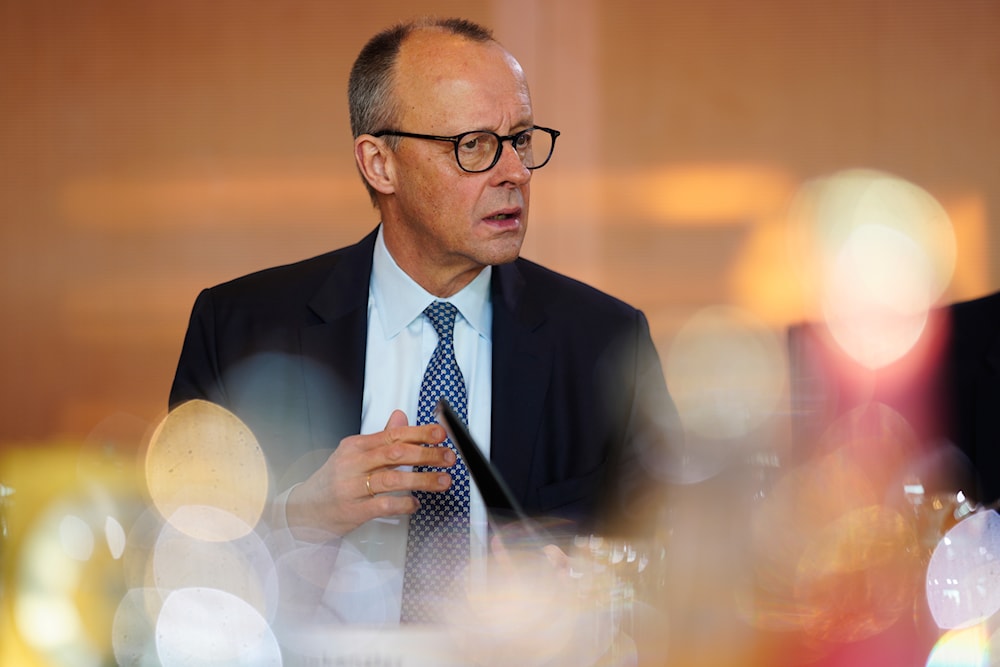
German Chancellor Friedrich Merz is leading the cabinet meeting at the chancellery in Berlin, Germany, Wednesday, Jan. 7, 2026 (AP)
The Iranian Foreign Ministry summoned German Ambassador Axel Dittmann following remarks by German Chancellor Friedrich Merz concerning the Islamic Revolutionary Guard Corps (IRGC) and the Iranian government, Jamaran reported on Thursday.
The summoning came after Merz, during a joint press conference with Romanian Prime Minister Ilie Bolojan on Wednesday, criticized EU member states for not supporting the designation of the IRGC as a terrorist organization. He also stated that Germany intends to increase pressure on Iran.
Merz said, "There are states in the EU that are not prepared to consider the IRGC a terrorist organization," adding that Berlin aims to exert "maximum pressure" on Iran.
The IRGC is a formal branch of Iran’s armed forces, and Iranian officials have repeatedly condemned efforts by Western governments to apply such labels to state institutions.
EU designates Iran's IRGC as 'terrorist' organization
European Union foreign ministers on Thursday agreed to designate Iran’s Islamic Revolution Guard Corps (IRGC) as a “terrorist organisation,” in light of the ongoing riots in the country, the bloc’s top diplomat confirmed.
“Repression cannot go unanswered,” EU foreign policy chief Kaja Kallas wrote on X. “Any regime that kills thousands of its own people is working toward its own demise.”
European Commission President Ursula von der Leyen welcomed the move, describing the designation as “long overdue.” In a post on X, she said labeling the IRGC a terrorist organization was “justified” for what she described as a “regime that crushes its own people’s protests in blood,” a designation that the Israeli regime did not seem to warrant after killing over 71,000 people in Gaza, nor did the US regime for killing innocent people, bystanders, and protesters.
Kaja Kallas’ claims remain unsubstantiated, resting on political assertion rather than verified evidence. Coming from an EU that shielded Israelis during the Gaza genocide, Europe appears to be lacking the moral credibility to pass judgment.
That credibility collapsed further when German Chancellor Friedrich Merz called Israeli aggression on Iran, “This is the dirty work Israel is doing for all of us, exposing the bloc’s selective outrage and double standards, now echoed by Kaja Kallas.
Diplomatic risks, fear of retaliation
Despite the shift, concerns remain within the bloc over potential fallout. European diplomats have warned that designating the IRGC could provoke retaliation, including the detention of European nationals.
Several EU states maintain embassies in Tehran and rely on engagement with Iranian security-linked institutions to manage sensitive issues. One EU official noted to Politico that IRGC-affiliated bodies often serve as unavoidable interlocutors, making a complete severance difficult in practice.
Iran has repeatedly rejected Western accusations, maintaining that recent unrest began as peaceful protests driven by economic grievances but was later hijacked by organized, foreign-backed networks. Iranian officials insist security forces acted to restore order amid coordinated attacks on public infrastructure, emergency services, and religious sites.
Read more: Iran summons Italian envoy over IRGC 'terror listing' remarks


