
Iran urges UN to reject US draft on Strait of Hormuz
 3 Min Read
Iran urged UN member states to reject a US-backed draft resolution on the Strait of Hormuz, arguing it distorts realities and legitimizes Washington’s actions in the Gulf.
-
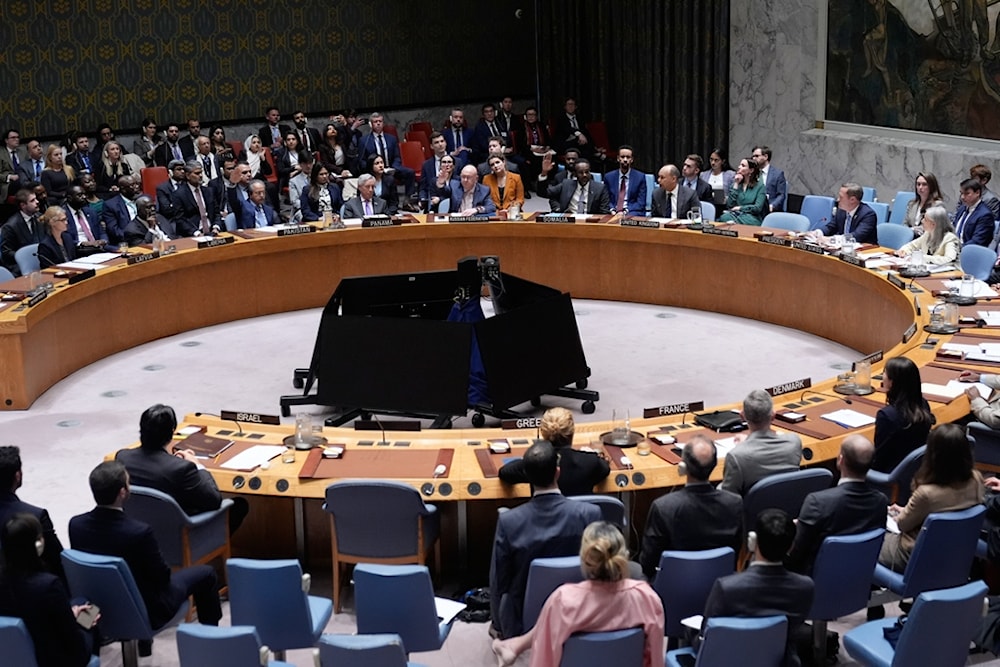
Members of the Security Council vote on a Russian sponsored resolution at United Nations headquarters, Wednesday, March 11, 2026. (AP Photo/Seth Wenig)
Iran has intensified diplomatic efforts at the United Nations to block a US-backed resolution on the Strait of Hormuz, warning that Washington and “Israel” are attempting to use the Security Council to legitimize their aggression against the Islamic Republic.
In letters addressed to Antonio Guterres, Chinese Foreign Minister Wang Yi, Beijing’s UN envoy Fu Cong, and UN member states, Iranian Foreign Minister Abbas Araghchi denounced the US-Bahraini draft resolution as “one-sided and provocative,” arguing that it deliberately ignores the US-Israeli war launched against Iran earlier this year.
“The current situation is directly and exclusively the result of their unjustified and illegal war of aggression,” Araghchi wrote.
Hormuz power struggle
The proposed resolution, backed by several Gulf states aligned with the United States, calls for measures framed around “freedom of navigation” and maritime security. However, Tehran says the initiative is aimed at shielding unlawful US military actions in the Gulf and providing political cover for Washington’s blockade and attacks on Iranian-linked vessels.
Iranian officials have repeatedly condemned the US naval blockade imposed in April as an “act of war” and a violation of international law. Tehran argues that Washington cannot simultaneously impose an economic and naval siege on Iran while accusing the Islamic Republic of destabilizing regional shipping lanes.
Araghchi further warned against efforts to invoke Chapter VII of the UN Charter, saying the move could open the door to sanctions or military enforcement measures against Iran under the pretext of maritime security. “The international community should not allow the Security Council to be abused by aggressors or turned into a tool for legitimizing illegal actions,” he stated.
Strait tensions deepen further
The latest conflict comes after months of escalation that began following US and Israeli attacks on Iranian territory on February 28, an assault that Tehran says triggered its subsequent military and maritime response. Iran has since used its strategic position along the Strait to exert pressure on Washington and its allies, while continuing to permit passage for certain countries viewed as non-hostile, including China, Russia, India, and Pakistan.
Tehran has also said that disruptions in shipping are tied less to Iranian actions than to the climate of war created by Washington and Tel Aviv. Araghchi recently stated that “Strait of Hormuz is not closed. Ships hesitate because insurers fear the war of choice you initiated, not Iran.”
Iran maintains that maritime traffic through the Strait will fully normalize once the war ends permanently and the sanctions and blockade imposed by the United States are lifted. “The path to stability lies in the United States adhering to international law, not in misusing the Security Council in ways that further complicate the situation,” Araghchi wrote.
The US-led initiative is expected to face strong resistance from both China and Russia, which have criticized previous Western-backed resolutions for omitting any reference to the US-Israeli attacks that sparked the war.
Read more: Pezeshkian reflects on 'cordial' meeting with Sayyed Mojtaba Khamenei


