
Russia, China veto Hormuz Bahrain security resolution at UN
 4 Min Read
Russia and China vetoed a Bahrain-backed UN resolution on the Strait of Hormuz, arguing it could legitimize further aggression on Iran by authorizing military action while ignoring the US-Israeli attacks that triggered the war.
-
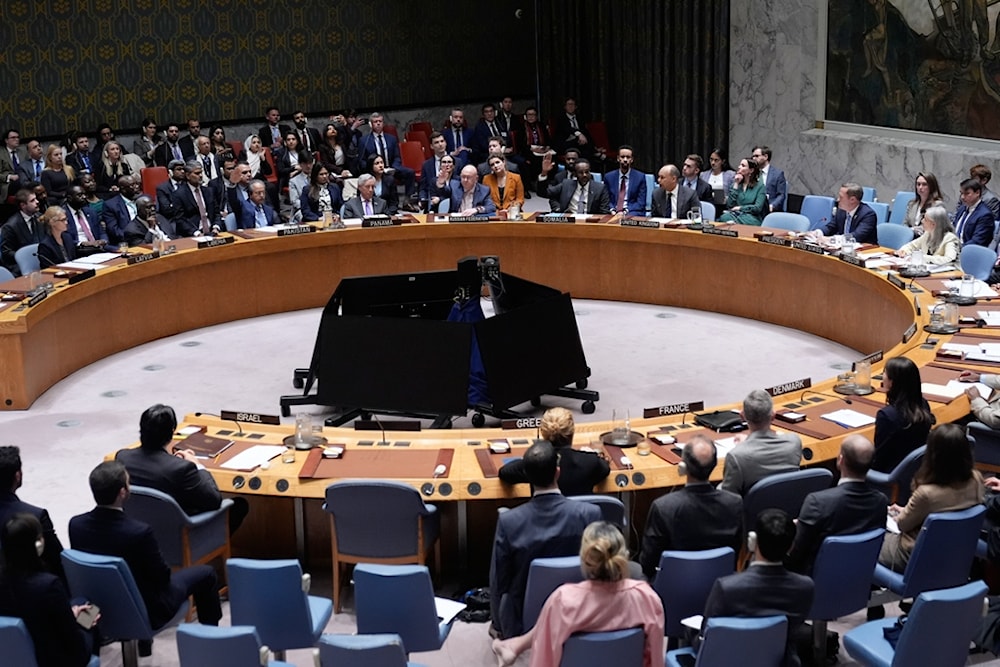
Members of the Security Council vote on a Russian sponsored resolution at United Nations headquarters, Wednesday, March 11, 2026. (AP Photo/Seth Wenig)
Russia and China on Monday vetoed a Bahrain-drafted resolution at the United Nations Security Council on the Strait of Hormuz, blocking a proposal that had undergone days of revisions amid warnings it could escalate the war on Iran and legitimize further aggressions on the country.
The draft secured 11 votes in favor, while Colombia and Pakistan abstained, but ultimately failed due to opposition from Moscow and Beijing, confirming earlier expectations that the text would face decisive resistance.
The proposed resolution would authorize member states to use "all defensive means necessary and commensurate with the circumstances, in the Strait of Hormuz and adjacent waters, including within the territorial waters of littoral States within or bordering the Strait of Hormuz, to secure transit passage and to deter attempts to close, obstruct or otherwise interfere with international navigation through the Strait of Hormuz."
It would also demand that Iran immediately cease all attacks on merchant and commercial vessels in the strait.
The document would also welcome "diplomatic efforts that advance the prospects for a durable peace, and encouraging Member States in the region to strengthen dialogue and consultations in this regard," the text of the draft resolution reads.
From “use of force” to veto
The failed vote follows several days of intense negotiations and delays at the Security Council.
On April 3, a planned vote was postponed amid deep divisions, with earlier versions of the draft explicitly allowing the “use of force” in the Strait—language that Russia and China strongly opposed.
Subsequent revisions attempted to soften the wording, replacing explicit authorization with references to “defensive” measures. However, Russian officials warned that such phrasing has historically been used to justify offensive operations.
“We can discuss the draft itself, which Bahrain has submitted and which has been discussed for several days in the UN Security Council ... But ... there are a lot of problems ... Of course, such a decision by the Security Council is unlikely to add ... chances of a peaceful settlement,” Russian Foreign Minister Sergey Lavrov said.
Lavrov further cautioned that the resolution could be used to justify escalation rather than resolve the crisis.
“It [the resolution] was probably planned with the best of intentions, but either it is being used to disrupt the still very fragile chances of negotiations, or it is being used to legitimize the aggression against Iran in hindsight,” he said.
War rooted in US-Israeli attacks on Iran
The push for the resolution came in the context of the ongoing war that began with US-Israeli attacks on Iran, which triggered Tehran’s retaliatory measures, including actions affecting maritime traffic through the Strait of Hormuz.
Despite this sequence, critics argued that the draft resolution focused exclusively on Iran’s response while omitting the attacks that initiated the war.
Lavrov rejected efforts to treat the Strait crisis as a standalone issue, linking it directly to the broader war.
“And when President Trump says, I think he said it the day before yesterday... As soon as we finish the fighting, he explains that almost all the tasks there have been solved... As soon as we end the fighting, shipping in the Strait of Hormuz will resume on a normal basis. But this means that the problem is not that you just need to demand from Iran, you need to stop the fighting, and then the regime of the strait will be restored,” he said.
Deep divisions persist
Even after Bahrain removed explicit references to force in the latest draft, major powers remained divided over its implications.
Russia and China maintained that the resolution could open the door to expanded foreign military presence in and around the Strait under the pretext of protecting navigation, while other states pushed for immediate measures to secure shipping routes.
France also expressed skepticism over the feasibility of military solutions, warning that any attempt to “liberate” the Strait could prolong the war and endanger maritime traffic.
Read more: Strait of Hormuz, Bab al-Mandab will be blocked if US escalates: Iran


