
Iran–US messages continue via Pakistani mediation: Report
 3 Min Read
Backchannel communication persists following the first round of talks, with a Pakistani intermediary relaying messages between both sides after negotiations stalled without significant progress.
-
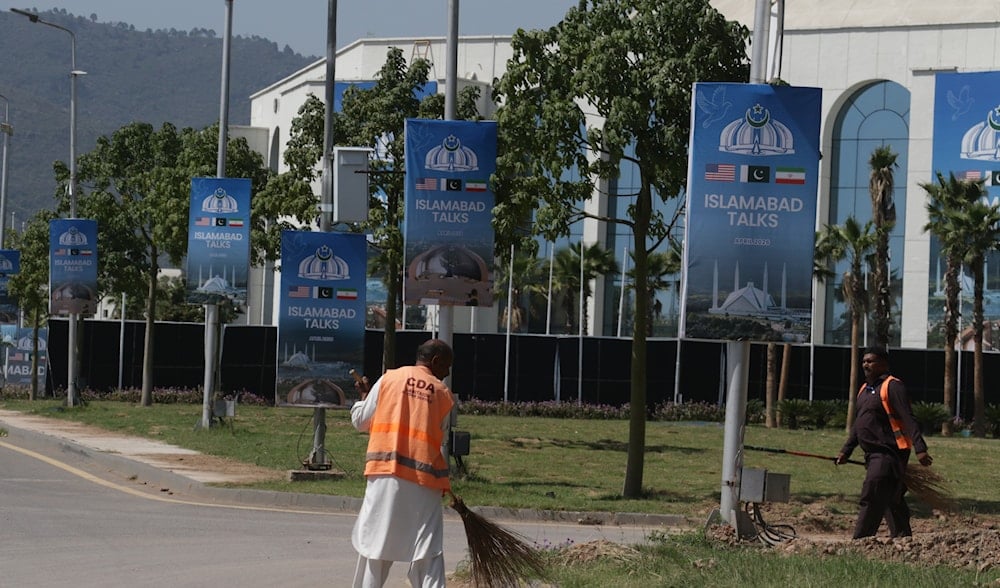
A worker cleans a road next to billboards of the US-Iran talks ahead of the second round of the US-Iran officials' talks, in Islamabad, April 19, 2026. (AP)
The exchange of messages between Iran and the United States has continued in recent days through a Pakistani intermediary, following the conclusion of the first round of negotiations, according to exclusive information reported by Tasnim News Agency.
This exchange follows the same framework as the initial round, which ended without notable results amid excessive American demands.
The Iranian agency also indicated that the Pakistani mediator has, in recent days, resumed relaying messages between the two sides after negotiations had stalled.
Iran withholds second-round US talks until blockade lifted
Iran has not yet decided whether to send a delegation for negotiations with the United States, Tasnim News Agency reported on Sunday, as tensions remain high following Washington’s continued breach of the ceasefire.
According to the report, Tehran has made clear that talks with the United States will not take place as long as the maritime blockade remains in force, effectively linking any diplomatic engagement to the removal of coercive measures.
Communication between the two sides is ongoing through a Pakistani intermediary, suggesting that backchannel contacts remain active despite the absence of formal negotiations.
Talks collapse
The current deadlock follows an earlier round of talks held in Islamabad in mid-April, which lasted several hours but ended without agreement after excessive US demands.
The US delegation was led by Vice President JD Vance, while Iran was represented by a senior delegation headed by Parliament Speaker Mohammad Bagher Ghalibaf and Foreign Minister Abbas Araghchi.
Tehran rejected “maximalist” US demands, arguing that Washington sought sweeping concessions, particularly on nuclear and regional issues, without offering credible guarantees or meaningful sanctions relief in return.
Ceasefire contradiction
The breakdown was further compounded by Washington’s decision to impose a naval blockade on April 12, even as negotiations were ongoing.
Iran had initially moved to reopen the waterway under a ceasefire understanding before reversing course in response to continued US interference with maritime traffic.
Washington maintained its blockade, announced on April 12, even as it publicly framed the Strait as “reopened,” a contradiction that has fueled tensions.
Iran has argued that engaging in talks under such conditions would amount to negotiating under pressure, insisting that meaningful dialogue requires the lifting of restrictions on its shipping and ports.
Read more: Vance pulls out of Iran talks after last-minute security issues


