
Iran views hostile rhetoric as threat, vows to not leave it unanswered
 4 Min Read
Iran’s Army Chief Amir Hatami warns that hostile rhetoric will not go unanswered, reaffirming the country’s readiness to defend national security.
-
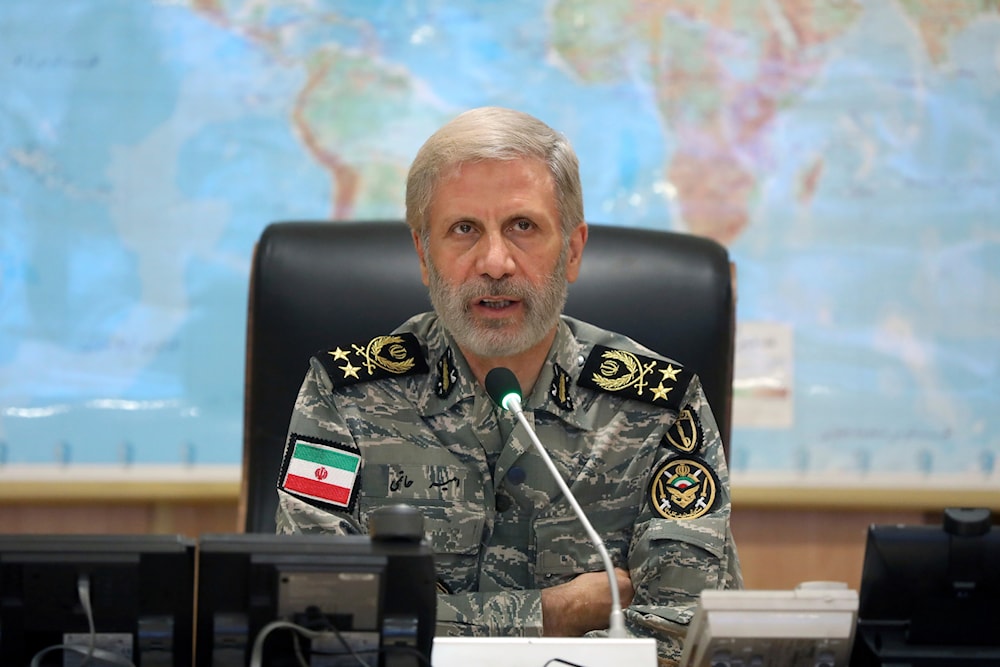
Iran's Army Commander-in-Chief, Major General Amir Hatami, attends a video call with top commanders, in Zolfaghar central headquarters, in this photo released on June 23, 2025 (Iranian Army Press Service via AP)
Iran has reiterated its determination to respond decisively to any threats or hostile rhetoric targeting the country, as the country’s Army Commander-in-Chief, Major General Amir Hatami, emphasized the strategic and security challenges facing Tehran.
Hatami delivered a speech to students of the 86th course at the Army’s Command and Staff University, stressing that Tehran views the escalation of hostile rhetoric as a threat to national security.
“Any enemy miscalculation will be met with a more decisive response, and the hands of any aggressor would be cut off,” Hatami warned.
'New world order' behind instability, insecurity
Hatami described the current international situation as one aimed at “forming a new world order,” generating instability and insecurity at global, regional, and national levels. He referenced the collapse of the Ottoman Empire and the establishment of "Israel" as actions orchestrated by global powers in West Asia.
Citing remarks by former US President Joe Biden following Operation Al-Aqsa Flood, Hatami said the statement that "Israel" would have to be created if it did not exist explains the United States’ ongoing support for the Israeli regime.
Highlighting Iran’s strategic position and the principles of the Islamic Revolution, the Army chief noted that enemies seek to undermine the country’s capacities and target its sources of national power.
“The nation and the Leader of the Islamic Revolution are the two fundamental pillars of Iran’s power, and enemies harbor the greatest hostility toward these two pillars,” Hatami said.
The Army chief also reflected on the lessons from the 12-day war on Iran, stressing that the readiness of Iran’s armed forces—including the Army, IRGC, and law enforcement units—is higher than ever. He reaffirmed the Army’s commitment to defending the country’s independence, territorial integrity, and political system.
Hatami praises conduct of Iranian people
On domestic developments, Hatami praised the Iranian people’s conduct during protests against economic hardship, noting that citizens separated themselves from rioters and rejected foreign agendas. He described the public’s dignity, patience, and insight as a source of national pride.
Iranian officials continue to stress a clear distinction between peaceful protest, which they stress is a protected right under the law, and organized acts of rioting, sabotage, or violence. Authorities have reaffirmed that dialogue will continue with citizens raising legitimate economic concerns, while firm legal and security measures will be enforced against those seeking to exploit hardship to undermine public order and national stability amid ongoing economic strain.
Read more: Iran rejects US domination as Armed Forces affirm high readiness
Iran executes Mossad spy
In a separate development, the Iranian Judiciary executed Ali Ardestani, convicted of espionage for "Israel’s" Mossad intelligence service. The Supreme Court confirmed the death sentence after all legal procedures were completed.
According to court documents, Ardestani was recruited by Mossad via online communications and carried out missions in exchange for financial rewards and promises of a British visa. The convict provided photographs, information on targeted subjects, and met in person with Mossad contacts inside Iran. Ardestani was arrested while performing a mission for the Israeli intelligence agency, and during interrogation, he admitted his motive was financial gain.
Iran has acted swiftly against espionage threats, arresting and prosecuting individuals involved in intelligence activities for adversaries, including at least 12 spies, since the war on Iran ended in late June.
Read more: Iran police say paid rioters hijaking economic protests


