
Iran vows 'destructive' retaliation if energy facilities attacked
 3 Min Read
Tehran warns that targeting its energy infrastructure could prompt a destructive response and disrupt maritime traffic in the Gulf region.
-
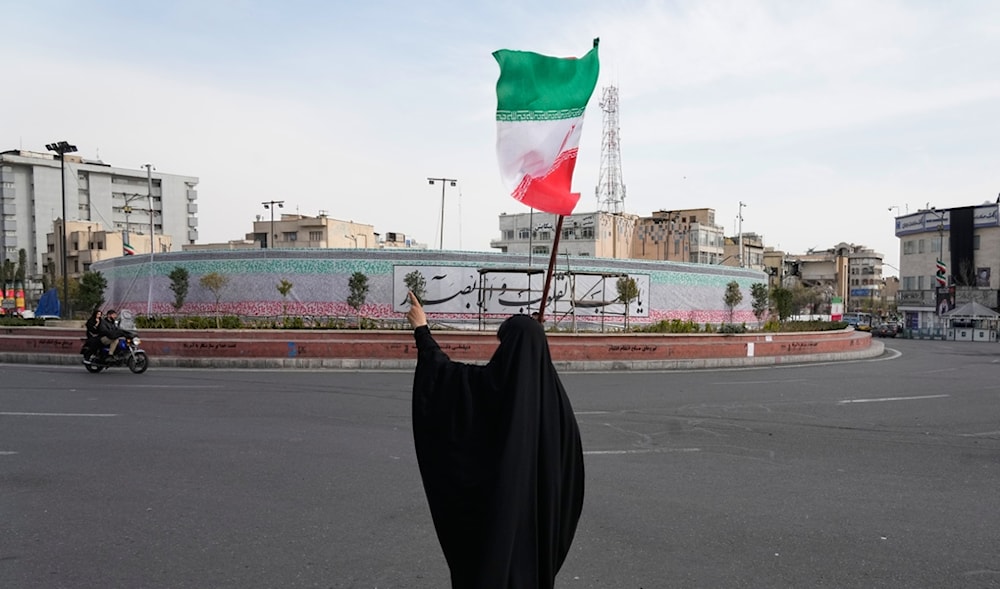
A woman waves an Iranian flag during a campaign in support of the government at the Enqelab-e-Eslami, or Islamic Revolution, square in downtown Tehran, Iran, Sunday, March 22, 2026. (AP)
Any aggression targeting power plants or energy infrastructure will be met with a “decisive and destructive” response, Iran's Defense Council stated on Monday, asserting a heightened level of deterrence as the joint US-Israeli war escalates.
In a statement, the council stressed its firm commitment to responding to any attack on energy facilities.
It noted that, as part of a retaliatory response to the strike on Iran’s Natanz nuclear facilities, the Israeli Dimona nuclear complex was also targeted, reinforcing its posture of immediate and reciprocal action.
Strait of Hormuz accessible through coordination
The council further warned that any attempt by an adversary to target Iran’s coasts or islands would trigger the deployment of naval mines across maritime routes in the Gulf. Such a move, it said, would effectively transform the broader Gulf region into a situation comparable to the Strait of Hormuz, with lasting disruptions to navigation.
The statement also emphasized that passage through the Strait of Hormuz for non-hostile countries would only be possible through coordination with Iran, underscoring the country’s strategic leverage over one of the world’s most critical maritime chokepoints.
On Sunday, Foreign Minister Abbas Araghchi and the Foreign Ministry issued parallel statements that placed full responsibility for shipping disruptions on the United States and the Israeli entity.
In a post on X on Sunday evening, Araghchi rejected the framing that Iran had unilaterally disrupted one of the world's most critical maritime corridors.
- Strait of Hormuz is not closed. Ships hesitate because insurers fear the war of choice you initiated—not Iran
— Seyed Abbas Araghchi (@araghchi) March 22, 2026
- No insurer—and no Iranian—will be swayed by more threats. Try respect
- Freedom of Navigation cannot exist without Freedom of Trade. Respect both—or expect neither
"The Strait of Hormuz is not closed," he wrote. "Ships hesitate because insurers fear the war of choice you initiated — not Iran." The foreign minister was referring to the surge in war risk premiums imposed by international insurers in response to the ongoing US-Israeli aggression against Iran, which has cast a shadow over commercial shipping in the Gulf region.
The Foreign Ministry further affirmed that Iran has historically upheld freedom of navigation across the Gulf, the Strait of Hormuz, and the Sea of Oman, but stressed that these principles cannot function in isolation from respect for the sovereignty and sovereign rights of the coastal state, a position rooted in the United Nations Convention on the Law of the Sea.
Read more: Iran air defense engage F15 near Hormuz Strait, investigation ongoing


