
Iran war forces Gulf states to rethink regional strategy
 2 Min Read
The Iran war has forced Gulf states to reassess regional alliances, exposing the limits of US protection, the resilience of Tehran, and the growing push for a more independent Gulf foreign policy.
-
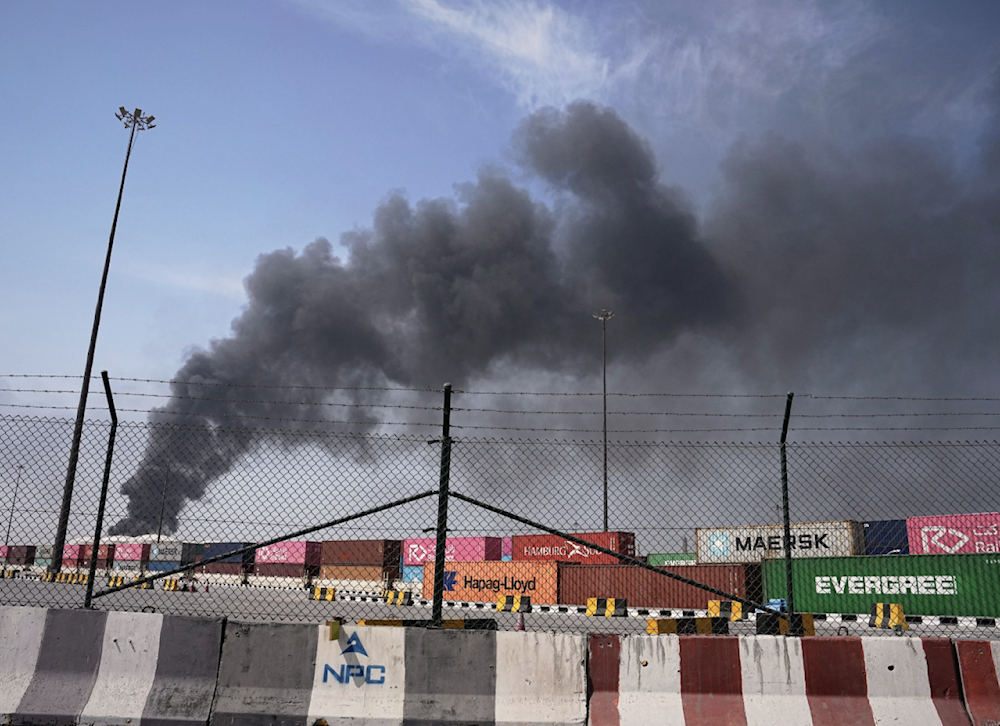
Smoke rises after an Iranian drone attack in the port area of Dubai, United Arab Emirates, March 1, 2026. (AP)
The American-Israeli war on Iran has triggered a major strategic reassessment across Gulf Cooperation Council (GCC) states, exposing the limits of US protection and reinforcing Tehran’s ability to impose new regional deterrence equations.
Despite sustaining an aggressive bombing campaign, Iran managed to maintain pressure throughout the war, disrupting global energy markets by tightening control over the Strait of Hormuz and launching missile and drone attacks on strategic sites across the Gulf.
For Gulf states, the war revealed a difficult reality: decades of reliance on US military protection and billions spent on Western defense systems failed to shield critical infrastructure from retaliation.
Iran’s resilience reshapes Gulf calculations
Regional governments increasingly view Iran’s ability to survive the war as a demonstration of strategic resilience rather than defeat.
At the same time, Tehran’s regional allies, Hezbollah in Lebanon and Ansar Allah in Yemen, maintained operations on multiple fronts, while Iranian support in Iraq remained largely intact.
These developments are expected to push Gulf states toward a more pragmatic approach centered on diplomacy and de-escalation with Tehran rather than direct confrontation.
The Chinese-brokered Saudi-Iranian rapprochement reached in 2023 now appears more important than ever as Gulf capitals seek mechanisms to prevent broader regional instability.
Confidence in Washington weakened
The war also deepened Gulf skepticism toward Washington after several GCC states were on the receiving end of retaliatory strikes on US bases.
Although Gulf governments are expected to maintain military cooperation with the United States, they are also likely to pursue more independent foreign policies and diversify partnerships with China and Russia.
At the same time, ongoing Israeli aggression on Gaza and Lebanon has further complicated normalization efforts between Gulf states and “Israel”, particularly amid growing public opposition across the Arab world.
For Gulf governments, the war reinforced a central lesson: Iran remains a geopolitical reality, while dependence on external powers alone can no longer guarantee regional security.


