
Iraq assumes OIC presidency as 52nd session opens in Baghdad
 3 Min Read
Iraq assumes the OIC chairmanship as its 52nd Council of Foreign Ministers session opens in Baghdad, with Palestine and regional cooperation topping the agenda.
-
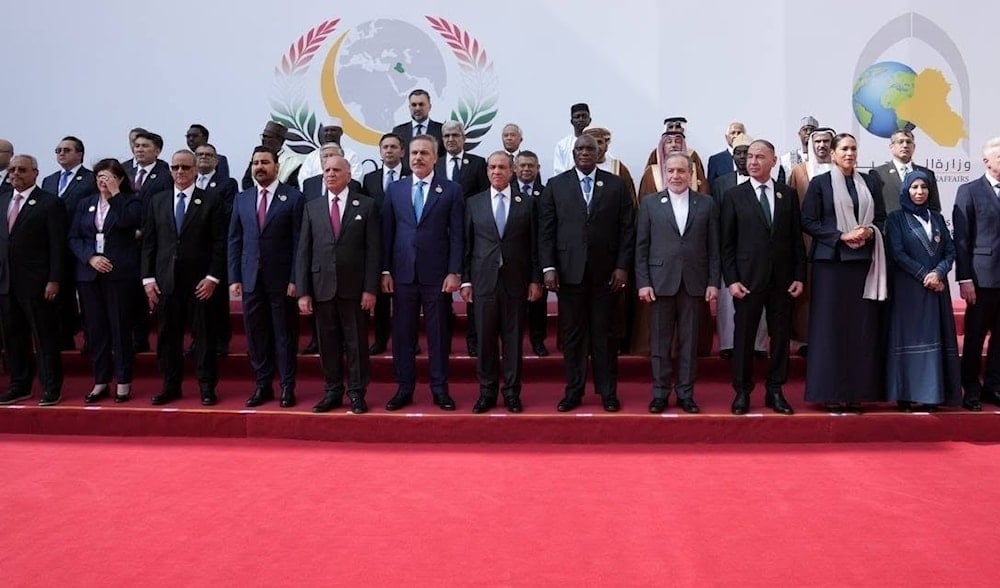
Arab and Muslim foreign ministers and officials line up for the commemorative photo for the 52nd session of the Organization of Islamic Cooperation in Baghdad, Iraq, October 17, 2026 (INA)
Iraq formally assumed the one-year presidency of the Organization of Islamic Cooperation (OIC) Council of Foreign Ministers on Saturday, succeeding Türkiye, as the council’s 52nd session opened in Baghdad.
The two-day meeting is being held under the slogan “Dialogue and Solidarity Are Two Essential Pillars for Promoting Peace and Sustainable Development.” Iraqi Prime Minister Ali Faleh al-Zaidi inaugurated the session.
In his opening address, al-Zaidi proposed an Iraqi initiative to connect energy networks, railways, transport systems, and digital communications across Islamic countries.
"We welcome you to Baghdad, a crossroads of civilizations and a city of knowledge, thought, and history, which opens its doors today to its brothers from the Islamic world,” al-Zaidi said in his address.
He added, "We congratulate the Secretary-General of the Organization of Islamic Cooperation on assuming his duties, and we wish him success in leading the Organization’s work and in advancing projects that serve the interests of our Islamic nation."
The proposal also calls for developing digital payment systems and strengthening links between industrial zones. He urged greater freedom of trade and protection of international transit routes to facilitate transportation and support stability and prosperity.
Palestine tops agenda as 57 OIC members attend
Al-Zaidi reaffirmed Iraq’s position on Palestine, calling it “the core of the conflict in the region.” He stressed that securing justice for the Palestinian people and guaranteeing their rights are fundamental to regional security and stability.
The Iraqi prime minister also called for stronger joint efforts to protect the interests of peoples across the region, emphasizing mutual understanding and acceptance of differences as key to reducing disputes. He thanked Pakistan for its efforts to defuse crises.
Conference spokesperson Ambassador Hasanein Kamel said the session had drawn representatives from all 57 OIC member states, alongside United Nations Deputy Secretary-General Amina Mohammed, representatives of the Arab League and more than 40 international organizations.
He additionally told the Iraqi News Agency (INA) that the session was held "under the theme: ‘Dialogue and Solidarity: Fundamental Pillars for Promoting Peace and Sustainable Development.’”
The Palestinian issue is the leading political item on the agenda, Kamel said, with discussions set to cover displacement, settlement expansion, and attempts to Judaize al-Quds.
Other topics include regional crises, counterterrorism, Islamophobia, and economic cooperation. The agenda also encompasses water and food security, investment, intra-Islamic trade, electricity interconnection, and energy cooperation, according to Kamel.
The meetings will also address development issues and ways to strengthen coordination among Islamic countries across economic and security-related fields.
The meeting coincides with the arrival of Iranian Foreign Minister Abbas Araghchi in Baghdad, where he is leading a diplomatic delegation to participate in the OIC session.
Araghchi is scheduled to hold bilateral meetings with several participating foreign ministers on the sidelines of the conference to discuss regional developments and strengthen dialogue and coordination.


