
Iraqi groups condemn US-Saudi attacks, demand foreign troop withdrawal
 4 Min Read
Iraqi political and armed groups condemn joint US-Saudi strikes, demanding an end to foreign military presence and stronger air defenses.
-
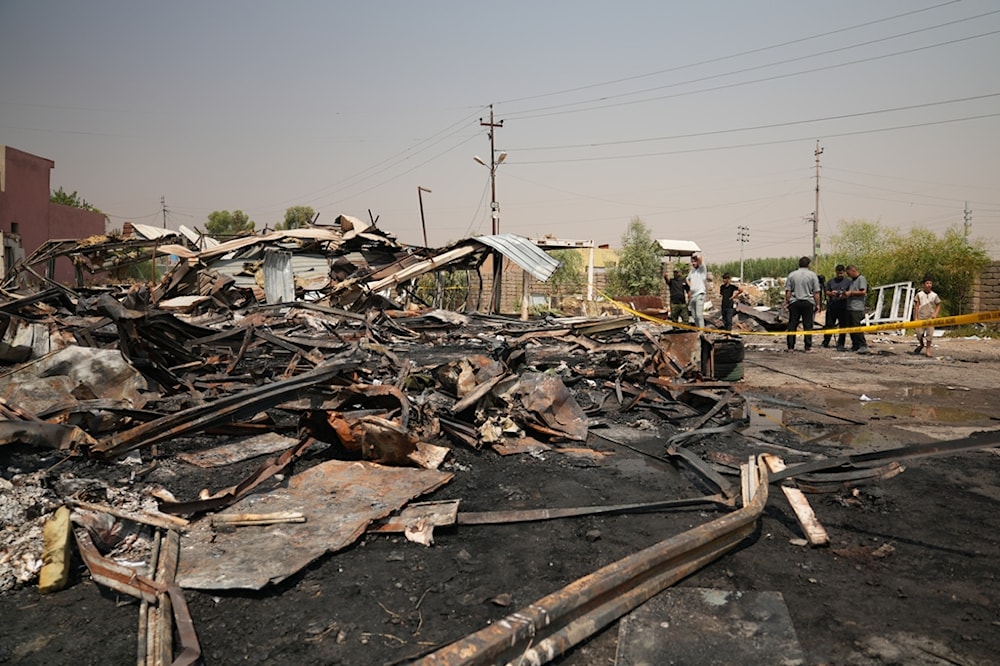
Iraqis inspect damaged structures at the site of an airstrike on a Popular Mobilization Forces base in Mosul, Iraq, Wednesday, July 29, 2026. (AP Photo/Farid Abdulwahed)
Iraqi political and armed resistance groups have condemned joint US-Saudi airstrikes against targets across Iraq, calling for the withdrawal of foreign forces and urging Baghdad to strengthen the country's air defense capabilities.
The condemnations came after the Popular Mobilization Forces (PMF) said at least 20 of its members were martyred and 32 others wounded in the attacks, which it said targeted official PMF headquarters in several Iraqi provinces.
The PMF said that the attacks were a "joint US-Saudi aggression" and said the casualty figures were preliminary.
Saudi Arabia's Defense Ministry said its armed forces, in coordination with the US Central Command, had carried out "limited precision strikes against targets belonging to militias present on Iraqi territory." Riyadh said the attacks were linked to strikes targeting oil facilities in Saudi Arabia.
The Islamic Resistance in Iraq rejected Saudi Arabia's accusations that it had attacked Saudi territory. It stated that the claims were "an attempt to justify Riyadh's inability to respond to damaging Yemeni strikes against infrastructure in the Eastern Province and Riyadh, amid concerns over the nature of a potential future Yemeni response."
Al-Nujaba calls for expulsion of foreign forces
The Islamic Resistance Movement, Harakat al-Nujaba, strongly condemned the "criminal US-Saudi aggression" and called on the Iraqi government to take immediate action.
In a statement issued on July 29, the group said the continued presence of US military bases and facilities in Iraq posed a serious threat to the country's security and stability.
It called for the expulsion of US forces and an end to collaboration with foreign powers, while also demanding that all forms of cooperation with Saudi Arabia be halted.
The group further criticized the Iraqi government for its silence in response to the attacks, urging authorities to move beyond statements of condemnation and take concrete measures.
Among its demands, the al-Nujaba movement called for the immediate acquisition of advanced air defense systems to protect Iraqi airspace and sovereignty. It also called for those responsible for leaving Iraqi airspace vulnerable to attacks to be held accountable.
The movement said it would not allow Iraqi territory to be violated without consequences.
Al-Khazali urges completion of foreign troop withdrawal
The secretary-general of Asa'ib Ahl al-Haq, Sheikh Qais al-Khazali, also condemned the attack and warned of its potentially serious consequences.
Al-Khazali stressed the need to complete the withdrawal of foreign forces from Iraqi territory and called for the country's defensive capabilities to be strengthened.
His comments came amid growing calls from Iraqi groups for Baghdad to reassess the presence of foreign military forces and improve its ability to protect the country's airspace.
Dawa Party calls for firm response
The Islamic Dawa Party said that the "Saudi-US aggression" as a blatant violation of Iraq's sovereignty and territorial integrity.
The party rejected allegations that strikes against Saudi Arabia had been launched from Iraqi territory, saying that such claims should be supported by conclusive evidence and documentation.
It warned that the attacks would only deepen regional tensions, fuel further war and undermine efforts aimed at reducing escalation.
The party called on the Iraqi government to adopt a "firm national position" commensurate with the seriousness of the attack and to use all available means to safeguard Iraq's sovereignty.
It also urged Baghdad to hold those responsible for the attack accountable, while stressing that Iraq retains the right to use all legitimate means to defend its sovereignty and deter any further aggression.
Read more: Why did the US and Saudi Arabia target Iraq? A deep dive


