
'Israel' to face UNGA with deepening global isolation
 5 Min Read
"Israel" faces growing international isolation over its war on Gaza and expanding illegal settlements, amid sanctions, declining US favorability, and tensions with Trump.
-
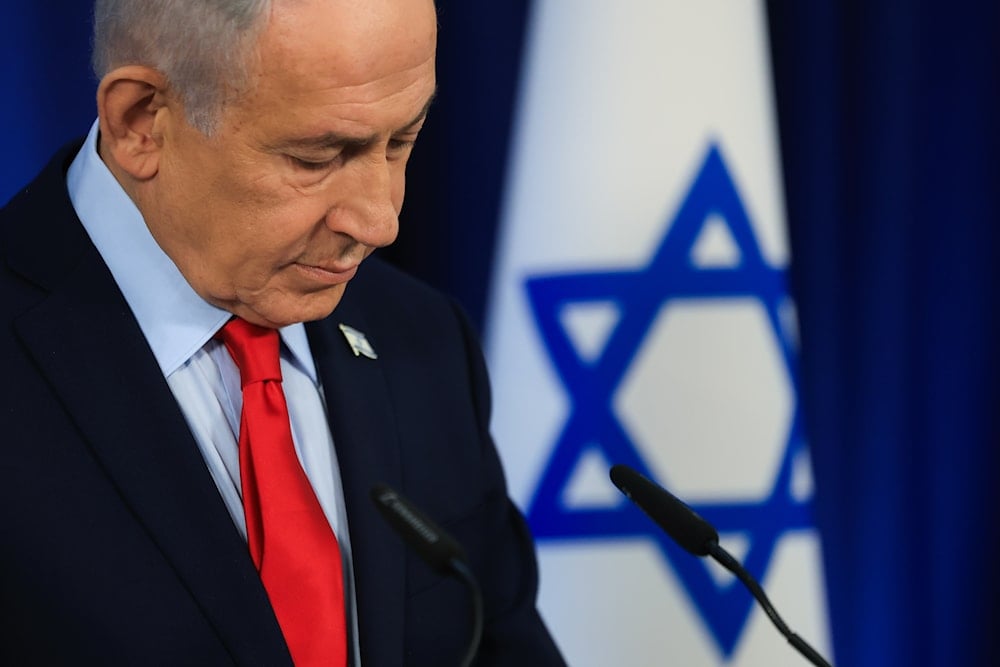
Israeli Prime Minister Benjamin Netanyahu holds a press conference in al-Quds, Occupied Palestine, March 19, 2026. (AP)
"Israel" is facing deepening international isolation over its war on Gaza and its expansion of settlements in the West Bank, with sanctions imposed this month by a dozen countries, declining favorability in the United States, and strain in relations between Benjamin Netanyahu and Donald Trump, The Washington Post reported on Thursday.
The isolation, particularly at the United Nations, came as no surprise, according to The Washington Post. At last year’s General Assembly, more than 100 diplomats from more than 50 countries walked out of the assembly hall in an unusually strong rebuke as Netanyahu entered, although he drew some cheers as well.
According to WP, Netanyahu often thrives under such pressure; according to the source material, messaging to voters at home and allies abroad a stalwartness in the face of an increasingly unsympathetic world.
In recent months, "Israel’s" international standing, which took a downturn amid criticism of its war on Gaza, has continued to erode. International outrage has grown over the expansion of illegal settlements in the West Bank and violence committed by Israeli settlers there.
A dozen countries announce sanctions on illegal settlements
This month, a dozen countries including Britain, Canada and France announced sanctions on Israeli settlements. When announcing the measures, British Foreign Secretary Edward Miliband said he felt “a deep sense of shame about what has unfolded in Palestine under the eyes of the international community” in both Gaza and the West Bank.
“Israel finds itself in a dire situation,” Jesse Weinberg, a researcher focused on US-Middle East relations at the Institute for National Security Studies told The Washington Post.
Although the two countries and their militaries remain close, Weinberg said that “American support for Israel is at an all-time nadir, and he can’t get away from that.” He added: “There is this growing consensus amongst Israel’s friends in the US that if things continue as they are now, Israel will be in significant trouble.”
Netanyahu’s domestic standing and his relationship with Trump
As the election nears, Netanyahu’s critics at home blame him and hard-liners in his government for tarnishing "Israel’s" international reputation, while many supporters see him as a hardened leader capable of handling multiple conflicts even under international pressure.
Trump and Netanyahu have clashed over the direction of the Israeli war on Gaza since Trump’s election in 2024, and more recently the two have been at odds over the war on Iran as it drags on, plunging global energy markets into crisis.
As of Wednesday, Netanyahu was not planning to meet Trump during his New York visit. The Israeli prime minister is set to arrive in New York on Thursday and return to "Israel" without spending the night. Weinberg said Netanyahu generally spends longer in the United States when he comes for the UN General Assembly.
“The fact that it’s just a single-day trip, and the fact that Trump is not going to meet with him, underscores the problematic situation that Israel and Israel’s leadership find themselves in at this moment,” Weinberg said.
Netanyahu’s UN address and messaging strategy
“Shame on you,” Netanyahu said in a video statement posted to X before he departed "Israel" on Tuesday. “I’m coming to the UN, I’m going to tell the truth about our heroic soldiers, and I’m going to tell the truth about you.”
Such exchanges can bolster Netanyahu’s image in "Israel", said Michael Oren, former Israeli ambassador to the US, who explained that “Netanyahu always tries to time his speech at the UN so it hits prime-time Israeli television. It’s a big issue for him.”
Netanyahu has spoken before the General Assembly as prime minister more than a dozen times, and over the years he has leveraged the appearance for political and strategic messaging.
Declining Support in the US and Europe, and Cultural Boycotts
In the US, "Israel" is facing declining favorability. According to a Pew poll published in April, 60 percent of American adults have an unfavorable view of Israel, up from 53 percent the year before. And among US lawmakers there are growing calls for dramatic changes to US military aid to Israel.
In Europe, Spain and Italy began calls for restricting arms sales to "Israel" in the days and weeks following the Oct. 7, 2023, attacks. Last year, a wave of nations including France and the United Kingdom recognized the state of Palestine.
Tensions are also playing out in cultural spaces. Ireland announced it will boycott the Eurovision Song Contest next year for a second year in a row over Israeli participation. The Netherlands, Iceland, Slovenia and Spain also skipped the 2026 competition.
Isolation measures are boosting Netanyahu domestically
So far, measures intended to isolate "Israel" on the global stage have not only failed to have much impact, but in the immediate term, they appear to be boosting Netanyahu, said Aaron David Miller, who worked as a Middle East negotiator through several Democratic and Republican administrations before joining the Washington-based Carnegie Endowment for International Peace.
“For Netanyahu, the more isolation the better,” Miller said. Measures like the sanctions targeting settlements, he said, are used by Israel’s extreme right to justify the country’s adversarial policies.
“The fact is, the isolation plays into the narrative Netanyahu is trying to create, which is: It’s us versus them,” Miller said.


