
Israeli ambassador says Lebanon talks at risk of collapse
 3 Min Read
Israeli officials said the ongoing Lebanon talks risk collapse, insisting Hezbollah's disarmament and "Iran's withdrawal from Lebanon" must remain central to negotiations.
-
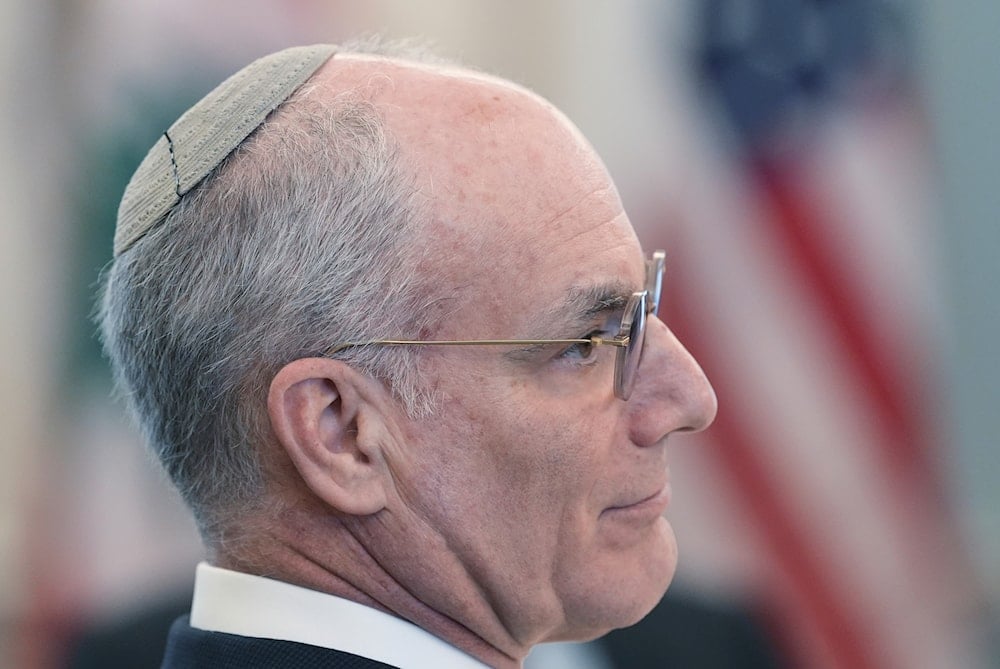
Israeli Ambassador to the United States Yechiel Leiter listens during a meeting at the State Department in Washington, on April 14, 2026. (AP)
Israeli officials voiced growing concern over the trajectory of direct negotiations with Lebanon, warning that the talks could unravel in the aftermath of the Iran-United States memorandum of agreement.
Speaking during the fifth round of US-mediated talks in Washington on Tuesday, Israeli Ambassador to the United States Yechiel Leiter described the process as being in a "train wreck," arguing that the objectives that had guided previous rounds of negotiations were at risk of being abandoned.
"This is the fifth round of talks, and I have to say, we are in a train wreck," Leiter said, adding that earlier discussions had been based on a shared understanding aimed at advancing so-called security arrangements between Lebanon and the Israeli occupation.
According to Leiter, previous rounds were conducted under the assumption that Iran's ties with Lebanon would be reduced and that Hezbollah's role would be a central issue in the negotiations.
"The premise was that Iran is out, and that the central discussion is about Lebanon and Hezbollah, not about how much Iran can restrain Hezbollah," the Israeli diplomat said, after Tehran forced a ceasefire in Lebanon in its negotiations with Washington.
Israel links talks to Iran-US understanding
The Israeli ambassador also commented on ongoing Iran-US engagement, claiming that Tel Aviv supports a potential deal while insisting that any agreement should involve constraints on the Resistance Front. It is worth noting that the MoU, signed between Iran and the US, made no mention of Iran's regional alliances. Instead, the understanding called for an immediate ceasefire on all fronts in the region.
"Israel very much hopes the MOU will succeed," Leiter claimed, demanding that a final agreement should address Iran's nuclear program, missile capabilities, and regional influence.
Read more: Maximum Danger: How 'Israel' can sabotage the Iran-US deal
Meanwhile, Israeli Foreign Minister Gideon Sa'ar echoed similar positions during a conference in occupied al-Quds, describing Hezbollah as the primary challenge facing both Lebanon and the Israeli occupation.
Sa'ar repeats accusations against Hezbollah
"The problem was and remains Hezbollah, for Lebanon and for Israel," Sa'ar said, claiming that the movement represented an obstacle to Lebanon's independence and to Israeli security.
Sa'ar also rejected accusations that "Israel" has violated Lebanese sovereignty through its repeated military aggression and occupation of Lebanese territory, instead blaming Hezbollah and Iran for undermining Lebanese sovereignty.
The latest round of negotiations comes amid ongoing direct talks between Lebanese and Israeli representatives in Washington. Hezbollah has previously condemned the negotiations, stressing that no positive outcome can emerge from "reconciliatory negotiations" whose foundations and objectives are aimed at securing submission and surrender.
Read more: Israeli battalion cmdr. linked to Hind Rajab case killed in Lebanon


