
Israeli attacks continue across southern Lebanon despite framework
 3 Min Read
Israeli explosions, fires, and airstrikes continue across southern Lebanon, raising questions over the US-brokered framework and de-escalation assurances.
-
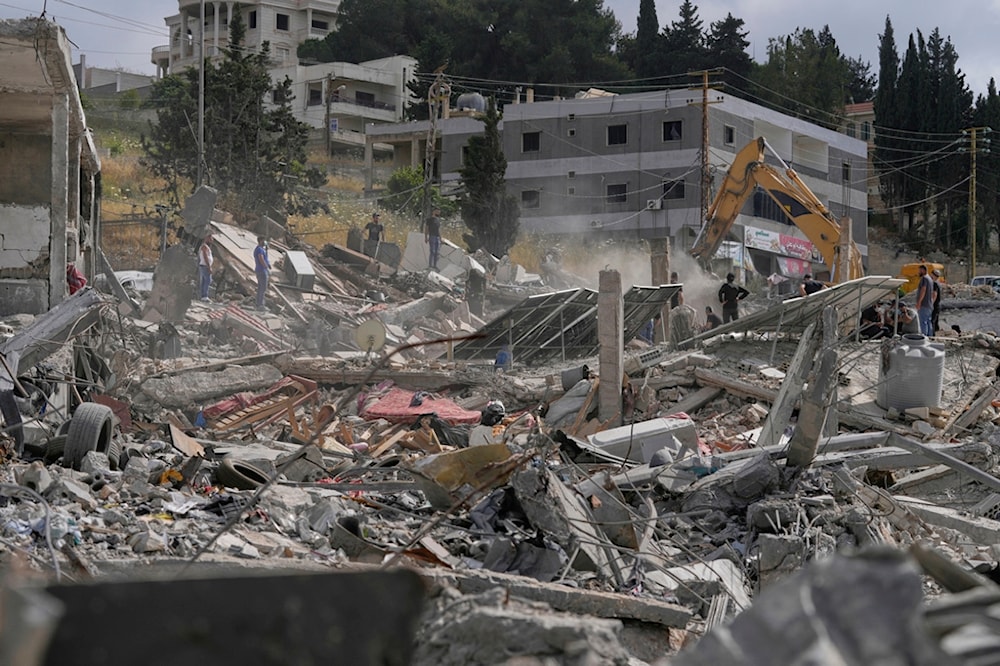
People returning to their village use an excavator as they search for dead bodies under the wreckage of a destroyed house in Beer al-Salassel, south Lebanon, Monday, June 15, 2026 (AP)
Despite the US-brokered framework signed between Lebanon's government and the Israeli occupation, Israeli explosions continued to echo across southern Lebanon.
Blasts were heard from Markaba, al-Qantara, Taybeh, Kfar Tebnit, Haddatha, al-Tiri, Taloussa, Aitaroun's outskirts, and areas between Majdal Zoun and al-Mansouri, with the shockwaves reaching villages far from the locations where the explosions were carried out.
Israeli occupation forces also set fire to homes and farmland in Qantara and Beit Yahoun, while explosive devices and sound grenades were dropped in areas including Ali al-Taher Heights and al-Mansouri.
Israeli aircraft also shelled the town of Shebaa and fired flares over Zawtar al-Sharqiyah.
Zawtar residents return to 60% of homes
Residents of the town of Zawtar al-Gharbiyah in the Nabatieh district continued to enter their town for the second consecutive day on Wednesday, following the deployment of the Lebanese army on Tuesday as part of an approved mechanism to coordinate the return of civilians.
Al Mayadeen's correspondent reported that large numbers of residents had gathered at the town's entrance, where the Lebanese army was managing and organizing the entry process.
The mayor of Zawtar al-Gharbiyah, Abd Ezzedine, described the town in an interview with Al Mayadeen as "effectively stricken by disaster," adding that "the scale of destruction exceeded expectations."
Lebanese Army deploy in Zawtar despite Israeli obstruction
The Lebanese Army has completed its deployment in the southern town of Zawtar al-Gharbiya in the Nabatieh district, following the withdrawal of Israeli forces from the area.
The deployment falls within the framework of "pilot zones" agreed upon during negotiations in Washington. The army is conducting engineering surveys ahead of residents' return.
Prime Minister Nawaf Salam arrived in the town alongside the army's deployment and placed the Lebanese flag in the main square.
On July 21, the Lebanese Army Command announced that military units had deployed inside the town "after carrying out the necessary communication and coordination with the Military Coordination Group for Lebanon (MCG4L)."
The Army Command said Israeli forces opened fire near Lebanese military units as they carried out the deployment, putting soldiers at risk and obstructing the mission. The army also said its units had not entered Zawtar al-Sharqiya.


