
Israeli forces resume work on Sufa 53 road in southern Quneitra
 4 Min Read
Sufa 53 is considered one of the main routes linking several areas of the southern Quneitra countryside.
-
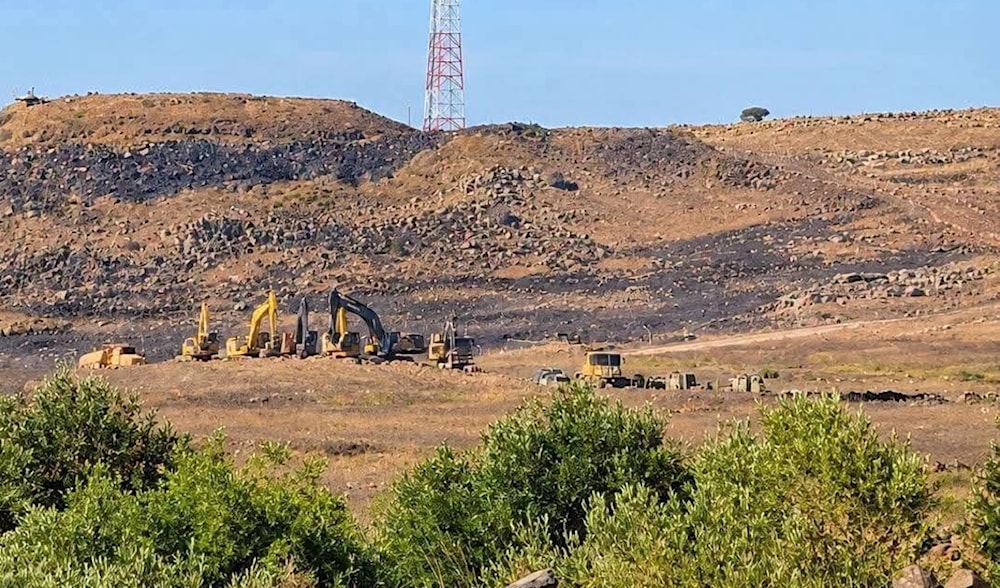
Israeli heavy machinery operate inside Syrian territory to continue the Sufa 53 project in Quneitra, Syria, October 4, 2026 (Social media)
Israeli forces have resumed work on the Sufa 53 road from the direction of al-Asha village in the southern Quneitra countryside, the Syrian Observatory for Human Rights reported on Sunday amid ongoing Israeli military activities in the area.
The "Sufa 53" project involves the construction of a road along the "separation line" in the border region and is considered one of the main routes linking several areas of the southern Quneitra countryside. The resumption of work on the road coincides with repeated Israeli activities in the surrounding area.
The project is a military engineering undertaking carried out by Israeli forces inside Israeli-occupied Syrian territory.
It involves cutting an approximately eight-meter-wide military road reinforced with earthen berms and trenches running parallel to the occupied Syrian Golan Heights, with an estimated length of about 70 kilometers. The fortifications have damaged agricultural land and pastures that serve as the primary source of income for residents.
Southern Syria is experiencing continuous Israeli escalation through repeated ground incursions, artillery strikes, and arrests of civilians, amid ongoing tension in the Quneitra and Daraa countrysides and residents' fears that these movements will expand and affect their daily lives.
SOHR documents 11 Israeli incursions, 8 shellings in 1 week
Between September 18 and 24, the Syrian Observatory for Human Rights (SOHR) documented 11 ground incursions and eight incidents of shelling, including checkpoints, raids, and assaults on locals on Syrian land.
The reported operations took place across the countryside of Quneitra, Daraa, and western Damascus, affecting populated areas, agricultural land, and locations near the "separation line". The activity also included temporary checkpoints, searches, civilian detentions, and repeated military and aerial movements.
Around nine Israeli military vehicles raided Wadi al-Raqad in western Daraa on September 18, where the force conducted a search operation and detained a shepherd. The same day, artillery fire struck the outskirts of Beit Jinn in the western Damascus countryside and al-Hamidiyah in Quneitra.
Two days later, two tanks and two military vehicles raided Wadi al-Raqad, and seven military vehicles advanced toward Tal Abu Qabis in Quneitra before withdrawing through the Ain Ziwan–Kodana route. Artillery also struck the Bir Ajam woodland and agricultural areas around al-Rafid, while military aircraft flew over northern Daraa.
On September 21, around 10 Israeli military vehicles entered the Quneitra countryside and reached the Rasm al-Halabi junction, where a temporary checkpoint was established. A shepherd was detained west of Sayda al-Hanout, while the outskirts of Jamla and Abdeen in the Yarmouk Basin area of western Daraa came under artillery and heavy machine-gun fire.
The following day, an Israeli patrol entered the vicinity of al-Rafid near a United Nations position, where troops searched civilian homes. Three military vehicles entered western Sayda al-Hanout from the occupied Syrian Golan through the Tal Abu al-Ghaithar gate, and another patrol established a temporary checkpoint on a bridge in Wadi al-Raqad between Daraa and Quneitra. Artillery fire was reported around Jamla and Abdeen and against agricultural land near al-Hamidiyah.
On September 23, a patrol entered Umm al-Azam in Quneitra and set up a temporary checkpoint, stopping and searching passersby. In Wadi al-Raqad, three military vehicles advanced toward the river bridge, and forces opened fire and launched three RPG rounds toward uninhabited land before withdrawing.
A patrol assaulted a shepherd from al-Asha village on September 24 during an incursion near the village in southern Quneitra.


