
Israeli media warn of ‘greatest catastrophe’ under Netanyahu
 3 Min Read
Israeli daily Maariv warns Netanyahu is leading the Israeli occupation toward its “greatest catastrophe”, citing deep internal divisions and worsening conditions across multiple fronts.
-
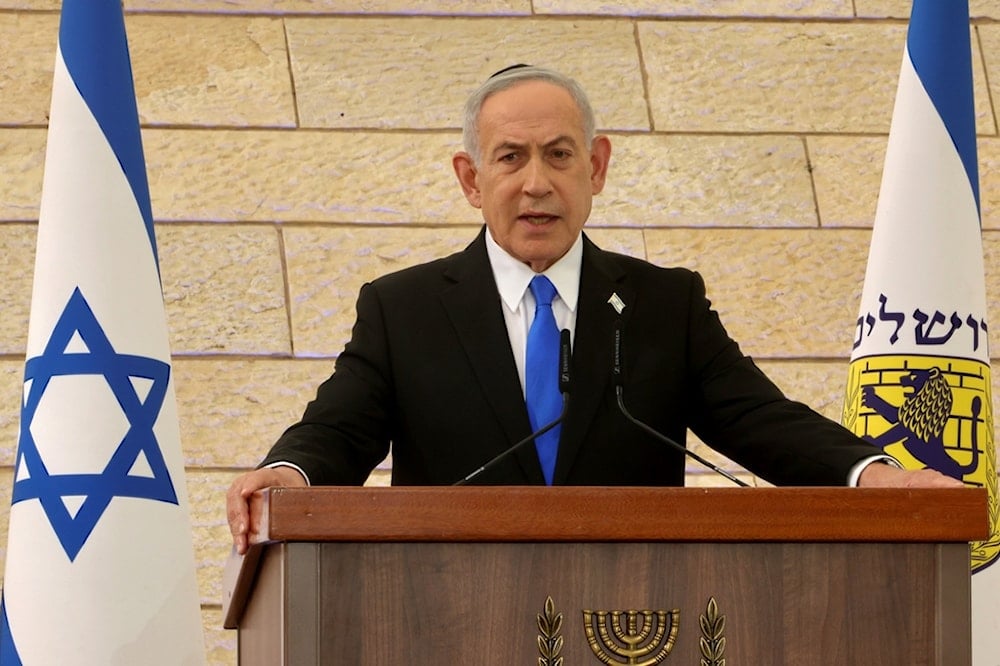
Israeli Prime Minister Benjamin Netanyahu attends an event in occupied al-Quds, occupied Palestine, on April 20, 2026. (AP)
Israeli daily Maariv has issued a sharp critique of Prime Minister Benjamin Netanyahu, warning that his leadership is bringing about what it described as the “greatest catastrophe” since the occupation of Palestine.
The newspaper identified the most dangerous and central crisis facing “Israel” as the deepening internal rift within Israeli society, warning that this fracture could ultimately lead to the collapse of what it referred to as the “Third Temple.” The term “Third Temple” refers to a proposed Jewish temple envisioned by settler groups to be built in al-Quds, on the site currently occupied by the Dome of the Rock within the al-Aqsa Mosque compound.
Escalating incursions by Israeli settlers into the compound, alongside repeated attacks on Muslim worshippers, are part of broader efforts aimed at altering the historical and religious status quo of the site. These actions are seen as aligning with long-standing attempts by extremist factions to impose control over the compound and reshape the identity of the city, threatening its Islamic and Christian heritage.
According to Maariv, “what we see around us is the handiwork of Netanyahu, something the angels of destruction would be proud of,” directly attributing the deepening societal divisions to the policies of the prime minister.
Deteriorating strategic position
In a separate assessment published a day earlier, the same outlet stated that "Israel’s" overall position is now worse than it was prior to the war across all fronts.
“Starting from now, Israel is in a less favorable position than it was expected to be,” the report said, adding that the situation in both Lebanon and Gaza has deteriorated compared to February 27 of this year.
The criticism comes amid multiple wars launched by "Israel" on several fronts, particularly in Iran, Lebanon, and Gaza, without achieving the objectives repeatedly outlined by Netanyahu at the outset of each confrontation.
Mounting criticism after ceasefires
Following the April 17 ceasefire in Lebanon, Israeli analysts intensified their criticism of Netanyahu’s office, describing the developments leading up to the truce as a major political failure.
Similarly, after the April 8 ceasefire between Iran and the United States, an Israeli public opinion poll revealed significant shifts in the political landscape. The survey indicated a marked decline in support for Netanyahu’s right-wing bloc, alongside a notable rise in influence for opposing military-aligned currents.
The growing wave of criticism in Israeli media reflects increasing pressure on Netanyahu’s leadership as the outcomes of recent conflicts continue to fuel internal discontent and political realignment.
Read more: Israeli soldier desecrates Jesus statue in south Lebanon


