
Israeli occupation plans military checkpoint on Rafah crossing
 3 Min Read
“Israel” plans a military checkpoint in Gaza to control movement through the Rafah crossing with Egypt, Reuters sources say, ahead of its reopening.
-
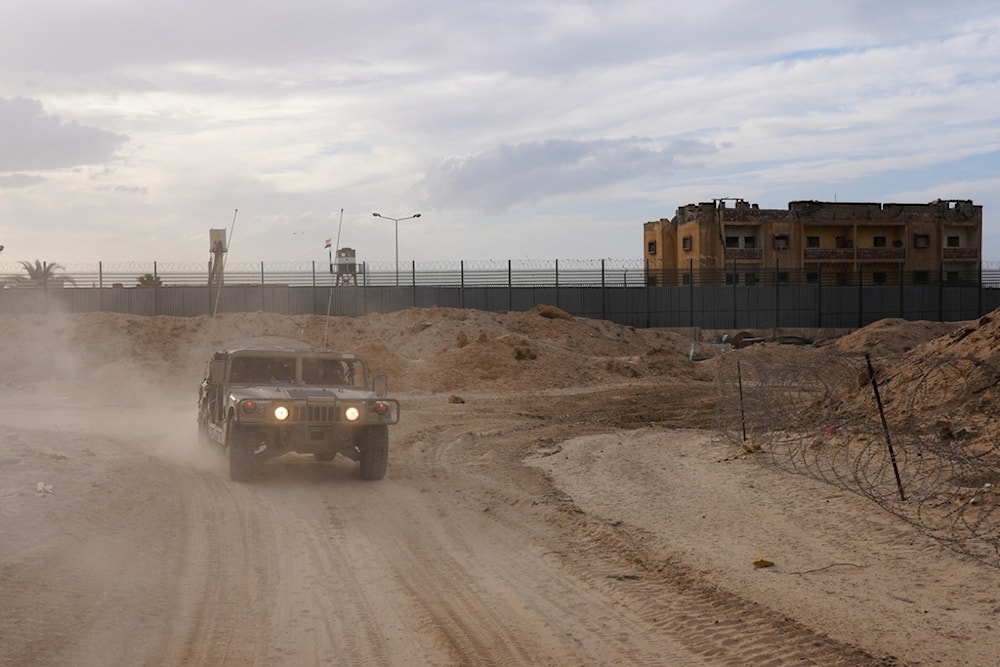
Israeli soldiers drive on the Philadelphi Corridor along the border with Egypt during an army-organized tour for journalists in Rafah, Gaza Strip, Monday, December 8, 2025 (AP)
Three informed sources told Reuters that “Israel” plans to establish a military checkpoint inside Gaza to screen all individuals entering and leaving through the Rafah border crossing with Egypt.
According to the Reuters sources, the move is aimed at restricting the number of Palestinians returning to Gaza via Rafah, ensuring that more people leave the blockaded strip than enter it, ahead of the crossing’s expected reopening next week.
Ali Shaath, head of the US-backed Palestinian technocratic committee tasked with the temporary administration of Gaza, previously announced that the Rafah crossing would reopen next week. The crossing effectively serves as the only entry and exit point for Gaza’s population of more than two million people.
Israeli media reported that the Israeli ministerial security cabinet is set to discuss the reopening of Rafah on Saturday, as preparations advance for new operational arrangements at the crossing.
The reports added that the operational framework has been “practically finalized,” including the establishment of an additional Israeli-managed crossing point and the implementation of remote security screening procedures.
Rafah crossing to open
Israeli media reported early Friday that the Israeli Security Cabinet is expected to discuss the issue of opening the Rafah border crossing between the Gaza Strip and Egypt.
According to these reports, arrangements for operating the crossing have been “practically finalized,” including the establishment of an additional crossing under Israeli oversight and the implementation of remote security checks.
Despite a ceasefire agreement taking effect on October 11, 2025, "Israel" continues to violate the terms, maintaining a crippling siege on the Gaza Strip. These violations have exacerbated the already dire humanitarian crisis, limiting access to essential goods, fuel, and medical services for over two million Palestinians.
Local and international humanitarian organizations have repeatedly warned that the blockade, along with continued military activity, is pushing Gaza’s civilian population deeper into crisis.
Obstructed aid
On humanitarian access, the office said only 25,816 aid, commercial, and fuel trucks had entered Gaza out of a planned 60,000, a compliance rate of 43%. This included 15,163 aid trucks (59%), 10,004 commercial trucks (39%), and 649 fuel trucks, representing just 13% of the 5,000 fuel trucks that were supposed to enter. The average daily entry stood at 261 trucks, compared with the agreed 600 per day.
The Gaza Government Media Office said the continued violations amount to a dangerous attempt to circumvent the ceasefire and impose what it described as a policy of subjugation, starvation, and coercion.
It held "Israel" fully responsible for the ongoing deterioration of the humanitarian situation and called on US President Donald Trump, the agreement’s sponsors, mediators, guarantors, the international community, and the United Nations to enforce full compliance with the deal, ensure civilian protection, and guarantee the immediate and safe flow of humanitarian aid, fuel, and shelter materials into the Gaza Strip.


