
Japan PM mulling snap election in coming weeks: Reports
 3 Min Read
Japan’s PM Sanae Takaichi may call a general election in early 2026 to strengthen her parliamentary majority and push key policies forward.
-
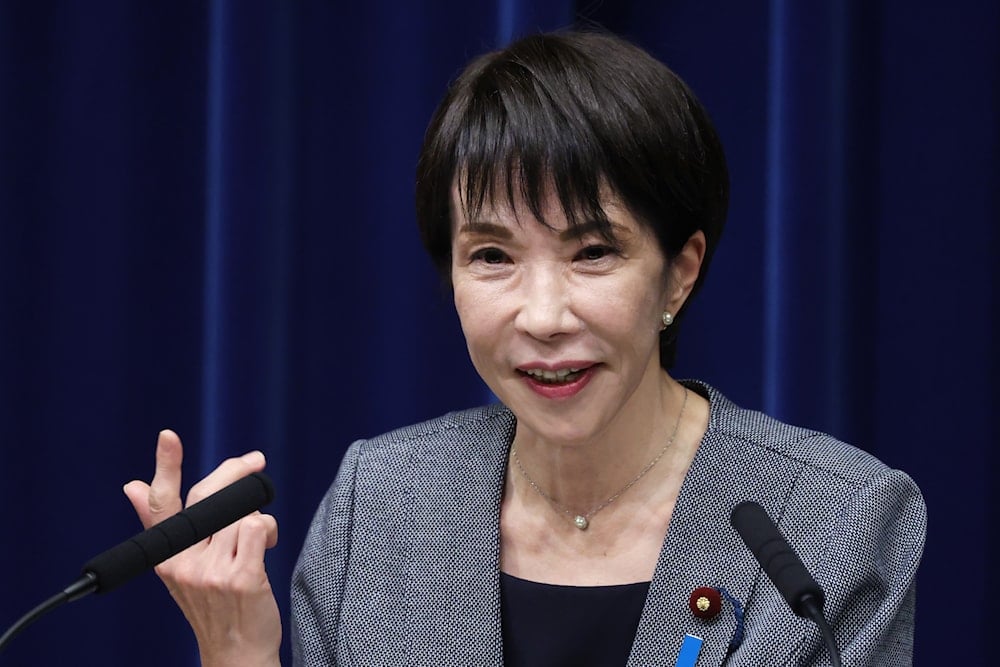
Japan's Prime Minister Sanae Takaichi speaks during a news conference at the prime minister's office in Tokyo on December 17, 2025. (Kiyoshi Ota/Pool Photo via AP)
Japan’s Prime Minister Sanae Takaichi is reportedly considering calling a general election in the coming weeks to leverage growing public approval for her administration. According to Japanese media reports on Saturday, Takaichi may dissolve the lower house of parliament at the start of the upcoming session on January 23.
The move would likely set the stage for a general election in early to mid-February, as reported by the Yomiuri newspaper, citing unnamed government sources.
Appointed in October as Japan’s first woman prime minister, Takaichi’s government currently enjoys a strong approval rating of around 70 percent. However, her ruling bloc maintains only a slim majority in the lower house of parliament, limiting its capacity to pass key legislation.
Some members of Takaichi’s administration reportedly believe that early dissolution of parliament would help consolidate power while public support remains high. The Mainichi newspaper cited internal views supporting early elections to strengthen the government’s foundation.
Takaichi became Japan’s fifth prime minister in five years when she was elected to lead a minority government. In November, her Liberal Democratic Party (LDP), in coalition with the Japan Innovation Party, regained its lower-house majority after three lawmakers joined the LDP.
Despite the gains, the ruling coalition continues to hold a minority in the upper house, posing challenges to Takaichi’s legislative agenda.
Key policy goals: fiscal spending and intelligence reform
A stronger majority in parliament would enable the Prime Minister to pursue her plans for increased fiscal spending and the expansion of Japan’s intelligence capabilities, according to the Yomiuri. Takaichi has consistently advocated for what she describes as “proactive” economic and security policies, aiming to reinforce national resilience amid growing regional tensions.
Relations between Tokyo and Beijing have deteriorated since Takaichi suggested in November that Japan could potentially intervene militarily if China were to launch an attack on Taiwan, the self-ruled island that China claims as its own.
In response, Beijing imposed broad export restrictions on "dual-use" items with potential military applications. It reportedly began limiting shipments of rare-earth elements, critical materials used in electric vehicles, missile systems, and other technologies.
Despite the rising tensions, Takaichi stated last month that she remains "always open" to dialogue with China.


