
Iran could shape Trump’s legacy and JD Vance’s political trajectory
 3 Min Read
US-Iran negotiations in Islamabad mark a turning point in regional diplomacy and shifting political stakes for Trump and J.D. Vance.
-
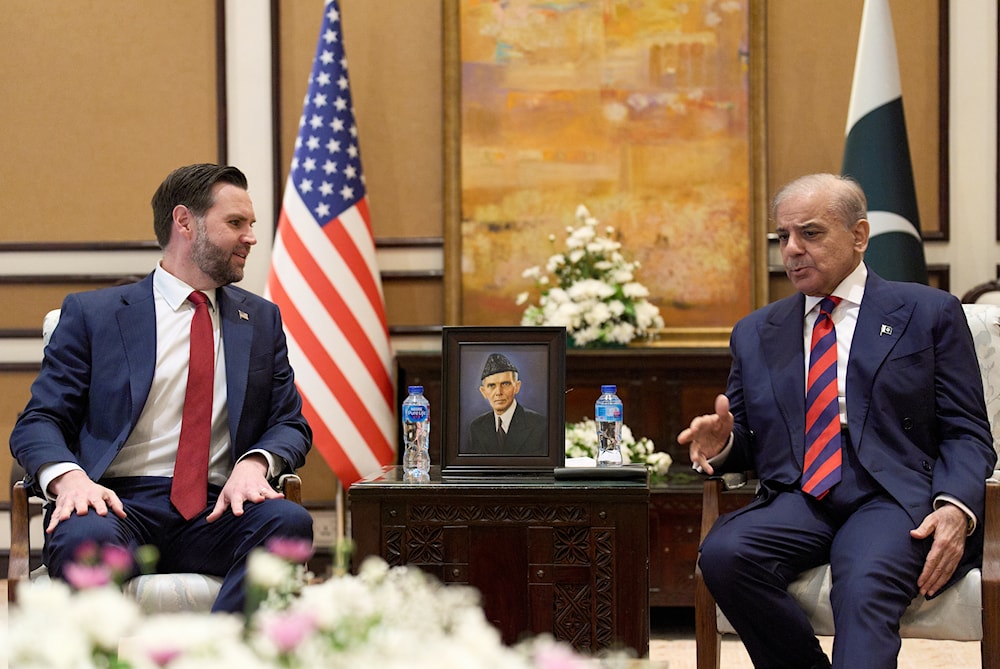
US Vice President JD Vance meets with Pakistan's Prime Minister Shehbaz Sharif on April 11, 2026, in Islamabad, for the U.S.-Iran talks. (AP Photo/Jacquelyn Martin, Pool)
US President Donald Trump launched a war on Iran, aiming to significantly weaken its regional and strategic influence. Yet after months of escalation, costly operations, and mounting political pressure, the Islamic Republic remains intact. As US-Iran negotiations shifted toward Islamabad, the geopolitical balance appears less one-sided than before.
In a report by The Atlantic, Karim Sadjadpour argues that rather than forcing a decisive outcome, the war has evolved into a tense diplomatic standoff. Both Washington and Tehran now appear to be recalibrating their objectives, moving from confrontation toward conditional engagement.
Trump foreign policy and internal political calculations
According to the report, the trajectory of Trump's foreign policy toward Iran has been shaped not only by military and diplomatic considerations but also by domestic political calculations. As the war dragged on, internal divisions reportedly grew over the sustainability and popularity of continued escalation.
Within this context, greater responsibility appears to be shifting toward J.D. Vance, positioning him as a key figure in the negotiations, reflecting an attempt to balance political risk while attempting to maintain leverage over Tehran.
Trump’s public framing of potential outcomes highlights this uncertainty, signaling both willingness to claim credit for success and distance himself from failure.
J.D. Vance Middle East Diplomacy and Emerging Role
The role of J.D. Vance in West Asia diplomacy became increasingly central after preparing for high-level talks in Islamabad. His position was viewed as relatively less interventionist in comparison to other figures in Washington’s foreign policy establishment, which may shape Tehran’s expectations.
According to the report, Iranian officials appear to view him as a more pragmatic interlocutor, potentially more open to rapid de-escalation. However, this perception also places significant pressure on him to deliver measurable results under highly constrained conditions.
The stakes are considerable: any agreement reached would carry long-term political consequences for his future influence.
A new round of negotiations is scheduled for Sunday morning
Iranian television reported on Saturday that, at the suggestion of the Pakistani mediator, it was agreed to hold another round of Iran-US talks on Sunday morning in Islamabad.
Earlier, Iran’s Tasnim news agency, citing an informed source, said another session of negotiations between the Iranian and US delegations had concluded in the Pakistani capital, noting that disagreements between the two sides persist.
The talks in Islamabad are taking place amid Iranian distrust of Washington, with Tehran presenting clear positions and insisting on a ceasefire in Lebanon, alongside conditions related to the Strait of Hormuz.
The discussions mark the highest-level engagement between the two sides since the 1979 Islamic Revolution, and the first direct talks since the 2015 nuclear agreement.
The Iranian delegation, led by Parliament Speaker Mohammad Bagher Ghalibaf and Foreign Minister Abbas Araghchi, arrived on Friday to prepare for the talks.
The U.S. delegation, led by Vice President JD Vance and including special envoy Steve Witkoff and Jared Kushner, arrived in Islamabad on Saturday aboard two US Air Force aircraft, according to Pakistani sources.


