
Kharg island secured, Gulf peace necessitates foreign withdrawal: Iran
 3 Min Read
Iran's parliament says Kharg Island is fully secured and warns that Gulf stability can only come through the withdrawal of all foreign forces from the region.
-
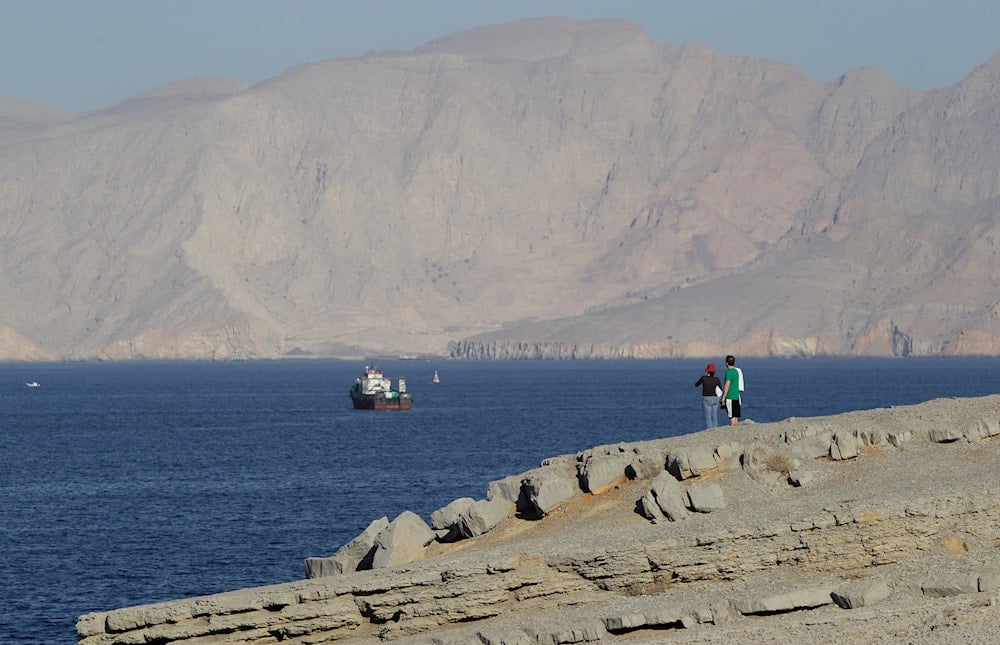
In this Jan. 18, 2012 photo, a tourist couple watches the mountains in the south of the Strait of Hormuz as the trading dhows and ships are docked on the Gulf waters near the town of Khasab, in Oman (AP)
The head of Iran's Parliamentary National Security and Foreign Policy Committee, Ebrahim Azizi, declared on Saturday that Kharg Island stands as "a symbol of the strength of the oil industry and resistance."
He further insisted that security across the Gulf's maritime corridor and neighbouring states "can only be achieved through the withdrawal of foreign forces from the region."
Azizi dismissed enemy illusions that "threats, intimidation, and psychological warfare can harm the oil sector," asserting that US and Israeli threats have had no impact on Iran's oil industry. He added that the sector has shown greater resilience than ever, with storage, loading, and export mechanisms operating at heightened readiness.
The spokesperson for the National Security Committee of #Iran’s Parliament, Ebrahim Rezaei, provides an update from #KhargIsland, reaffirming that life is ongoing, and oil exports are continuing without any problems.
— Al Mayadeen English (@MayadeenEnglish) March 28, 2026
This comes amid heightened #US military threats around Kharg… pic.twitter.com/rnxfHu8Dyb
The committee's spokesperson, Ebrahim Rezaei, speaking directly from the island, confirmed that life in Kharg is operating normally, with full security and stability maintained.
Rezaei stressed that the Armed Forces remain on maximum alert, warning that any attack on the island would be met with a decisive Iranian response.
Washington weighs escalation as Republican opposition grows
The Iranian statements arrive as Washington considers a substantial military build-up across the Gulf. The US is reportedly weighing the deployment of an additional 20,000 soldiers to join the roughly 50,000 troops already stationed in the region, on top of an earlier reported surge of 10,000 to supplement some 3,000 paratroopers and 5,000 Marines already operating in West Asia.
Military analysts warn, however, that even these numbers fall far short of what a ground campaign against Iran would demand. Lieutenant General Sir Nick Borton, a combat veteran of Iraq and Afghanistan, estimated that a successful invasion would require many hundreds of thousands of troops, with other former NATO generals placing the figure well above one million.
The prospect of a ground invasion has drawn rare public dissent within Trump's own party. Several House Republicans, including combat veterans, have spoken out against escalation. POLITICO reported that one anonymous GOP lawmaker warned that a ground invasion could cost Republicans "60 to 70 seats."
US strikes on Kharg
US President Donald Trump had announced two weeks ago that the US struck Kharg Island, which targeted military installations but no oil infrastructure. Foreign Minister Abbas Araghchi said the missiles that struck Kharg and Abu Musa islands were launched from Ras Al Khaimah and a site in close proximity to Dubai in the UAE.
Iran's General Staff spokesperson, Brigadier General Abolfazl Shekarchi, issued a stark warning in response, cautioning that any attack on Kharg Island's oil facilities would trigger immediate Iranian retaliation against all oil and gas infrastructure in the country from which the aggression originates.
Kharg Island is Iran's principal oil export hub, handling the vast majority of its crude shipments to global markets. The island hosts major loading terminals, extensive storage infrastructure, and deepwater ports built to accommodate supertankers.
View this post on Instagram


