
Kushner financing largely ignored amid Iran diplomacy role
 3 Min Read
Jared Kushner faces scrutiny over Saudi financial ties while leading US diplomacy with Iran, as most media outlets overlook the conflict of interest.
-
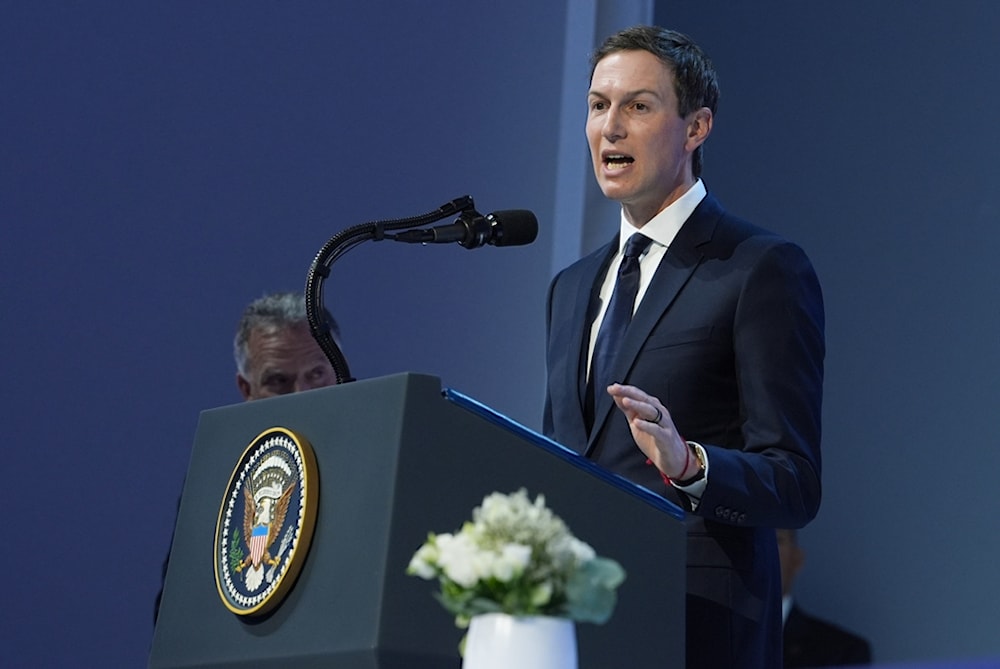
Jared Kushner speaks after the signing of a Board of Peace charter during the Annual Meeting of the World Economic Forum in Davos, Switzerland, Thursday, January 22, 2026. (AP Photo/Evan Vucci)
Jared Kushner, son-in-law of US President Donald Trump, has taken on a central diplomatic role in negotiations with Iran while maintaining extensive financial ties with Saudi Arabia.
The overlap between public responsibilities and private financial interests has raised concerns among lawmakers and analysts, particularly given the scale of Kushner’s business dealings with the Saudi government.
At the center of the issue is whether an individual engaged in high-level diplomacy can simultaneously maintain financial relationships with a foreign state involved in the same geopolitical arena.
Billions from Riyadh and ongoing financial gains
In 2021, Kushner’s private equity firm, Affinity Partners, secured a $2 billion investment from Saudi Arabia’s sovereign wealth fund, the Public Investment Fund.
US lawmakers, including Ron Wyden and Robert Garcia, have stated that Kushner has since received more than $110 million in management fees tied to that investment.
Reports also indicate that Kushner has sought additional funding from Saudi sources, even as he participates in diplomatic efforts involving Iran, raising further questions about overlapping interests.
Saudi Crown Prince Mohammed bin Salman, who oversees the Public Investment Fund, has been a central figure in shaping Saudi regional policy, including its stance on regional conflicts.
Read more: Democrats demand answers on Kushner's Middle East business deals
Media coverage largely omits financial links
An analysis by Popular Information found that major US media outlets have largely failed to highlight Kushner’s financial connections in their reporting on his diplomatic role.
Out of 202 articles published between late February and mid-April referencing Kushner’s involvement in Iran-related diplomacy, only six mentioned his financial ties to Saudi Arabia.
The majority of coverage across outlets, including The Wall Street Journal, The Associated Press, CNN, and The New York Post, did not address the issue.
Even in cases where outlets had previously reported on Kushner’s business dealings, those details were often absent from coverage of his diplomatic activities.
Congressional probe intensifies scrutiny
The issue has now drawn formal attention from US lawmakers. Jamie Raskin, ranking member of the House Judiciary Committee, has launched an investigation into Kushner’s activities.
In a letter dated April 16, Raskin wrote that Kushner’s dual role creates “a glaring and incurable conflict of interest,” arguing that financial ties to Saudi Arabia could influence decision-making in matters of war and diplomacy.
Raskin further warned that such arrangements risk “further harm to American servicemembers” and could deepen military entanglements, while benefiting external financial backers.
The investigation seeks extensive documentation, including communications with Saudi officials and interactions with the White House regarding Kushner’s governmental role.
Should political dynamics in Congress shift, the probe could expand, potentially involving subpoena powers.


