
Kuwait cuts oil output citing Hormuz security risks
 4 Min Read
Kuwait has temporarily reduced crude oil production and refining operations due to escalating regional tensions and security risks around the Strait of Hormuz.
-
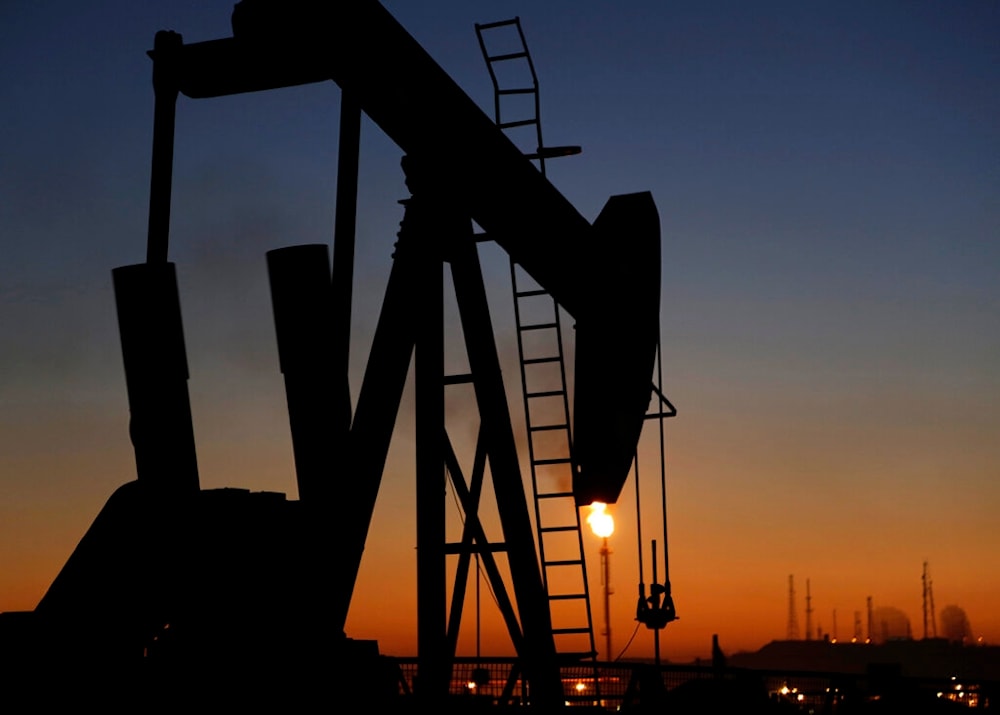
In this Jan. 18, 2016 file photo, an oil pump works at sunset, in the desert oil fields of Sakhir, Bahrain (AP)
Kuwait has reduced crude oil production and refining activity as tensions escalate across the Gulf following the US-Israeli military assault on Iran, with authorities citing security concerns linked to maritime routes and regional hostilities.
The decision was announced by Kuwait Petroleum Corporation, which said the adjustment was a precautionary step taken as instability around the Strait of Hormuz continues to grow.
In a statement released on Saturday, the company said the measure was prompted by what it described as Iranian actions and warnings affecting navigation through the strategic waterway.
"Kuwait Petroleum Corporation (KPC) announces that in light of the ongoing aggression by the Islamic Republic of Iran against the State of Kuwait, including Iranian threats against safe passage of ships through the Strait of Hormuz, KPC has implemented a precautionary reduction in crude oil production and refining throughput as part of its risk management and business continuity strategy," the statement read.
Officials indicated the move is temporary and will be reassessed as the regional situation evolves. The company said that production could be stored and later restored once conditions stabilize.
Hormuz Under Control
The decision comes as tensions around the Strait of Hormuz intensify, with Islamic Revolutionary Guard Corps officials earlier this week declaring that the waterway is under the control of Iran’s naval forces. IRGC Navy political advisor Mohammad Akbarzadeh said that "the Strait of Hormuz is currently under the full control of the naval forces of the Revolutionary Guard."
Iranian officials have also warned that shipping through the corridor could face further risks. Brigadier General Ebrahim Jabbari, advisor to the IRGC commander, said that “any ship attempting to pass through the Strait of Hormuz will burn,” adding that “not one drop of oil will be allowed to leave the region.”
Shipping through the passage has already slowed sharply amid the escalating conflict. Data cited earlier this week showed that only two tankers crossed the strait on Monday, far below the roughly 60 vessels that normally transit the route each day. Insurers have increased war-risk premiums while several shipping companies have scaled back operations due to attacks on vessels near Oman and the United Arab Emirates.
Oil Prices Surge
Energy markets have reacted strongly to the instability. On Friday, Brent crude rose above $87 per barrel for the first time since July 2024 as traders responded to fears that the conflict could disrupt oil flows from the Gulf, which handles roughly one-fifth of globally traded crude and a similar share of liquefied natural gas shipments.
Security concerns have also mounted in Kuwaiti waters in recent days. On Thursday, a tanker anchored off the country’s coast reported a large explosion on its port side roughly 56 kilometers southeast of Mubarak Al-Kabeer Port, according to the United Kingdom Maritime Trade Operations (UKMTO). The blast damaged one of the vessel’s cargo tanks and caused oil to leak into surrounding waters, though the crew was reported safe.
On the security front, Kuwait’s defense ministry said the National Guard intercepted and destroyed a drone that entered one of its operational zones. According to the ministry, the unit had been deployed to safeguard key facilities and respond to potential aerial threats targeting critical infrastructure.
Hormuz Risks Grow
The Gulf country sits near major shipping routes used to transport oil exports from several regional producers, making it particularly vulnerable to disruptions in the Strait of Hormuz.
The development comes as military tensions intensify across the Middle East after a joint offensive by the United States and "Israel" against Iran that began on February 28.
Iran has since launched retaliatory strikes on Israeli territory and US military installations across the region. The first day of the attacks saw Sayyed Ali Khamenei martyred and a girls’ school in southern Iran struck. Iranian authorities say the death toll from the assault has surpassed 1,200.
Washington has meanwhile indicated that the US Navy could begin escorting commercial vessels through the Strait of Hormuz in an attempt to restore maritime traffic, raising the prospect of further confrontation in one of the world’s most critical energy corridors.


