
Lavrov: Moscow invitation to Zelensky major goodwill gesture
 5 Min Read
Russia has renewed its invitation for Zelensky to meet with Putin in Moscow amid intensified US-led diplomacy.
-
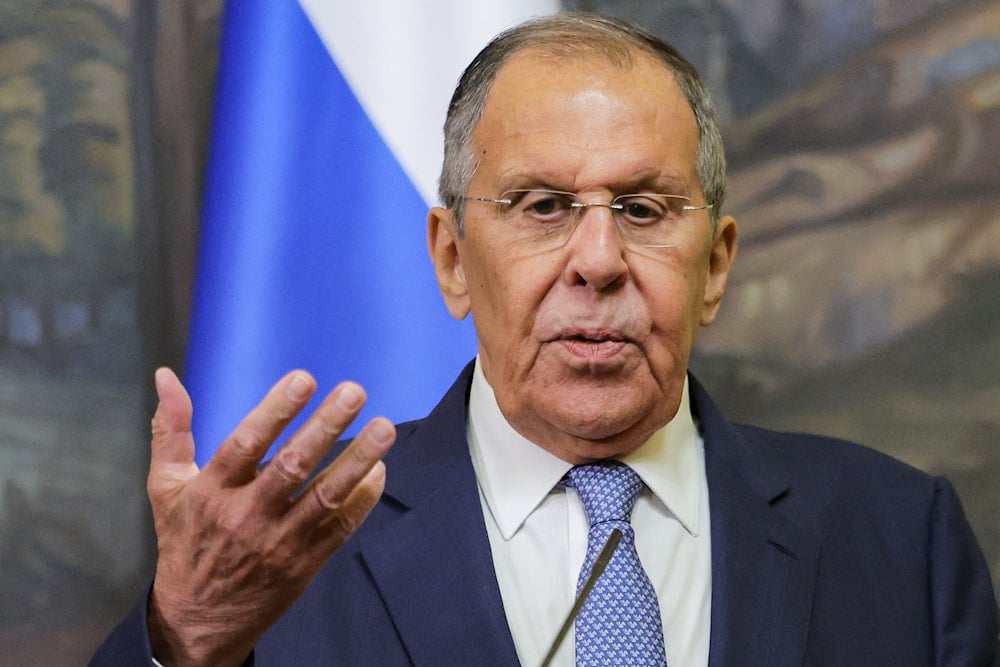
Russian Foreign Minister Sergey Lavrov speaks during a news conference following his talks with Saudi Foreign Minister Prince Faisal bin Farhan Al Saud at Zinaida Morozova's Mansion in Moscow, Tuesday, Sept. 8, 2026 (AP)
Russia has renewed its invitation for Ukrainian President Volodymyr Zelensky to travel to Moscow for direct talks with Russian President Vladimir Putin, as diplomatic activity surrounding the Ukraine conflict intensifies following a fresh US push to revive negotiations.
Speaking to reporters on the sidelines of the BRICS summit in New Delhi on Saturday, Russian Foreign Minister Sergey Lavrov described Moscow's invitation as a major concession by the Russian side.
"The invitation was sent to this character. If he wants to meet, let him come. This is already a huge gesture of goodwill on our part because he still has not revoked his decree banning contacts with [Russian President Vladimir] Putin and his office," Lavrov said.
His remarks followed renewed statements from Zelensky expressing readiness for a face-to-face meeting with Putin. The Ukrainian president recently floated the possibility of holding such talks on the sidelines of the G20 summit in Miami in December.
Moscow, however, has responded by insisting there is no need to wait for a meeting abroad, arguing that Zelensky can travel directly to the Russian capital if he genuinely wants negotiations.
US diplomacy revives negotiations track
The exchange comes amid renewed diplomatic activity led by Washington, which has sought in recent days to narrow differences between Moscow and Kiev.
US envoys Steve Witkoff and Jared Kushner held lengthy talks with Putin in Moscow earlier this month before traveling to Kiev for discussions with Zelensky, effectively carrying proposals between the Russian and Ukrainian sides.
Zelensky later said some of the ideas put forward during the talks were worth considering, while Ukrainian, US, and European officials continued discussing possible venues and formats for another round of negotiations.
The diplomatic activity has increased speculation that direct contacts between Moscow and Kiev could resume after a prolonged period without substantial progress toward a political settlement.
However, major disagreements remain over territory, security arrangements, the terms of any ceasefire, and the broader framework of a potential agreement.
Moscow insists Zelensky can come to Russia
Lavrov argued that Putin had little reason to travel abroad solely for a meeting with Zelensky.
He said the Russian president has "plenty of business to attend to" in Russia, while Zelensky "travels around and is never home."
Earlier on Saturday, Kremlin spokesperson Dmitry Peskov issued a similar message, saying that if Zelensky genuinely wanted direct talks with Putin, he could travel to Moscow.
Russian officials have also repeatedly pointed to a Ukrainian decree adopted in 2022 that declared negotiations with Putin impossible.
Lavrov cited the continued existence of that decree while questioning Kiev's recent calls for direct diplomacy, arguing that Zelensky has yet to formally reverse the decision.
The venue itself has consequently become part of the political dispute. While Kiev has raised the possibility of meeting Putin at an international summit or another third-party location, Moscow is seeking to demonstrate that it is already offering a direct negotiating channel on Russian territory.
Russia says military operation will continue during talks
Lavrov separately reaffirmed that Russia remains prepared to negotiate a settlement to the conflict, but made clear that Moscow would not suspend its military campaign simply because negotiations had begun.
"We remain ready for negotiations, but we will not stop the special military operation for the duration of the talks," Lavrov said.
The statement underscores Moscow's position that diplomatic negotiations and military operations can proceed simultaneously.
Russia has resisted proposals that would require an initial ceasefire before substantive negotiations, maintaining that military pressure should not be halted in the absence of a broader political agreement.
The issue remains one of the central differences between the sides as Washington attempts to revive diplomacy.
Winter, battlefield developments add urgency
The latest negotiating push is also unfolding ahead of winter, as both Russia and Ukraine seek to strengthen their positions militarily and diplomatically.
Kiev has been seeking additional Western air-defense support amid expectations that attacks on energy infrastructure could intensify during the colder months, while Moscow continues military operations in eastern Ukraine.
Against that backdrop, both Russia and Ukraine have increasingly sought to portray themselves as open to negotiations while accusing the other side of obstructing progress.
For Moscow, the invitation to Zelensky allows it to present Russia as willing to host direct talks while rejecting demands to halt military operations beforehand.
For Kiev, proposals for a meeting on neutral or international territory offer a way to pursue negotiations without accepting Moscow's preferred format.
The revived diplomatic activity therefore does not yet signal that the two sides are close to an agreement, but it has reopened a negotiating track that had remained largely stalled.
Read more: Kremlin says no coherent Ukraine settlement roadmap yet


