
Lavrov takes swing at US foreign policy and global conduct
 2 Min Read
Russia's Foreign Minister accuses the US of using coups, assassinations, and "any means necessary" to secure interests abroad, warning of long-term global consequences.
-
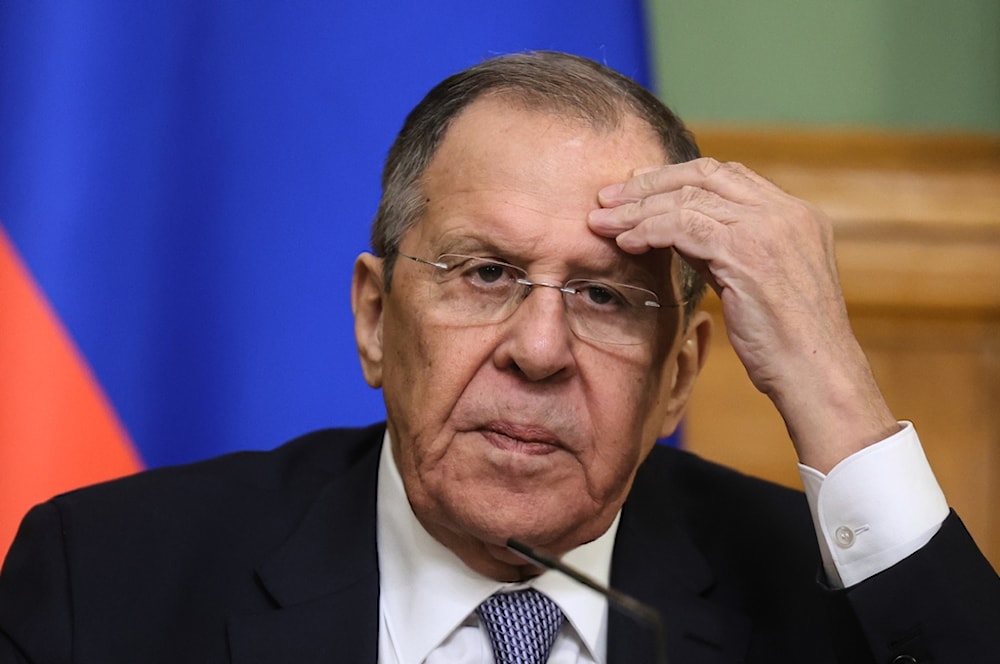
Russian Foreign Minister Sergey Lavrov attends a joint news conference with acting Libyan Foreign Minister Taher al-Baour at Zinaida Morozova's Mansion in Moscow, Tuesday, April 21, 2026 (Pool Photo via AP)
Russia’s Foreign Minister Sergey Lavrov has accused the United States of prioritizing its own interests abroad and being willing to use extreme measures, including coups and assassinations, to secure them.
Speaking in an interview for Russian Public Television (OTR), Lavrov said Washington effectively operates on the principle that “no one tells them what to do” and acts solely in defense of its own well-being.
He said the US is prepared to defend those interests “by any means necessary,” including “coups, kidnappings, or assassinations of the leaders of countries that possess the natural resources the Americans need.”
Lavrov cautioned that the consequences of US and Israeli actions are “extremely serious” and will have long-term global effects.
The Russian foreign minister also said Washington has benefited from Russia’s reduced role in European energy markets, while urging what he described as a more balanced approach that takes Russian interests into account.
'Europe reviving colonial era'
In a separate set of remarks, Lavrov also accused Europe of attempting to revive “colonial-era” politics by pressuring dissenting EU members such as Hungary and Slovakia to follow directives from Brussels.
He said the European Union is effectively enforcing political conformity, forcing member states to “simply obey those in charge in Brussels,” particularly on key foreign and energy policy issues.
Lavrov framed these developments as part of a broader shift in European politics, arguing that internal divisions are being suppressed in favour of centralized decision-making.
Read more: Sanctions losing impact? EU measures barely dent Russia: Analysis


