
Lebanon conditions Rome talks on IOF withdrawal from 2 'pilot zones'
 4 Min Read
Lebanon is conditioning its participation in the upcoming Rome talks on a genuine Israeli withdrawal from two "pilot zones" in South Lebanon.
-
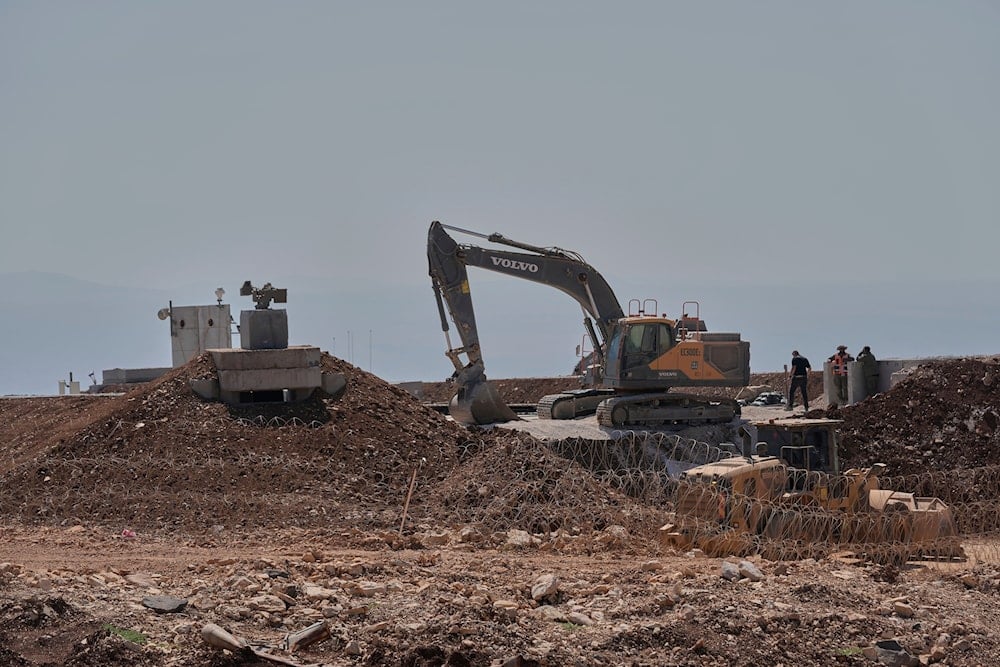
Workers stand beside a bulldozer at one of five new Israeli army positions built inside Lebanese territory along the road between Houla and Kfar Kila following airstrikes and a ground offensive that destroyed nearby villages, southern Lebanon, Wednesday, Aug. 20, 2025 (AP)
Lebanon is demanding concrete Israeli withdrawal from occupied territory before entering the next round of direct negotiations in Rome, as the US-sponsored framework faces growing criticism for attempting to turn Israeli redeployment into pressure on the Resistance.
A diplomatic source familiar with the talks told AFP on Wednesday that Beirut has conditioned its participation in the upcoming round on an Israeli pullback from two so-called “pilot zones” in Southern Lebanon.
The Rome meetings, announced by Italy for July 15 and 16, would follow five rounds of US-sponsored talks in Washington aimed at ending the war launched by the Israeli occupation against Lebanon and imposing a new security arrangement in the south.
The negotiations recently produced a framework agreement that calls for the Lebanese Army to deploy in selected areas while Hezbollah is pushed toward disarmament and Israeli forces carry out what Washington and Tel Aviv have described as a gradual withdrawal from occupied Lebanese territory.
Hezbollah has rejected the framework, viewing it as an attempt to extract political and security concessions from Lebanon while leaving the Israeli occupation’s presence and freedom of action intact.
Dispute over ‘pilot zones’ deepens
The controversy has deepened over the designation of the “pilot zones” themselves. Lebanese concerns center on the fact that these areas are being presented as sites of Israeli withdrawal even though they are not occupied zones from which the Israeli occupation must withdraw. This allows “Israel” to claim progress through a symbolic or staged redeployment while maintaining its deeper military presence in southern Lebanon.
At the center of the dispute is whether Israeli occupation forces are even present in the towns of Froun and Zawtar al-Gharbiyah for the IOF to claim they would withdraw from them as part of the proposed “pilot zone” arrangement.
Al Mayadeen footage from the two southern Lebanese towns has debunked claims of an Israeli military presence there, raising further concerns that the framework could manufacture the appearance of Israeli withdrawal from areas where occupation forces are not deployed to begin with.
The proposed US-led framework introduces so-called “pilot zones” in South Lebanon as part of the agreement reached between Lebanese authorities and the Israeli occupation. Under the plan, designated villages would come under full Lebanese Army control, while Israeli mechanisms would be used to verify the absence of what the occupation calls “illegal” weapons, before potentially expanding the model across the entire border area.
The Lebanese diplomatic source, speaking on condition of anonymity, said “Lebanon is stipulating Israel's withdrawal from two pilot zones in order to participate in the round of negotiations” next week.
The demand reflects Beirut’s insistence that any new phase must begin with an actual Israeli pullback, not with arrangements that shift the burden onto Lebanon while Israeli forces remain entrenched in a so-called “security zone”.
Transition to Rome and ongoing war context
According to the Lebanese source, the US State Department told the negotiating delegations that “reaching a framework agreement is the end of one phase and the beginning of a new one."
Washington also said it could not continue hosting the talks indefinitely, the source added, arguing that the next phase, which is expected to address a permanent agreement, requires negotiators to be closer to their countries “for consultation”.
The source said the Israeli side quickly accepted Rome as the next venue, seeing the move as a chance to “reduce the pressure” it faced from Washington during talks over the ceasefire and the framework agreement.
Lebanon, however, received assurances through its contacts with the United States that Washington would maintain “the same level of engagement in the negotiations and the same policy in managing the talks” once the process moves from Washington to Rome.
The war re-erupted on March 2 after Hezbollah responded to continued Israeli violations of Lebanese sovereignty.
The Israeli occupation then launched a major bombing campaign and ground assault on Lebanon, killing more than 4,300 people and occupying areas near the border.
The dispute over the "pilot zones" now threatens to expose the framework’s central weakness: it offers “Israel” a path to preserve its military gains while demanding that Lebanon dismantle the Resistance before recovering full sovereignty over its territory.
Read more: Fadlallah: Resistance to remain against occupation, foreign pressure


