
Libyan official raises sabotage possibility after Ankara plane crash
 3 Min Read
A fatal plane crash in Ankara that killed Libya's Chief of the General Staff has triggered an international investigation, as a former Libyan ambassador warned that sabotage cannot be ruled out and pointed to the potential political fallout for Turkey's role in Libya.
-
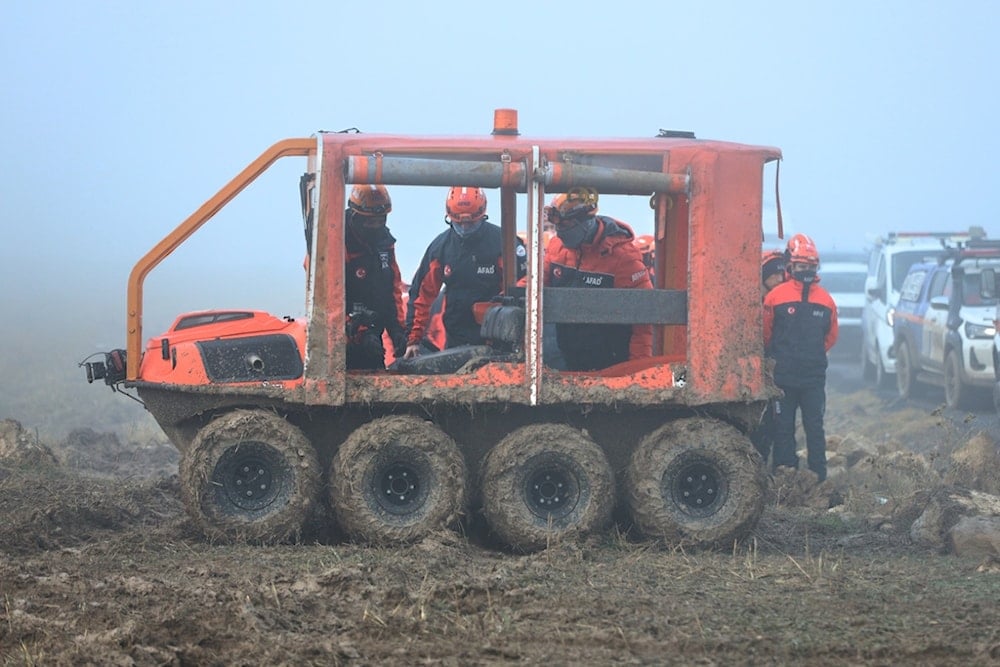
Turkish rescue teams search for the remains of a private jet carrying Libya's military chief and four others that crashed after taking off from Ankara, killing everyone on board, in Ankara, Türkiye, early Wednesday, Dec. 24, 2025 (AP Photo/Efekan Akyuz)
A plane crash in Ankara that killed Libya’s Chief of the General Staff has prompted questions about possible sabotage, amid an ongoing investigation into what Turkish officials described as a technical emergency shortly after takeoff.
Former Libyan ambassador Muhammad Salim Amish said on Friday that while there is no conclusive information at this stage, external interference cannot be ruled out and the incident could ultimately benefit actors seeking to undermine Ankara’s role in Libya.
Fatal Descent
Muhammad al-Haddad and members of his entourage were killed when a Dassault Falcon 50 private jet crashed minutes after departing Esenboga Airport en route to Tripoli. Turkish authorities said the aircraft reported an electrical malfunction soon after takeoff and requested to return for an emergency landing before losing radar contact during its descent.
The wreckage was later located in the Haymana district, south of Ankara, near a rural area outside residential zones. Turkish media reported that the crash narrowly avoided a larger disaster, as the jet was expected to pass over densely populated neighborhoods had it remained airborne for several more minutes.
The Ankara Chief Public Prosecutor's Office has opened a formal investigation. Officials said the cockpit voice recorder and flight data recorder were recovered and that their decoding and analysis would be carried out in a third country, as part of a broader technical probe.
Sabotage Questioned
Speaking to the Turkish daily Turkiye, Amish said the political implications of the crash cannot be ignored: "What happened could have played into the hands of Ankara’s opponents, allowing them to strengthen their positions in the army and weaken Türkiye’s influence. There is no precise information, but ‘external interference’ with the aircraft cannot be ruled out."
He said investigators should prioritize examining the aircraft’s mechanical condition, the maintenance record, fuel quality, and airworthiness, as well as identifying the owner of the leased aircraft, which Turkish officials said was registered abroad, and reviewing its previous flight routes.
Amish also pointed to Libya’s continued political and military fragmentation, arguing that Türkiye has been taking what he described as serious steps to support efforts aimed at reunifying the country’s institutions. According to him, al-Haddad and others on board were central figures in negotiations and coordination efforts related to rebuilding a unified national military structure.
Mourning Declared
Libyan authorities declared a period of mourning following the crash, while officials said interim arrangements were being made to cover the duties of the slain chief of staff as investigations continue.
Turkish Minister of Transport and Infrastructure Abdulkadir Uraloglu said earlier this week that the investigation would also review flight communications, airport surveillance footage, and crew-related factors, including pre-flight conditions, as part of efforts to determine the cause of the crash.
Read more: Black boxes recovered after Libyan army chief plane crash near Ankara


