
Maduro confirms call with Trump, considers it 'opening to dialogue'
 2 Min Read
Venezuela’s Maduro confirms a phone call with Trump, calling it respectful and a potential step toward renewed dialogue and diplomacy.
-
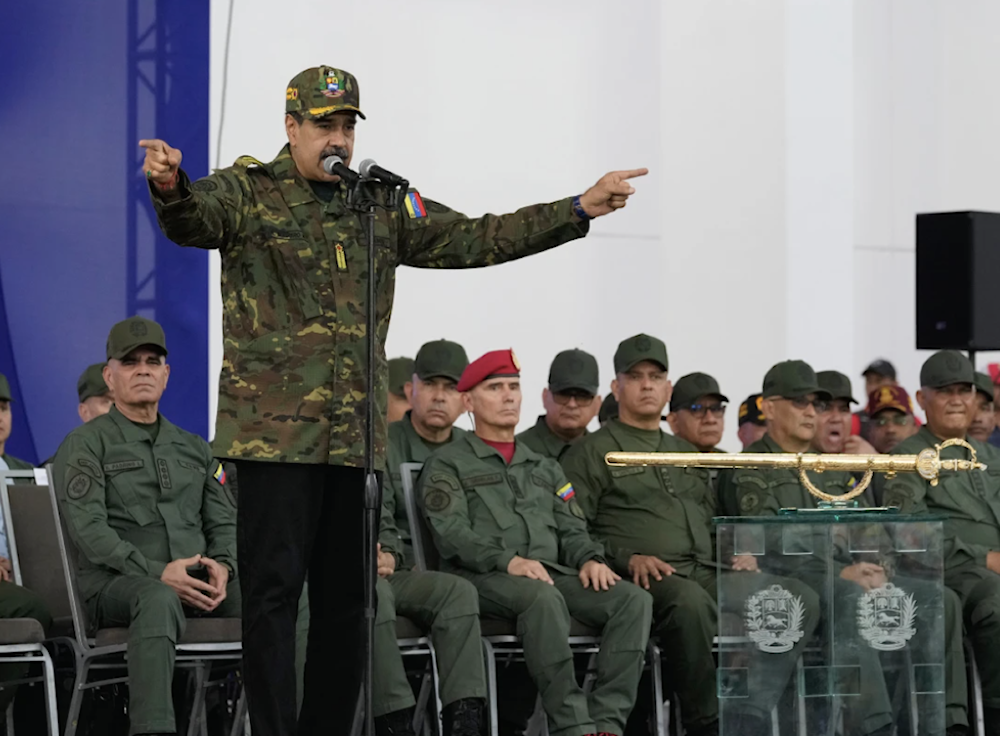
Maduro confirms call with Trump, sees it as an opening for dialogue
Venezuelan President Nicolas Maduro confirmed on Thursday that he held a phone conversation with US President Donald Trump, describing it as respectful and constructive.
Maduro said the call took place 10 days ago and characterized it as “an opening to dialogue,” emphasizing Venezuela’s commitment to diplomacy and peace. “We will always strive for peace,” he said, adding that he believes the American people also reject war.
He urged Venezuelans to remain calm and confident, stating, “We must always maintain unwavering calm and a firm belief in our victory—the victory of justice and peace.”
Maduro’s comments come days after Trump publicly acknowledged the call but declined to provide details, simply stating, “I don’t want to comment on it... The answer is yes.”
US-led regime change in Venezuela angering MAGA
United States President Donald Trump’s suggestion of an imminent land strike against Venezuela has jolted the America First movement he built on avoiding foreign entanglements, sparking divisions among his supporters and reviving debates reminiscent of the war on Iraq, part of what supporters describe as “forever wars”.
On Tuesday, Trump hinted not only at an intervention in Venezuela but also at possible attacks against other countries. The remarks rattled anti-interventionists, a core Make America Great Again (MAGA) constituency, who fear that toppling Venezuelan President Nicolas Maduro could mire the US in a years-long conflict, destabilize the region, and damage both Trump’s legacy and the movement’s political brand.
Republicans redraw the lines on intervention
Despite his long-standing criticism of US interventions, some Republican allies are now defending the possibility of military action. They argue that operations within the Western Hemisphere are more defensible than the West Asia wars they once denounced, and contend that the US is not seeking “regime change” but an adjustment in Venezuelan leadership without reshaping its political structure.
“He’s not trying to play God with what regime is in which country,” said Alex Gray, former National Security Council chief of staff.
Gray argued the move represents a refocusing of US strategy toward “core American interests,” describing Venezuela as central to hemispheric security.


