
Maduro's son calls on Venezuelans to mobilize following US aggression
 2 Min Read
Maduro’s son urges Venezuelans to mobilize after the US attack on Caracas and the kidnapping of his father.
-
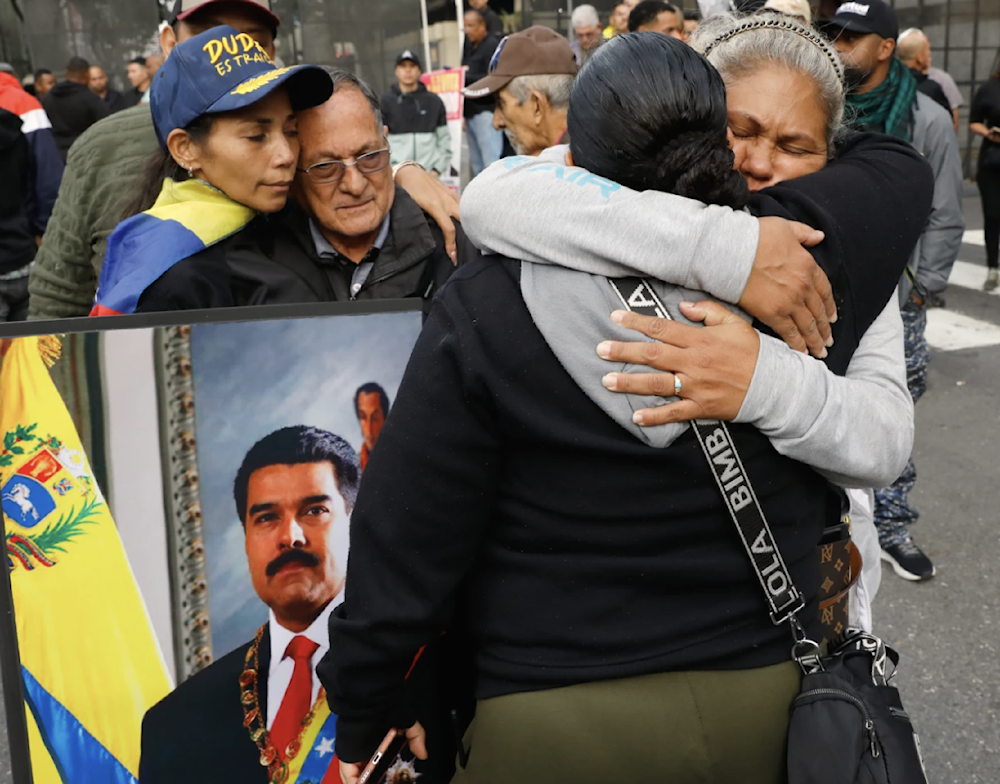
Supporters of Venezuelan President Nicolas Maduro embrace in downtown Caracas, Venezuela, on January 3, 2026, after his abduction. (AP)
Venezuelan lawmaker Nicolas Maduro Guerra, son of President Nicolas Maduro, called on the people of Venezuela to unite and take to the streets in response to the latest US aggression targeting the country’s leadership and sovereignty.
In an audio message circulated on Thursday, Maduro Guerra urged national unity and popular mobilization. "Today was a day of shock, but tomorrow we will take to the streets,” he said. “We are fine, calm, and steady, and you will see us in the street."
He called on supporters to raise the banners of late President Hugo Chávez and stand firm in solidarity, demanding the safe return of Maduro and his wife, First Lady Cilia Flores.
Rodriguez ordered to lead Venezuela
After Maduro's abduction, Venezuela’s Supreme Court on Saturday ordered Executive Vice President Delcy Rodríguez to assume and exercise, in an acting capacity, all powers and duties of the presidency to ensure administrative continuity and the comprehensive defense of the nation.
The ruling was issued by the Constitutional Chamber of the Supreme Tribunal of Justice following what the court described as a foreign military attack on January 3, 2026, which it said resulted in the abduction of Venezuela’s constitutional president, Nicolás Maduro.
Reading the decision, Constitutional Chamber president Tania D’Amelio Cardiet outlined the legal and factual grounds behind the ruling, stating that the president’s forced absence constituted a situation of material and temporary impossibility to carry out his constitutional duties.
She said the court was compelled to act in light of what it described as an exceptional and unprecedented scenario not explicitly foreseen in the Venezuelan constitution, one that posed a direct threat to state stability, national security, and the effective functioning of the legal order.


