
Mamdani revokes pro-'Israel' executive orders signed by Adams
 3 Min Read
Zohran Mamdani repeals key Adams-era orders on first day as NYC mayor, including IHRA adoption and BDS restrictions.
-
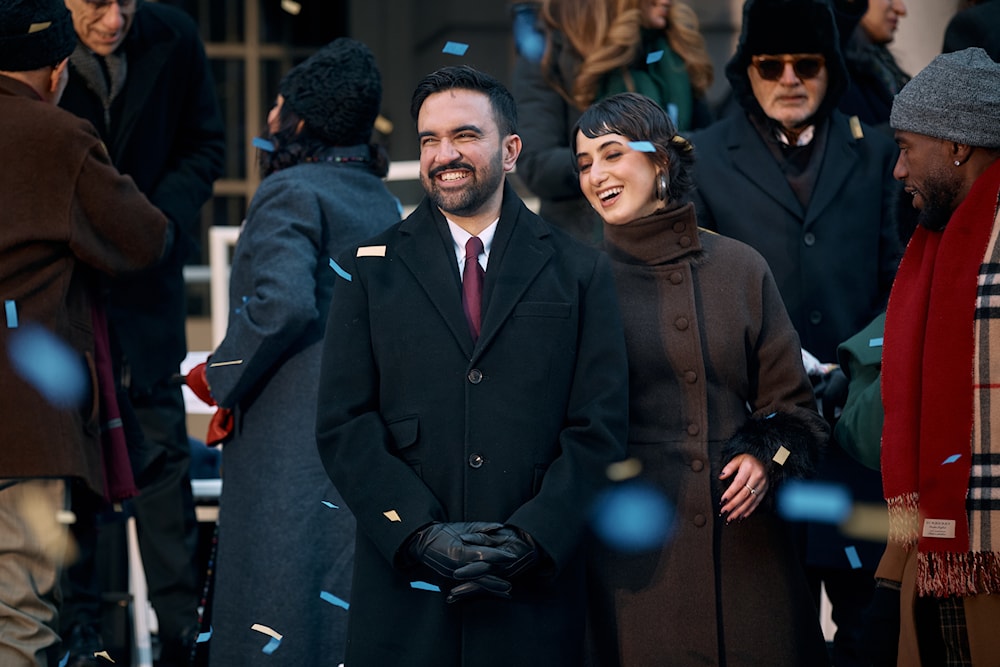
Mayor Zohran Mamdani, left, and his wife, Rama Duwaji react during Mamdani's inauguration ceremony, Thursday, Jan. 1, 2026, in New York (AP)
New York City Mayor Zohran Mamdani on Thursday moved swiftly on his first day in office, overturning all executive orders signed by his predecessor, Eric Adams, after September 26, 2024, the date Adams was indicted on five federal charges, including bribery, wire fraud, and campaign finance violations, CNN reported.
The revoked measures include a ban on protests outside synagogues, restrictions on city employees cooperating with the Boycott, Divestment and Sanctions (BDS) movement, and the city’s adoption of the International Holocaust Remembrance Alliance (IHRA) definition of antisemitism, a move that has long been controversial.
Under the IHRA definition, statements claiming that “the existence of a State of Israel is a racist endeavor” are considered to deny the Jewish people’s right to self-determination. Critics argue the definition conflates legitimate criticism of "Israel" with antisemitism, a concern cited by opponents of its adoption in New York.
Despite repealing the executive order related to the IHRA definition, Mamdani stated during his first press conference after the inauguration that he would maintain the Office to Combat Antisemitism. The decision surprised observers, as many had expected the incoming mayor to shutter the office, which was established in May under Adams. Critics have previously dismissed the office as a campaign stunt and questioned its effectiveness.
Mamdani pledges an inclusive, diverse New York City
Mamdani was publicly sworn in outside City Hall on Thursday, after taking the oath privately at midnight on New Year’s Eve. In his inaugural address, he emphasized inclusion and diversity, describing New York as a city shaped by people of different languages, faiths, and backgrounds.
Zohran Mamdani’s inauguration unfolded in two parts, starting just after midnight in the decommissioned Old City Hall subway station beneath Lower Manhattan, where he was sworn in on a centuries‑old Quran, a historic first for a New York City mayor.
“New York belongs to all who live in it together. We will tell a new story of our city,” Mamdani said, listing communities ranging from Pashto- and Mandarin-speaking residents to Jewish, Muslim, Christian, Sikh, and Hindu New Yorkers, as well as those who do not practice any religion. He also singled out Palestinian New Yorkers, saying they “will no longer have to contend with a politics that speaks of universalism and then makes them the exception.”
In his speech, Mamdani pledged to govern “expansively and audaciously,” promising to use government power to uplift working‑class New Yorkers and directly invoking residents from halal cart vendors to subway riders as central to his vision. He vowed not to lower expectations but to pursue transformative policies on affordability and equity.
The ceremony concluded with applause from the crowd as Mamdani pledged to tell a “new story” for the city, one rooted in equality and shared belonging. Supporters waved signs and flags while the new mayor greeted attendees, signaling the start of an administration he said would seek to restore trust in City Hall.


