
Mamdani's concessions to pro-'Israel' groups backfire: ScheerPost
 4 Min Read
Zohran Mamdani’s concessions to pro-"Israel" organizations risk alienating his progressive supporters without easing opposition to his administration, Margaret Kimberley argues in ScheerPost.
-
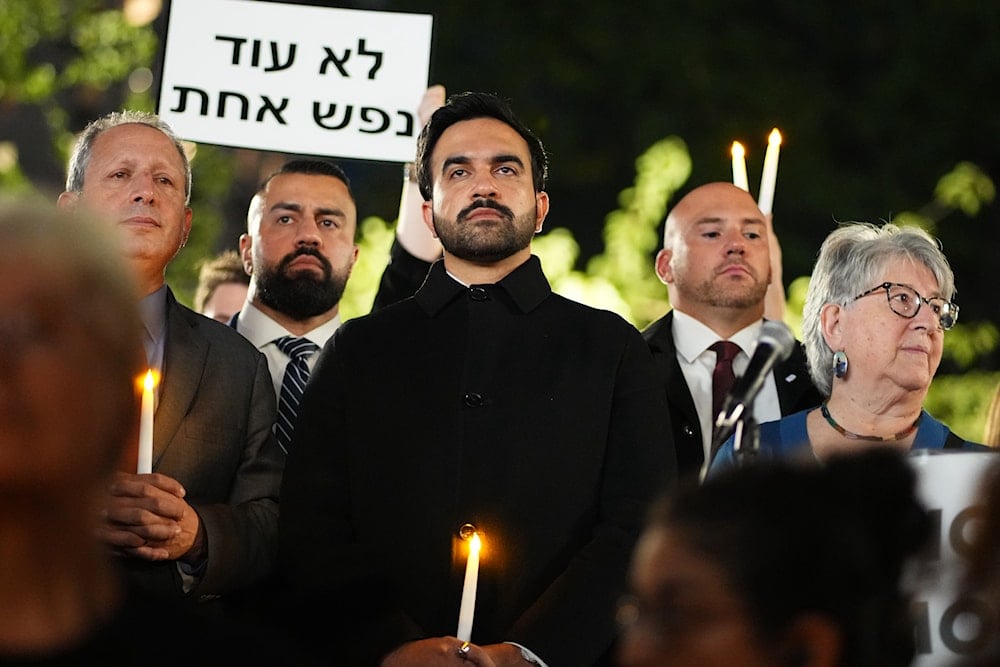
New York City Mayor Zohran Mamdani attends a vigil marking the third anniversary of Operation Al-Aqsa Flood Wednesday, Oct. 7, 2026, in New York (AP)
New York City Mayor Zohran Mamdani’s concessions to pro-"Israel" organizations have failed to silence his opponents and risk alienating the progressive supporters who helped elect him, writer Margaret Kimberley argued in a commentary published by ScheerPost.
The article criticized Mamdani’s Strategy to Combat Antisemitism, arguing that the initiative illustrates how organized political pressure can undermine an elected official’s commitment to Palestinian rights.
According to Kimberley, the mayor allocated an additional $6 million to Jewish organizations, including institutions involved in advocacy for “Israel", only to face renewed criticism from groups demanding that he change his political rhetoric.
Pro-'Israel' groups seek more than funding
Kimberley pointed to the response from UJA-Federation of New York, which welcomed additional resources but accused Mamdani of contributing to hostility toward Jewish New Yorkers through his criticism of “Israel".
“While the Mayor’s plan has a number of positive elements, including some increased security funding for Jewish institutions and expanding proven programs, it fails to address a central issue that the Mayor himself has perpetuated: rhetoric that demonizes and delegitimizes Israel inevitably leads to the targeting of Jewish New Yorkers.”
For Kimberley, the statement revealed that the pressure on Mamdani extended beyond protecting religious institutions. She argued that the organizations challenging him were seeking to curb criticism of Israeli crimes and secure his acceptance of their political positions.
Kimberley questions antisemitism definitions and hate-crime figures
The commentary also criticized demands surrounding the International Holocaust Remembrance Alliance’s definition of antisemitism, which Kimberley argued is used to equate anti-Zionism with antisemitism.
She questioned the basis of hate-crime statistics cited to justify the initiative, including the assertion that antisemitic offenses constitute half of all hate crimes in the city, and criticized the influence of the Anti-Defamation League and the American Jewish Committee on that discussion.
Palestine solidarity at the center of the dispute
Mamdani’s election raised expectations among supporters seeking economic reforms at home and a public official willing to defend Palestinian rights. Kimberley argued that his latest initiative risked undermining that political support without securing any meaningful accommodation from his opponents.
The commentary cited remarks in which Mamdani distinguished Jewish New Yorkers from the Israeli government while identifying US financial support as a source of accountability.
“It’s been very clear, one that no Jewish person in New York City is responsible for the actions of the state of Israel and if you want to hold anybody accountable it’s the people who are making those decisions, the prime minister, the state of Israel also our complicity as American taxpayers given that we know how many billions of dollars we have sent to bomb and continue to send.”
Funding and the influence of pro-'Israel' organizations
Kimberley’s criticism focused on the mayor’s dealings with organizations that actively support “Israel", arguing that his funding decisions strengthened institutions whose political demands remained at odds with those of his pro-Palestine supporters.
Among the organizations identified was the Jewish Community Relations Council, which organizes visits to “Israel” for elected officials and representatives of religious institutions, businesses, unions, and the media.
Kimberley presented those activities as an example of the mechanisms through which pro-"Israel" advocacy reaches local politics, including officials with no direct authority over US foreign policy.
Electoral victory does not end establishment pressure
The article situated Mamdani’s approach within a broader critique of the constraints facing progressive politicians once they enter office.
Kimberley argued that wealthy donors and organized interests retain the means to obstruct elected administrations even when their preferred candidates lose. She also cited opposition to Mamdani’s housing agenda, including rent freezes, as evidence of the resistance confronting his administration.
In her assessment, attempts to accommodate those interests could weaken the political coalition behind the mayor while leaving his opponents determined to deny him a second term.
The result, she warned, would be a growing distance between Mamdani and the supporters who expected his election to translate into sustained progressive policies and solidarity with Palestine.
Read more: Mamdani fires back at Netanyahu, says 'sanitizing genocide' at UN


