
Netanyahu: There are times we disagree with Trump
 2 Min Read
Israeli PM Netanyahu acknowledges disagreements with Trump while vowing new regional alliances, as Israeli officials and media slam his handling of the US-Iran agreement.
-
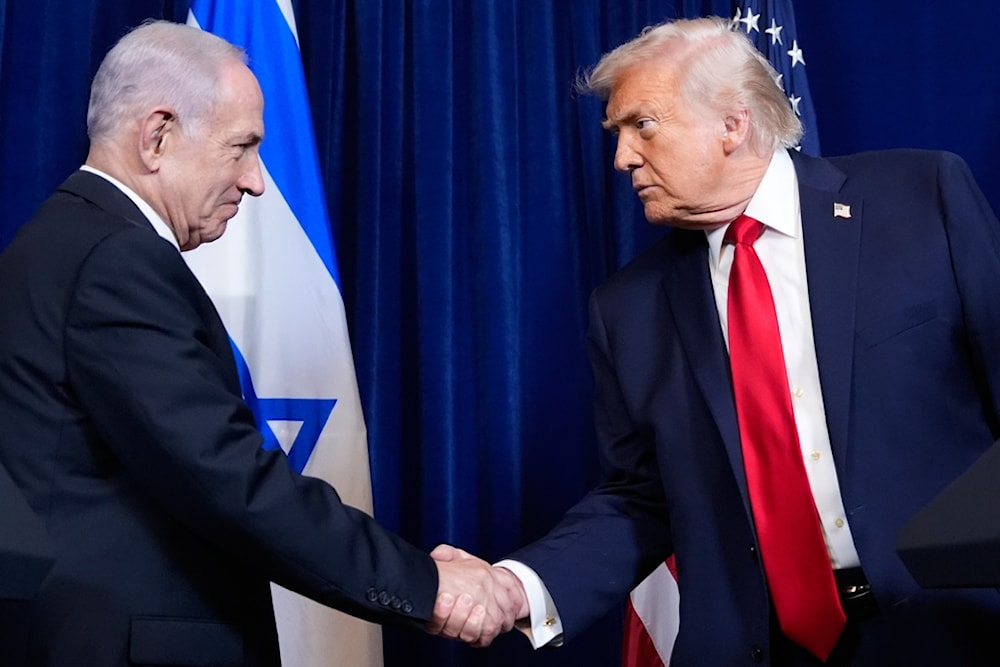
President Donald Trump shakes hands with Israel's Prime Minister Benjamin Netanyahu during a news conference at Mar-a-Lago, Dec. 29, 2025, in Palm Beach, Fla. (AP Photo/Alex Brandon, File)
Israeli Prime Minister Benjamin Netanyahu said on Monday that "Israel" intends to build new alliances with countries in the region and beyond, while securing so-called "arms independence."
Netanyahu said his forces would remain in the so-called "security zone" in Lebanon, a name he used for the occupation, "for as long as necessary," adding that he seeks to prevent the resistance from maintaining a presence along the border.
On reported tensions in his relationship with US President Donald Trump, Netanyahu acknowledged that "there are times when we do not agree," while insisting that "Israel's security interests must be defended wisely."
He further alleged that what had been "achieved" was distancing the Israeli regime from "immediate destruction," adding that "Iran will not have a nuclear weapon, not today and not tomorrow."
When asked about the agreement with Iran, Netanyahu said his government does not yet know its details, while claiming that had "Israel" not acted against Tehran, Iran would have "possessed atomic bombs."
Sharp backlash at home
Netanyahu's remarks came as he faces fierce criticism over his handling of the war on Iran, amid widespread assessments that the US-Iran agreement has left him humiliated.
Israeli officials launched scathing attacks on Netanyahu, accusing him of failure over the outcome of the agreement.
Former Israeli Prime Minister Ehud Barak described the US-Iran deal as "extremely bad," saying "Israel" is paying the price for "Netanyahu's arrogance and blindness" and that it "has not achieved any of the war's objectives."
Israel Hayom said the war against Iran ended in a strategic failure for "Israel," leaving Tehran stronger, with its regime intact, its nuclear capabilities preserved, and an emerging economic agreement in place. The paper also refuted the Israeli leadership's claim that Tehran had been "taught a harsh lesson," stressing that Iran has emerged victorious and that the IOF's hands are tied in Lebanon.


