
Netanyahu faces 27-point gap as opposition bloc leads
 3 Min Read
A new Channel 12 opinion poll shows 50% support for an anti-Netanyahu bloc, while his bloc falls to 31%, with a record 27-point gap over leadership suitability.
-
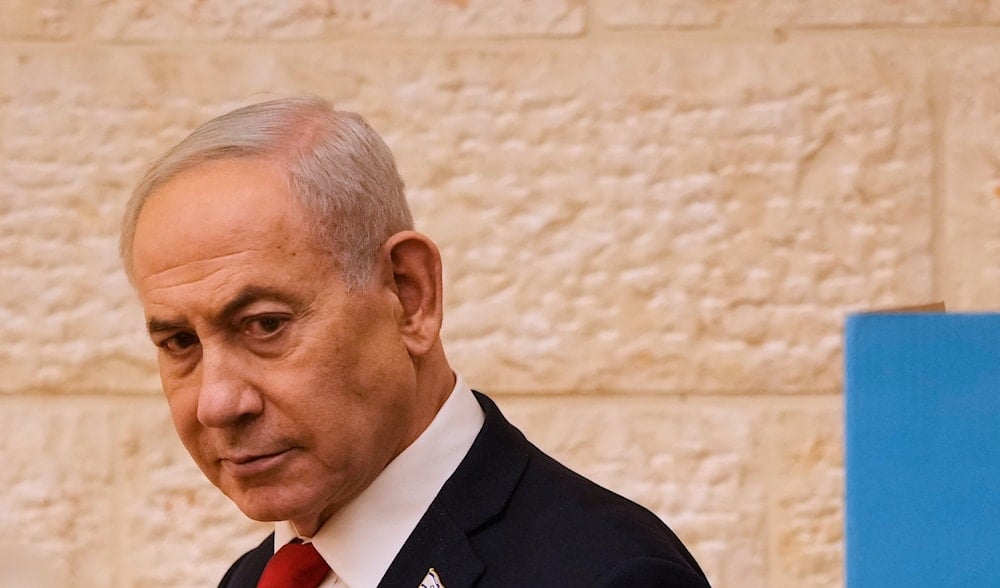
Israeli Prime Minister Benjamin Netanyahu casts his ballot in his Likud party primary elections ahead of the general election in October, in al-Quds on August 17, 2026 (AP)
Half of Israeli voters would back a bloc opposed to Prime Minister Benjamin Netanyahu, while support for his bloc has fallen to 31%, according to a new Israeli Channel 12 poll published Friday. The survey also showed a record 27-point gap against Netanyahu when voters were asked who was best suited to serve as prime minister.
The survey, conducted 60 days before the election, recorded a 27-point gap against Netanyahu in the question of suitability for the position. According to the poll, 59% of respondents said they did not want Netanyahu to remain prime minister, while only about one-third supported his continued leadership.
The results showed that 50% of voters would vote for the bloc of parties opposed to Netanyahu, while the strength of the pro-Netanyahu bloc fell to 31%, according to Channel 12.
New party crosses electoral threshold, 'third bloc' falters
In the first test of the political map following recent developments within the right-wing camp, the new party led by retired Major General Ofer Winter succeeded in crossing the electoral threshold, securing 4% of the vote, equivalent to approximately six Knesset seats. By contrast, the so-called "third bloc," comprising the parties of Gadi Eisenkot, Gilad Erdan and Benny Gantz, failed to cross the electoral threshold despite receiving a combined 5% of the vote.
Regarding the identity of the next police minister, 29% of respondents preferred Itamar Ben Gvir, compared with 21% for Yoav Segalovich. Among Arabs, the poll showed Segalovich received 45% support, compared with 0% for Ben Gvir, while 41% of Arab respondents said neither candidate was suitable for the position.
Ahead of the start of the academic year, 68% of Israelis gave the education system a "poor" rating, while only 25% rated its performance positively, according to the poll. Dissatisfaction also extended into Netanyahu’s camp, with 47% of his voters describing the performance of schools as poor.
Half of the public believes that a government headed by Gadi Eisenkot would deal with the education crisis more effectively, compared with only 25% who preferred Netanyahu, the survey found. Nearly identical figures emerged when Netanyahu was compared with Naftali Bennett.
Meanwhile, 63% of respondents opposed Yoav Kisch continuing as education minister in the next government, while only 12% supported his remaining in the post, according to the poll. Strong opposition to Kisch also emerged within Netanyahu’s own camp, with 40% of right-wing voters opposing his continuation as education minister.


