
Oil prices fall as Trump signals delay in US response to Iran
 3 Min Read
Oil prices fell after US President Donald Trump indicated that Washington might delay military action against Iran. Brent crude dropped below $65, while market volatility remains high amid geopolitical tensions.
-
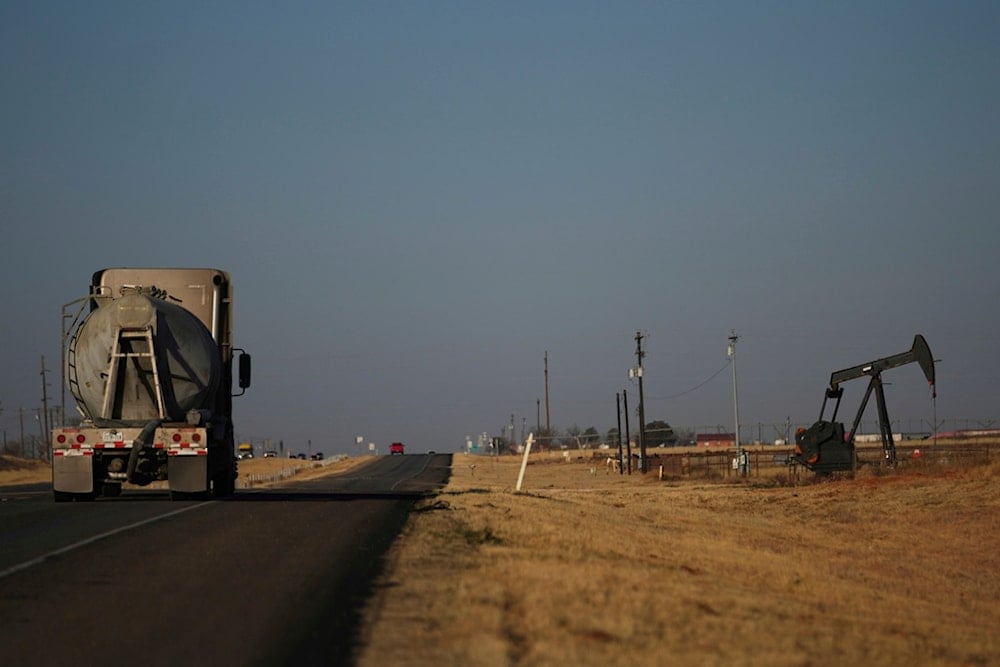
A tanker truck travels westbound on Route 180 next to an oil field pumpjack Saturday, February 22, 2025, in Seminole, Texas. (AP Photo/Julio Cortez)
Oil prices dropped for the first time in six days after US President Donald Trump suggested he may delay military action against Iran, easing immediate concerns over supply disruptions and geopolitical tensions in the region.
Brent crude fell as much as 3.4% to trade below $65 a barrel after gaining roughly 11% over the previous week. West Texas Intermediate hovered near $60. Trump stated he had been assured that Iran would stop killing protesters, reducing the likelihood of a near-term US military response to the foreign-backed riots against the government of Iranian Leader Sayyed Ali Khamenei, and calming fears over impacts on Iranian oil production and key maritime shipping lanes.
Despite this signal, the situation in Iran remained highly volatile. Authorities temporarily closed the airspace around Tehran, and the United States redeployed personnel in Qatar and at other military bases across the region as a precaution.
Oil prices had climbed early in the year as unrest in OPEC’s fourth-largest producer, coupled with instability in Venezuela, reintroduced a premium to oil markets. This followed five months of price declines driven by expectations of oversupply. Trump said he had a “very good call” with acting Venezuelan President Delcy Rodriguez on Wednesday, with oil among the topics discussed.
Separately, the US president told Reuters that he believed Venezuela remaining in OPEC would be preferable, although he expressed uncertainty about whether it would benefit the United States, adding that Washington had not yet discussed the matter with Caracas.
“Geopolitically induced strength in Brent likely continues, and a test up to $75 is certainly possible,” said Robert Rennie, head of commodity research at Westpac Banking Corp, to Bloomberg. He noted that the rally could reverse sharply once an “all-clear is sounded," drawing parallels with the Iran–"Israel" conflict in June.
Read more: Sayyed Khamenei says mass rallies foiled foreign plots against Iran
The price spread between Brent crude and West Texas Intermediate has reached its widest point since October 2024. New US government data showed that nationwide crude inventories rose by 3.4 million barrels last week, the largest increase since early November.
Rising stockpiles, increased Venezuelan oil shipments to the United States, and disruptions at a Black Sea terminal have all contributed to pushing West Texas Intermediate to its deepest discount relative to Brent crude in 15 months.
Read more: Oil prices edge higher in 2026 after steepest annual loss since 2020


