
Oil prices 2026 edge higher after biggest drop since 2020
 4 Min Read
Oil prices in 2026 edge higher after a near-20% annual drop, as US sanctions tighten pressure on Venezuela and energy infrastructure is targeted in Russia.
-
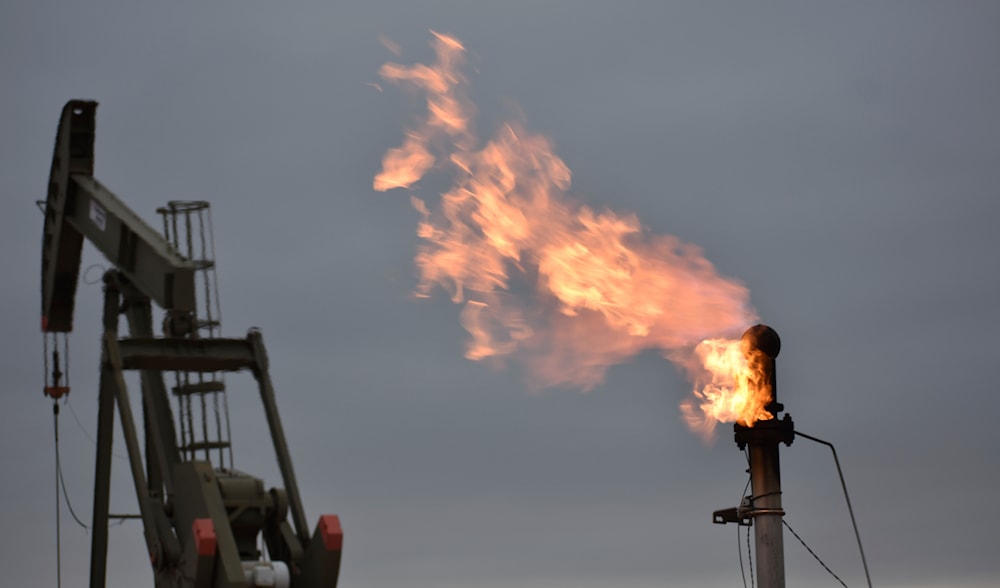
A flare for burning excess methane, or natural gas, from crude oil production is seen at a well pad in Watford City, North Dakota, August 26, 2021. (AP Photo/Matthew Brown)
With global markets bracing for shifts, oil prices 2026 have become a focal point for investors, policymakers, and consumers alike. As supply chain adjustments, geopolitical tensions, and renewable energy investments reshape the energy landscape, understanding projected price trends is more critical than ever.
By examining key economic indicators, technological breakthroughs, and policy decisions set to influence crude oil supply and demand, this article provides timely insights to help businesses adapt strategies, governments plan budgets, and consumers anticipate future costs.
Oil prices posted modest gains at the start of 2026, stabilizing after their steepest annual decline since the early months of the COVID-19 pandemic, as traders weighed renewed geopolitical disruptions against persistent concerns over a global supply glut.
-
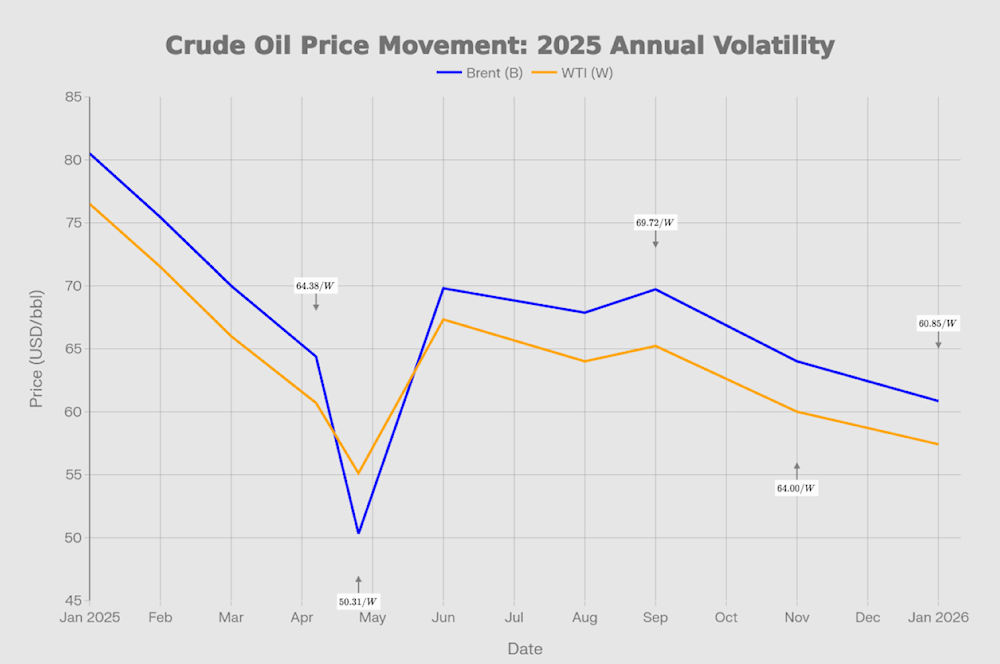
Data sourced from the US Energy Information Administration (EIA), Intercontinental Exchange (ICE), and CME Group. Brent Crude Oil prices from London trading and WTI prices from Cushing, Oklahoma futures contracts. (Visualized by Al Mayadeen English)
As shown in the above graph, oil price movements were demonstrated as follows:
- Brent crude futures rose by 35 cents to around $61 a barrel.
- US West Texas Intermediate (WTI) climbed to approximately $57.75.
- Both benchmarks ended 2025 down nearly 20%, with Brent marking its third consecutive year of losses, the longest streak on record.
Geopolitical developments offered limited near-term support to prices, though markets remain skeptical that disruptions will materially tighten global crude balances.
In recent months, Ukraine's intensified drone strikes on Russian energy infrastructure have resulted in several outcomes.
- Attacks on refineries, storage facilities, and export terminals.
- Disruption of refining capacity despite steady crude output
- Increased exports of unprocessed crude.
- Tighter supplies of refined products, particularly diesel.
Washington attempts to strangle Venezuela
At the same time, Washington has escalated pressure on Venezuela’s oil sector. The Trump administration imposed new sanctions on companies and oil tankers accused of facilitating Venezuelan crude exports, including firms based in Hong Kong and mainland China, effectively extending an illegitimate maritime blockade aimed at restricting Caracas’s access to global markets.
The sanctions have increased operational strain on Venezuela's state oil company, PDVSA, mainly in
- Creating difficulties in placing cargoes due to banking restrictions, insurance barriers, and a naval blockade.
- Causing domestic fuel inventories to build up as tankers cannot dock or offload.
- Raising the risk of refinery slowdowns.
- Forcing PDVSA to offer steep discounts to sell heavy crude to Asian buyers.
Washington's extraterritorial sanctions regime has also drawn diplomatic pushback, with Russia reportedly lodging a formal protest over the pursuit of a tanker linked to Venezuelan exports. Analysts say the campaign has disrupted trade flows without removing barrels from the market, reinforcing inefficiencies rather than tightening supply.
WATCH: Trump claims Venezuela took 'our oil', but did it? History says otherwise
Oversupply dominates market outlook
Despite these flashpoints, forecasts for oil markets remain dominated by longer-term fundamentals pointing to oversupplied global oil stocks. Rising output from the United States and other non-OPEC producers, alongside slowing demand growth, particularly in China, has reinforced expectations of a surplus in 2026.
-
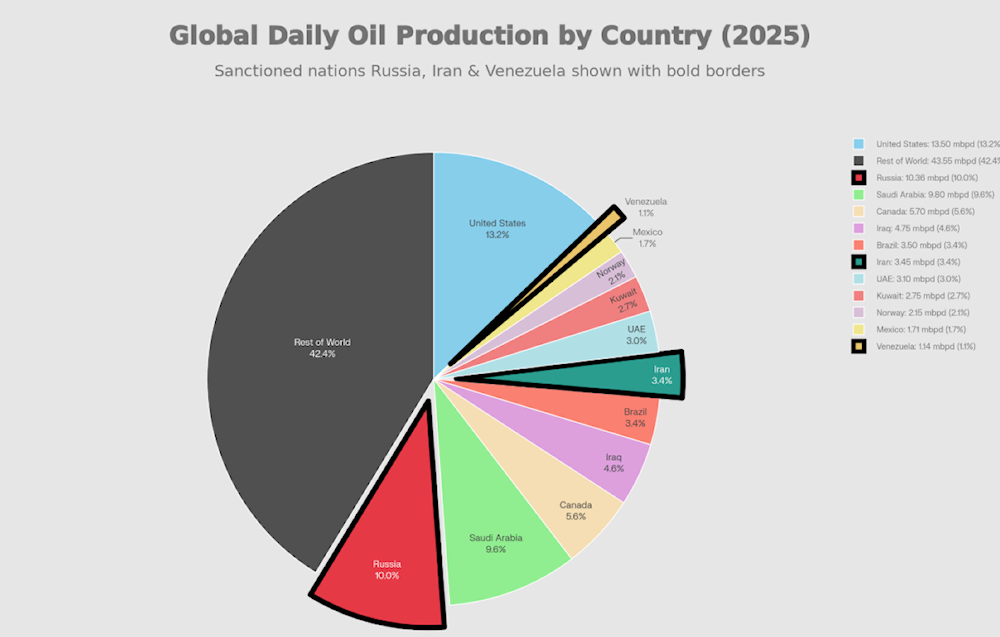
Oil production figures derived from the EIA International Energy Database, the International Energy Agency (IEA) Oil Market Report, and the OPEC Monthly Oil Market Report (October–December 2025). Volumes represent estimated daily crude oil production in million barrels per day (mbpd). Russia, Iran, and Venezuela are highlighted due to their geopolitical significance and sanctions-related impacts on global markets. Visualized by Al Mayadeen English.
The International Energy Agency has projected a global oil glut of nearly 4 million barrels per day this year, while US crude production reached a record high of about 13.9 million barrels per day in October, according to official data. Analysts say these dynamics have outweighed geopolitical risk premiums that once buoyed prices.
Market participants increasingly view the global oil market as having shifted from post-pandemic volatility to a structurally bearish phase, with supply growth expected to continue outpacing demand unless producers intervene decisively
Focus turns to OPEC+ meeting
Attention is now turning to an upcoming OPEC+ meeting scheduled for January 4, where key producers led by Saudi Arabia and Russia are expected to reaffirm a pause in planned output increases for the first quarter of 2026.
Analysts widely expect no immediate policy change, with the group likely to emphasize compliance with existing cuts and signal readiness to extend restrictions if prices remain under pressure. OPEC+ is currently withholding roughly 5 million barrels per day from the market, a strategy seen as crucial to preventing a sharper price collapse.
While geopolitical events may continue to offer short-term support, prices are expected to remain capped in the coming months unless supply discipline tightens or demand surprises to the upside.


