
Pakistan confirms final Iran-US peace deal text reached, Sharif says
 4 Min Read
Pakistan's Prime Minister Shehbaz Sharif has announced that a final, agreed‑upon text of an Iran-US peace deal has been reached, warning of a "misinformation campaign" aimed at sabotaging the agreement and stating that "peace has never been this close as it is now."
-
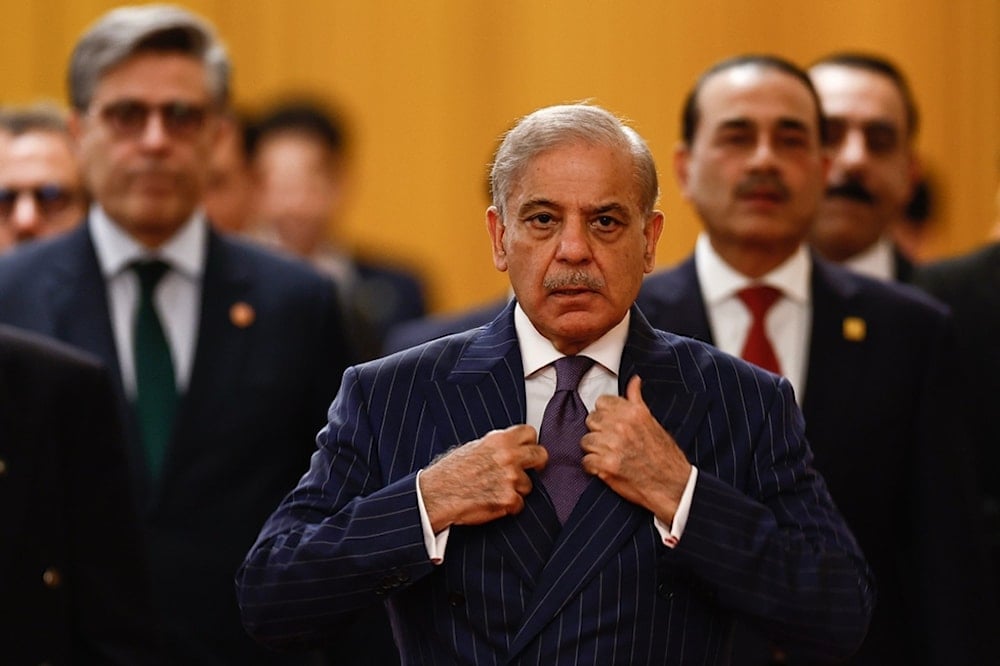
Pakistan's Prime Minister Shehbaz Sharif arrives for a meeting with Chinese President Xi Jinping at the Great Hall of the People, in Beijing, China, Monday May 25, 2026. (AP)
Pakistan's Prime Minister Shehbaz Sharif has announced that a final, agreed‑upon text of a peace deal between Iran and the United States has been reached, stating that "peace has never been this close as it is now," while warning of an "incessant misinformation campaign" aimed at sabotaging the agreement.
In a post on X, Sharif wrote: "Amid ongoing intense mediation efforts by Pakistan, we are fully aware of incessant misinformation campaign being waged by those who want to sabotage the peace deal. Setting aside the noise, we can confirm that a final, agreed upon text of the peace deal has been reached and Pakistan is now working closely with both sides to finalize the next steps."
Amid ongoing intense mediation efforts by Pakistan, we are fully aware of incessant misinformation campaign being waged by those who want to sabotage the peace deal. Setting aside the noise, we can confirm that a final, agreed upon text of the peace deal has been reached and…
— Shehbaz Sharif (@CMShehbaz) June 12, 2026
"Peace has never been this close as it is now," he added, tagging President Donald Trump, Vice President JD Vance, Secretary of State Marco Rubio, envoy Steve Witkoff, as well as Iranian President Masoud Pezeshkian and Foreign Minister Abbas Araghchi.
Pakistan working to finalise next steps
The announcement marks a significant development in the US-Israeli war on Iran, which began on February 28. Pakistan has been serving as a key mediator between Washington and Tehran, facilitating indirect negotiations aimed at ending the hostilities.
While Sharif confirmed that an agreed text exists, he did not provide details on the specific terms of the deal.
The announcement suggests that remaining obstacles may be procedural rather than substantive, with Pakistan now working to finalise the next steps for implementation.
Background: Iran says no final decision reached, accuses US of shifting positions
Sharif's warning about a "misinformation campaign" comes just hours after Iran's Foreign Ministry explicitly rejected claims that a deal has been finalised. Iranian Foreign Ministry spokesperson Esmail Baghaei said on Thursday that no final decision has been made regarding a potential agreement with the United States, stressing that reports suggesting a deal has been concluded remain "speculative" and that no matter has been definitively settled.
Baghaei explained that while a draft memorandum of understanding is nearly complete, the main obstacle remains what he described as "contradictory statements and shifting positions from the US side." He noted that Iran's decision-making mechanism is clear and requires the relevant authorities to reach a final conclusion on every detail of the proposed understanding before any agreement can be adopted.
The Iranian spokesperson also emphasised that Tehran has shown no flexibility regarding its red lines and non-negotiable principles. According to Baghaei, US officials attempted to introduce additional issues during recent talks, but Iran demonstrated that it would not yield to pressure or compromise on core positions.
Trump's contradictory claims fuel confusion
The divergence between Sharif's announcement and Iran's cautious stance reflects the contradictory signals emanating from Washington. On Thursday, President Trump claimed that he had cancelled planned military aggression against Iran, asserting that discussions had reached the highest levels of Iran's leadership and received approval. Trump further claimed that the "final points" of a prospective agreement had been approved "in both concept and great detail" by all parties involved, including the United States, "Israel", Saudi Arabia, the UAE, Qatar, Turkey, Pakistan, and others.
However, despite cancelling the planned aggression, Trump stated that the US naval blockade would remain "fully in effect" until the agreement is finalized. Baghaei, for his part, dismissed Trump's claims, saying that Washington is attempting to create the impression that Iran had been affected by threats and pressure, and rejecting such portrayals.
The contradictory statements suggest that significant gaps remain between the two sides, despite Pakistan's optimistic announcement. Iran has consistently insisted that any agreement must include the release of frozen assets, recognition of its control over the Strait of Hormuz, and the complete lifting of sanctions, core demands that Washington has not yet publicly conceded.


