
Pakistan quietly mediates Libya unity talks amid rival power split
 5 Min Read
Pakistan has reportedly begun quietly mediating between Libya’s eastern and western factions in a US-backed push for unity talks, aiming to advance a transitional power-sharing deal.
-
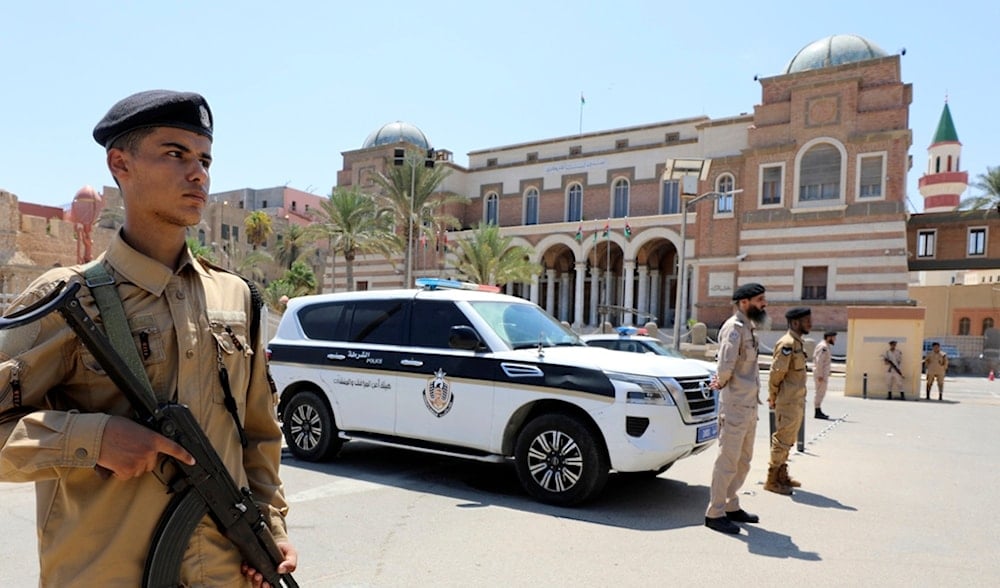
Libyan soldiers guard the Central Bank headquarters in Tripoli, Libya, Tuesday, Aug. 27, 2024 (AP)
Pakistan has quietly begun mediating between Libya’s rival eastern and western power centres in a previously unreported diplomatic effort to advance unity talks and a potential transitional settlement, two Pakistani sources have told Reuters.
The sources said the initiative, which began late last year, is part of broader international efforts to bridge Libya’s long-running political divide, and would significantly raise Pakistan’s diplomatic profile if it succeeds. According to the same sources, both Libyan sides requested Islamabad’s involvement.
Pakistan’s emerging mediation role in Libya conflict
The Pakistani involvement comes amid a wider US-backed push to find a political solution in Libya, which has remained divided between rival administrations since the 2011 NATO-backed uprising that toppled Muammar Gaddafi, the sources told Reuters.
One Pakistani source said the United States was “fully aware and involved” in Islamabad’s role, while also noting that Saudi Arabia has supported the mediation effort. Pakistan has recently expanded its diplomatic footprint through parallel engagements, including reported facilitation efforts between Washington and Tehran earlier this year.
Pakistan’s foreign ministry, military media wing, and Libyan officials from both east and west did not immediately respond to requests for comment from Reuters.
US-backed framework and regional backing for talks
The initiative is reportedly unfolding alongside US-led diplomatic activity to stabilize Libya’s fractured political system. Analysts claim Washington has been attempting to push a more structured settlement framework, though key details remain unsettled.
According to Pakistani sources cited by Reuters, the effort has also received backing from Saudi Arabia, which has long sought influence in Libya’s political and economic landscape. Qatar and Turkey, both key supporters of Libya’s western-based authorities, were also said to have encouraged Pakistan’s involvement.
However, it remains unclear how closely Pakistan is coordinating with other regional actors involved in Libya’s competing power networks.
Read more: How America’s forever wars fueled a global refugee crisis
Libya’s rival administrations and entrenched divisions
Libya has remained politically fragmented since 2011, with rival governments operating in the east and west, each backed by different foreign powers. The stalemate has repeatedly undermined attempts to organise national elections or form a unified administration.
The eastern camp, aligned with the Libyan National Army, maintains control over major territory and infrastructure, while the western-based Government of National Unity holds international recognition but limited authority on the ground.
Proposed transitional power-sharing plan
A proposed “Libya Reunification Plan” reportedly discussed among stakeholders would establish a 36-month transitional arrangement under a Government of National Consensus and Presidential Council, according to a summary seen by Reuters.
Under the draft framework, Abdulhamid Dbeibah, head of the UN-recognised Government of National Unity, would serve as prime minister, while Saddam Haftar, deputy commander of the eastern-based Libyan National Army, would chair the Presidential Council.
The plan also reportedly envisages granting Khalifa Haftar’s faction significant influence over Libya’s oil revenues and budgetary structures, reflecting the central role of oil in the country’s political balance.
A Pakistani source cautioned that discussions are still ongoing and no final agreement has been reached, as reported by Reuters.
Strategic interests behind foreign involvement
Libya’s oil wealth and strategic location continue to attract competing regional and international actors, complicating efforts to reach a lasting settlement.
The sources told Reuters that foreign patrons remain deeply embedded in Libya’s rival political and military structures, making any unity arrangement highly dependent on external guarantees.
Analysts quoted in the report warned that unresolved disputes over governance posts, electoral frameworks, and resource distribution have repeatedly derailed past agreements.
Pakistan’s broader diplomatic positioning
Pakistan’s reported role in Libya comes as it seeks to expand its profile in international mediation efforts.
Last month, Pakistan’s army chief Asim Munir met Saddam Haftar in Rawalpindi, a meeting followed days later by Haftar’s visit to Washington, where he met senior US officials, according to Reuters.
Pakistan has also maintained defence and political ties with both Libyan camps, including reported engagement with eastern forces on military cooperation, despite the United Nations arms embargo on Libya.
Despite renewed diplomatic activity, analysts remain cautious about the prospects of a durable agreement. Experts warn that Libya’s competing internal factions, combined with overlapping foreign interests, continue to pose major obstacles to any transitional framework.
The complexity of balancing oil revenue distribution, military control, and political legitimacy means any agreement would require sustained external enforcement and internal consensus, conditions that have historically been difficult to achieve in Libya’s fractured political environment.
Read more: Muammar Kadhafi’s Son Saif al-Islam Assassinated in Libya


